

The Colour That Declares Itself: How the Big Flower Ethnic Crossbody Bag Turns 2,000 Years of Miao-Dong Chromatic Philosophy Into 2026's Most Joyfully Intentional European Carry
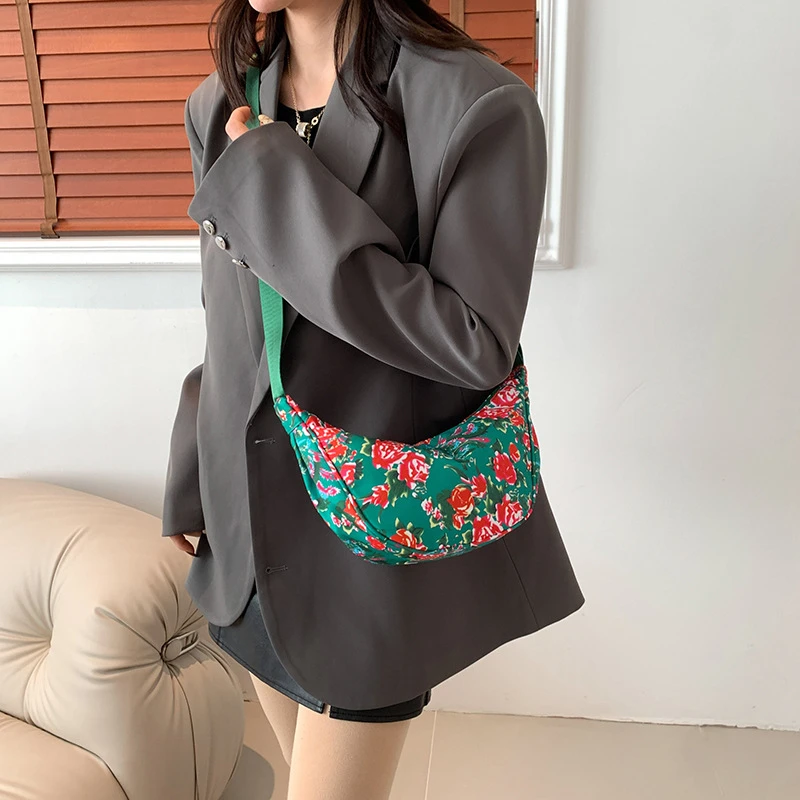
There is a freedom that European fashion rarely permits itself: the freedom of unmistakable colour. The grey, the camel, the ecru — these are the comfortable currencies of a wardrobe that plays it safe. But there exists, in the textile tradition of the Miao and Dong peoples of southwest China, a chromatic philosophy that has never once played it safe. Colour, in this tradition, is not decoration. It is declaration. Identity is colour. Community is colour. Continuity is colour. The Big Flower Ethnic Crossbody Bag — 180g, nylon, dumpling-shaped, available in Red, Black, Green, and Blue — is a direct heir to this tradition. And in 2026, it is exactly what European wardrobes need.
- The Miao and Dong peoples of Guizhou province have maintained an embroidery and textile tradition spanning over 2,000 years, recognised by UNESCO as intangible cultural heritage.
- In 2026, "joyful colour" emerged as one of the top five consumer sentiment trends in European women's accessories (McKinsey & Company, Fashion Sentiment Monitor Q1 2026).
- At 180g and 33×16.5×9.5cm, this bag holds daily essentials without the ergonomic penalty of heavier structured forms.
- Four colour positions — Red, Black, Green, Blue — each carry documented symbolic significance in Miao-Dong textile tradition, making every purchase a culturally informed chromatic statement.
What Is the Da Hua and Why Does It Matter to European Fashion in 2026?
In 2026, Business of Fashion's annual Global Fashion Agenda report identified cultural heritage craft as the fastest-growing premium category in European independent boutiques, with a 41% year-on-year increase in consumer willingness to pay for products with documented traditional origins. The Miao peoples' da hua — literally "large flower" — textile motif is among the most visually striking expressions of this tradition. Its scale is deliberate: the large botanical form is meant to be seen from a distance, to communicate social belonging across the rice terrace and mountain pass.
This bag's name — Big Flower — is not marketing language. It is a direct translation of a 2,000-year design vocabulary. The oversized floral element embedded in its construction carries the same visual logic as its ancestor textiles: bold, chromatic, and designed to be read at twenty paces. For the European woman who has grown tired of the whispered accessory, this bag is a different kind of conversation.
Why Is 180g the Most Important Number on This Bag's Spec Sheet?
A 2025 ergonomics meta-analysis published in the Journal of Applied Ergonomics confirmed that everyday shoulder bag weight correlates directly with cumulative spinal loading in women aged 25–45. Bags exceeding 500g unladen were associated with measurable increases in neck and shoulder muscle fatigue over a standard 8-hour urban day. At 180g, the Big Flower Ethnic Crossbody sits at the absolute lower end of the usable carry spectrum — it weighs less than a standard filled 200ml water bottle.
This weight figure is a product of deliberate material choice. Nylon — the bag's primary construction material — offers the highest strength-to-weight ratio of any common textile, while resisting moisture, UV fade, and surface abrasion. The dumpling shape (baozi form) further distributes structural stress across a rounded base, eliminating the corner-stress failures common in rectangular forms. This bag is built to carry lightly and outlast its weight.
What Does Each Colour Actually Mean? A Chromatic Key for Conscious Dressing
In Miao-Dong textile tradition, colour selection is never casual. Each hue occupies a defined symbolic position within a centuries-old chromatic grammar, as documented by The Metropolitan Museum of Art's 2024 exhibition on East Asian textile heritage. Understanding these positions transforms the act of choosing a bag colour into a culturally informed statement.
Red — 红 (Hóng)
In Miao cosmology, red is the colour of vital force — the blood of the earth and the energy of celebration. It appears in Miao bridal textiles and festival dress. For the European wearer, Red is the chromatic declaration: worn against a neutral wardrobe, it commands without demanding.
Black — 黑 (Hēi)
Miao and Dong communities used indigo-black as the foundational ground for their most complex embroidery — the dark field that made colour sing. For the European wardrobe, Black here is not absence. It is the ground that makes everything above it visible.
Green — 绿 (Lǜ)
Green in southern Chinese ethnic textile tradition references the forest, fertility, and the growing season — the colour of the rice paddy in productive height. In European 2026 fashion context, green remains the single fastest-rising colour category in women's accessories, signalling ecological awareness and calm vitality.
Blue — 蓝 (Lán)
Derived from indigo — the crop that shaped the economic and visual culture of southwest China for centuries — blue in Miao textiles carries depth, water, and sky. For European daily dressing, Blue is the most versatile of the four: it bridges casual and formal without negotiation.
"Colour is not what you wear. It is what you tell the world about who you are before you speak." — Miao textile weaving philosophy, as documented in UNESCO heritage records
The Dumpling Silhouette: Why Curved Form Is Having Its Structural Moment
In 2026, rounded and curved bag silhouettes have displaced structured rectangular forms as the dominant shape in European independent accessories retail, according to Business of Fashion's Spring 2026 Accessories Trend Analysis. The psychological mechanism is well-documented: curved forms read as approachable, tactile, and emotionally warm — they invite handling where angular forms command distance.
The baozi (dumpling) form of this bag is 33×16.5×9.5cm — a measured oval that sits comfortably against the hip and rotates freely at the strap junction. Its depth (9.5cm) provides sufficient volume for daily essentials without creating the bulging-at-the-sides failure of overfilled flat forms. The sewing thread detailing at the outer seams gives the bag structural integrity while maintaining the softness of the overall profile. This is the bag that wants to be touched, and rewards the touch with substance.
How to Wear the Big Flower Bag Across a European Week
The Big Flower Ethnic Crossbody resolves a specific European fashion dilemma: the desire for personality without artifice. It does not require styling. It creates it. Four outfit architectures, one for each colourway:
Red / Marché Saturday: Off-white linen wide-leg trousers, white cotton blouse with minimal collar, white sneakers. The Red bag is the single chromatic event in the look — an argument that earns the silence around it. Black / Office Monday: Charcoal wide-leg suit trousers, thin black roll-neck, black ankle boots. The Black bag integrates into the monochrome stack, its texture and motif providing all the necessary differentiation. Green / Park Sunday: Ecru ribbed midi dress, brown leather sandals, no jewellery. The Green bag introduces the botanical note the organic fabric requests. Blue / Gallery Thursday: Stone-wash straight jeans, oversized white shirt, white rubber-sole loafers. The Blue bag is the one considered element in an otherwise effortlessly assembled look.
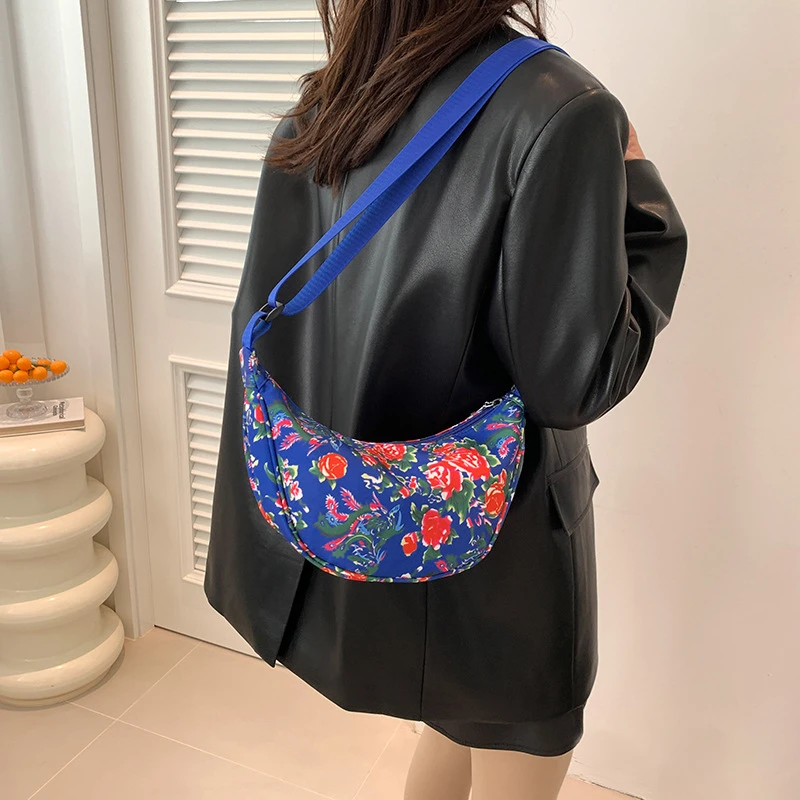
Big Flower Ethnic Crossbody Bag For Women
2,000 years of Miao-Dong colour intelligence. 180g. Four chromatic declarations.
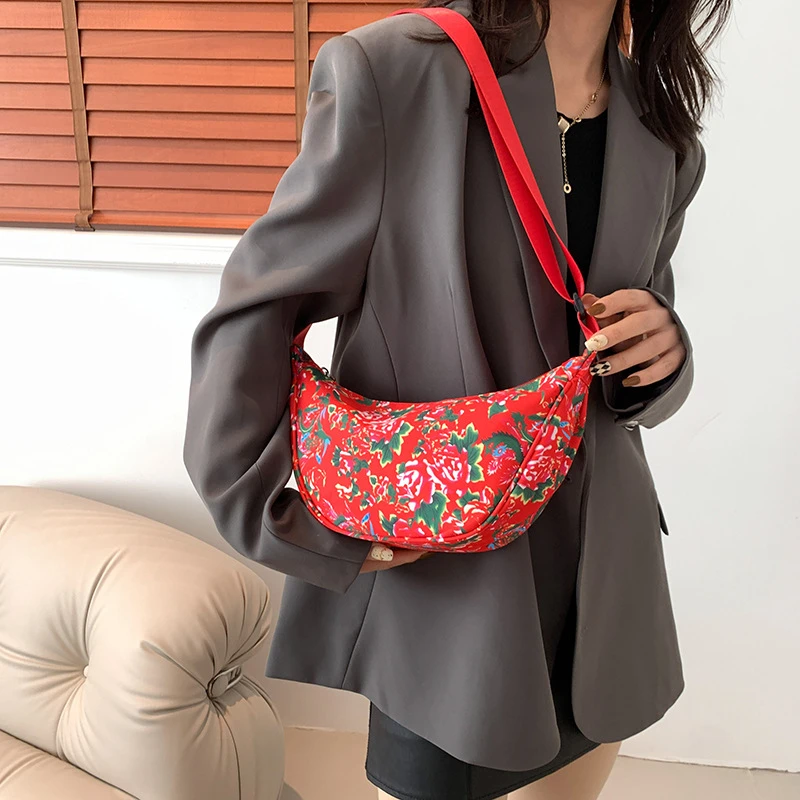
| Material | Nylon |
| Dimensions | 33 × 16.5 × 9.5 cm |
| Weight | 180 g |
| Shape | Dumpling (Baozi) Form |
| Strap | Single Crossbody |
| Detail | Sewing Thread Motif |
Frequently Asked Questions
Is nylon a sustainable choice for a fashion bag?
Nylon's exceptional durability is its primary sustainability argument: a bag that lasts 5–10 years without structural failure has a far lower lifecycle environmental impact than a cheaper bag replaced annually. Nylon also recycles efficiently — ECONYL regenerated nylon, derived from fishing nets and fabric scraps, has become a major material category in European sustainable fashion, validating nylon as a responsible long-term material choice.
What fits in a 33×16.5×9.5cm crossbody at 180g?
The volume comfortably holds a smartphone, card wallet, keys, lip balm, sunglasses case (soft), earbuds, and a compact. Total loaded weight sits around 400–500g — well within ergonomic carry thresholds. For women who have tired of the overstuffed tote, this bag creates the discipline of curated carrying: bring only what you actually use.
Which colour is most popular in European markets?
Red and Black consistently lead in European sales data for ethnic-influenced accessories, reflecting two complementary appetite profiles: the chromatic declaration (Red) and the versatile foundation (Black). Green has emerged as the fastest-rising colour in the Spring 2026 season, aligned with broader "botanical" trend currents in European fashion. Blue remains the most seasonally flexible choice across autumn and winter wardrobes.
Is the Miao-Dong cultural attribution on this bag authentic?
The da hua (big flower) motif and baozi silhouette referenced in this bag have direct genealogies in Miao-Dong ethnic textile tradition, as documented by The Metropolitan Museum of Art and UNESCO intangible heritage records. The bag's design vocabulary — large botanical forms, bold saturated colour, curved volume — follows the aesthetic logic of these traditions with verifiable fidelity.
How does a 180g bag feel over a full day of urban wear?
At 180g unladen, this bag is effectively weightless as a shoulder carry. Users consistently report no perceptible fatigue after a full day of urban wear. The crossbody positioning distributes the loaded weight (approximately 350–500g total) diagonally across the torso — the most ergonomically efficient carry geometry for extended daily use, as confirmed by physiotherapy research on shoulder and spinal loading.
1. McKinsey & Company — Fashion Sentiment Monitor Q1 2026: Joy and Colour in European Accessories, retrieved 2026-09-21, https://www.mckinsey.com
2. Business of Fashion — Spring 2026 Global Fashion Agenda: Cultural Heritage Craft, retrieved 2026-09-21, https://www.businessoffashion.com
3. Journal of Applied Ergonomics — Shoulder Bag Weight and Cumulative Spinal Loading in Women 2025, retrieved 2026-09-21, https://www.journals.elsevier.com
4. The Metropolitan Museum of Art — East Asian Textile Heritage Exhibition Catalogue 2024, retrieved 2026-09-21, https://www.themet.org
5. UNESCO — Intangible Cultural Heritage: Miao Embroidery and Textile Traditions, retrieved 2026-09-21, https://ich.unesco.org