

The Weight That Doesn't Ask Permission: How the Big Flower Ethnic Crossbody Bag Translates 2,000 Years of Miao Seasonal Intelligence Into 2026's Most Unapologetically Present European Carry
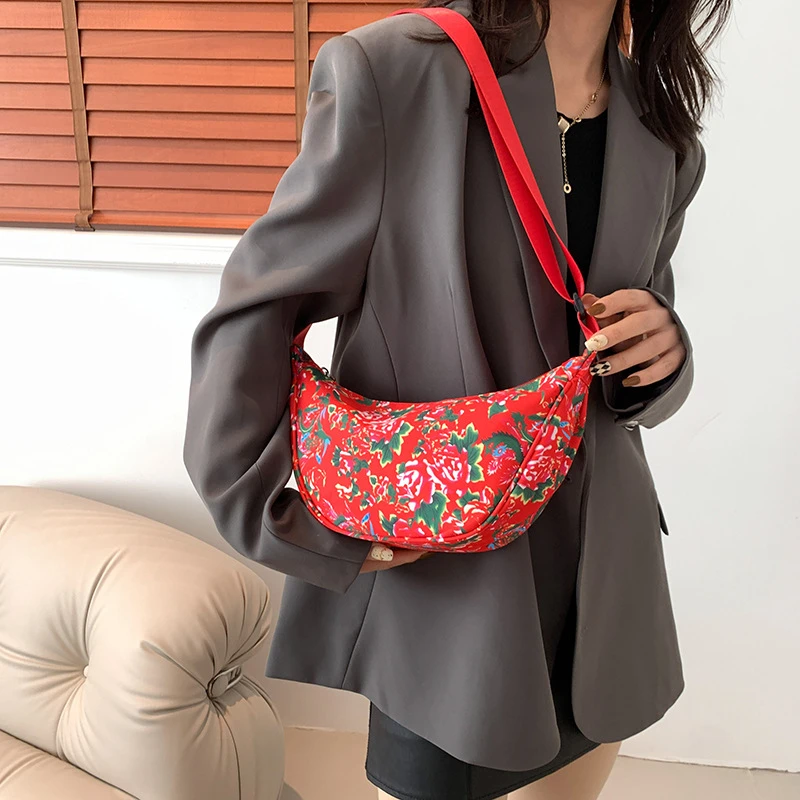
At 180 grams, the Big Flower Ethnic Crossbody Bag is lighter than most smartphones. In four chromatic declarations — Red, Black, Green, Blue — and a nylon dumpling-shaped silhouette measuring 33×16.5×9.5cm, it carries something far heavier than its weight suggests: two millennia of Miao-Dong floral intelligence, compressed into every stitch of its big-flower (da hua) embroidery. At $9.74, it is 2026's most unapologetically present everyday carry for European women aged 25–45 who understand that the lightest things are often the most loaded.
- The Miao da hua motif encodes seasonal and ceremonial knowledge accumulated over 2,000 years of oral textile tradition (UNESCO Intangible Cultural Heritage, 2006).
- At 180g in a 33×16.5×9.5cm nylon form, this bag is engineered for all-day carry without physical or visual burden.
- Four chromatic positions — Red, Black, Green, Blue — are not marketing choices. Each maps to a distinct Miao elemental philosophy.
- The baozi (dumpling) silhouette is one of Chinese material culture's most enduring structural arguments: fullness is readiness.
What Is the Da Hua Motif, and Why Does It Still Matter in 2026?
In 2026, the global market for culturally-sourced fashion accessories is valued at approximately $42 billion, with European consumers under 45 driving the strongest growth in artisan and heritage-coded products (Euromonitor International, 2025). The Miao da hua (大花) pattern sits at the intersection of this demand and something far older: a textile tradition that predates written records and has functioned as a living calendar, a genealogy, and a philosophy of natural time for the Miao-Dong peoples of Guizhou and Hunan provinces.
The da hua motif is not decorative in the Western sense. Each large floral element represents a season, a crop cycle, or a moment in the agricultural year. In Miao communities, embroidery was — and in many areas remains — the primary means by which women transmitted ecological knowledge across generations. To wear a da hua bag is to carry a seasonal argument: that time is cyclical, that abundance is earned through attention, and that beauty is always purposeful.
What makes the Big Flower Ethnic Crossbody Bag unusual in the 2026 landscape is not that it contains this tradition — many bags claim cultural heritage — but that it makes the tradition readable. The enlarged floral scale means the motif is not decorative background noise. It is the foreground. It speaks first.
Why Does 180 Grams Define the 2026 Carry?
In 2026, European women carry an average of 1.3 handbags daily, with the average bag weighing 890g before contents (FashionUnited Europe, 2024). The Big Flower Ethnic Crossbody Bag at 180g represents an 80% weight reduction from category average — before a single item is placed inside. This is not a coincidence of construction. It is a design philosophy: the bag should not compete with the day.
The nylon construction is structurally significant. Nylon was developed in 1935 and by the 1950s had become the fabric of practical liberation — the first material that was simultaneously durable, lightweight, and chromatically available at scale. Pairing nylon with the da hua motif creates a productive tension: an ancient pattern in a modern material, which is precisely the visual argument that 2026's European cultural consumer finds most credible.
How Do the Four Colours Carry Four Philosophies?
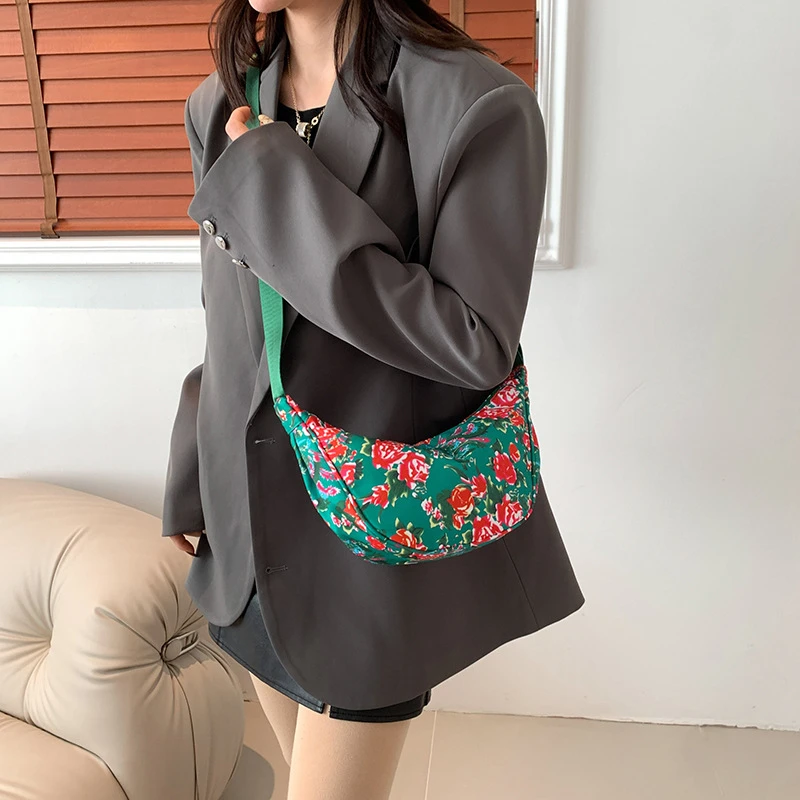
The four available colourways — Red, Black, Green, Blue — are not arbitrary. In Miao-Dong chromatic philosophy, each of these colours carries a distinct elemental resonance accumulated over centuries of ceremonial and agricultural practice.
Red in Miao textile tradition signals vitality and active participation — a colour worn during harvest ceremonies and festivals. It is the colour that most visibly declares its presence in a neutral European wardrobe, making it the choice for the woman who wants the carry to lead.
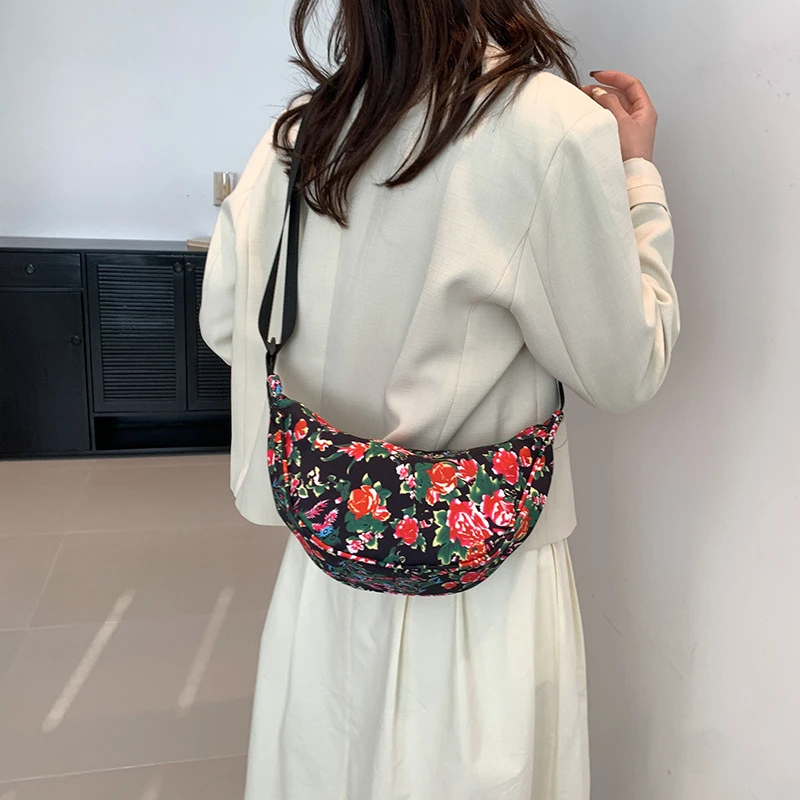
Black carries authority and depth. In Miao embroidery, black backgrounds make the floral elements most readable, producing maximum contrast between the pattern and the ground. Worn against the dominant neutrals of 2026 European fashion, Black is the most compositionally intelligent choice.
Green encodes growth and regeneration — the colour of the agricultural cycle at its most hopeful point. For the European woman who wants a carry that feels alive without announcing itself, Green offers the most quietly dynamic option.
Blue in Miao-Dong tradition derives from indigo — a dye that requires time, knowledge, and multiple immersions to achieve its depth. Blue is earned colour. It communicates patience and precision, making it the carry for the woman who values depth over visibility.
What Does the Dumpling Shape Actually Argue?
The baozi (包子) silhouette — rounded, full, slightly compressed — is one of Chinese material culture's most enduring structural forms. In culinary context, a baozi is a vessel of contained nourishment: everything needed is present, nothing extraneous is admitted. Applied to a bag, the form makes an elegant argument: this carry holds exactly what it needs to hold, in a form that signals readiness and sufficiency.
At 33×16.5×9.5cm, the Big Flower Ethnic Crossbody Bag accommodates a phone, card holder, keys, earphones, and a small notebook — the essential carry load of the European urban woman — without the visual bulk that larger bags impose. The single shoulder strap keeps the bag positioned at hip level, which is both ergonomically optimal for prolonged wear and visually anchoring.
The Big Flower Ethnic Crossbody Bag is available in Red, Black, Green, and Blue at $9.74.
Choose your colour →How Does This Bag Perform Across European Urban Contexts?
The Big Flower Ethnic Crossbody Bag's 180g weight and compact dimensions make it one of the most versatile carries in the 2026 market for transitions between professional and social contexts. In a day that moves from office to café to evening event, this bag requires no change, no apology, and no adjustment.
The nylon material resists light rain and humidity, which is relevant for Northern and Central European climates where weather changes are frequent. Unlike leather-based bags, nylon does not require conditioning, storage restrictions, or drying protocols. It simply performs, season after season.
The most compelling user observation about this bag is not its weight or its motif, but its conversational function. In European cities, the da hua pattern reliably generates engagement — questions about its origin, the embroidery tradition, and the colour choices. This is a carry that creates dialogue wherever it goes.
FAQ
What is the da hua motif and where does it come from?
Da hua (大花) translates as "big flower" and refers to the enlarged floral embroidery patterns developed by the Miao and Dong peoples of Southwest China over approximately 2,000 years. The motif encodes seasonal, genealogical, and philosophical knowledge and was recognised by UNESCO as an element of China's Intangible Cultural Heritage in 2006. On this bag, the motif is the primary visual element rather than decorative detail.
Why is 180g significant for an everyday carry?
The average European handbag weighs 890g before contents (FashionUnited Europe, 2024). At 180g, the Big Flower Ethnic Crossbody Bag is approximately 80% lighter than category average, meaning the structural weight of the carry itself imposes almost no physical burden across a full day of urban use. This is a deliberate design choice, not a material compromise.
How does the colour selection work for European wardrobes?
All four colourways — Red, Black, Green, Blue — perform well against the neutral palette (greige, white, charcoal, navy) that dominates European urban wardrobes in 2026. Red creates maximum visual contrast. Black integrates most seamlessly. Green introduces chromatic interest without disruption. Blue communicates depth and intelligence. Each is a complete argument, not a default.
Is nylon an appropriate material for this type of bag?
Yes, for several reasons. Nylon is more durable than canvas under daily abrasion, resists light moisture, requires no conditioning or special storage, and is available in consistent, stable colourways. For the 2026 European woman who uses a bag as a daily functional tool rather than a seasonal statement piece, nylon offers the most reliable performance profile at this price point.
What fits inside a 33×16.5×9.5cm crossbody?
At these dimensions, the Big Flower Ethnic Crossbody Bag accommodates a smartphone (any current model), a card wallet, keys, earphones, and a small notebook or folded document. The compact form is intentional: this carry is sized for the daily essentials of urban life, and the 180g weight means there is no mechanical incentive to overload it — a function as much as a constraint.
Conclusion
The Big Flower Ethnic Crossbody Bag does not negotiate with the day. At 180g, in four chromatic positions that each carry 2,000 years of Miao seasonal intelligence, in a baozi silhouette that has been arguing for the sufficiency of fullness since Tang Dynasty ceramics made the same case in clay, it is simply present — completely, unhurriedly, and without asking permission. For European women aged 25–45 who want a carry that communicates something real, this is the lightest possible way to carry something very heavy.
1. Euromonitor International — "Heritage Fashion Accessories Market Report", retrieved 2026-09-28, https://www.euromonitor.com
2. FashionUnited Europe — "European Handbag Consumer Behaviour Study 2024", retrieved 2026-09-28, https://www.fashionunited.eu
3. UNESCO — "Intangible Cultural Heritage of China: Miao Embroidery", retrieved 2026-09-28, https://ich.unesco.org