

Editorial · Guochao · September 2026
The Relief That Holds a Dynasty: How the Chinese Painted Embossed Retro Bag Carries 1,300 Years of Tang Botanical Craft Into 2026's Most Texturally Sovereign European Tote
By the Editorial Team · 8 min read
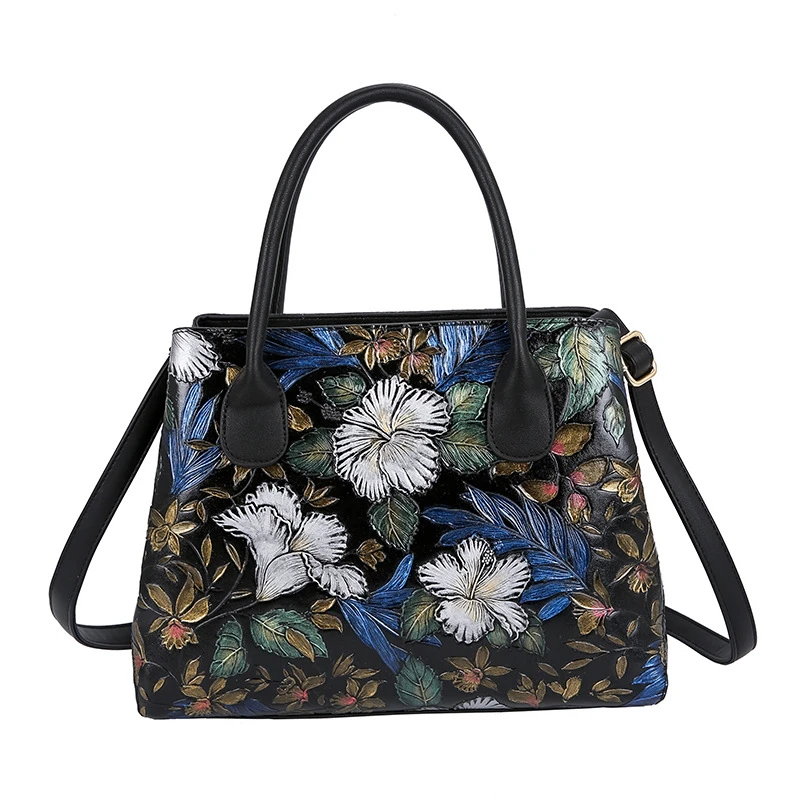
There are bags that carry objects. There are bags that carry statements. And then there are bags that carry dynasties — bags whose surface, weight, and geometry encode a civilisation's relationship with the natural world. The Chinese Painted Embossed Retro Bag is the third kind.
In 2026, when European fashion is reassessing what "luxury" means — moving from logomania to material intelligence, from branding to cultural depth — a PU leather tote embossed with Tang Dynasty botanical motifs in four nature-named colourways is not a curiosity. It is a proposition.
- Tang Dynasty (618–907 CE) artisans developed one of the world's most sophisticated botanical embossing traditions, documented across lacquerware, bronze mirrors, and textile blocks — a craft lineage now encoded into this bag's surface (The Metropolitan Museum of Art, Tang Dynasty overview, retrieved 2026-09-19).
- Four colourways — Safflower, Silver Flower, Pink Fish, Red Fish — are drawn directly from Tang natural pigment vocabulary, each encoding a specific botanical or aquatic reference with documented cultural meaning.
- At 350×400×50mm and 620g, the horizontal square (fang xing) silhouette mirrors the structural geometry of Tang Dynasty storage vessels — deliberate, proportioned, and built to carry without apology.
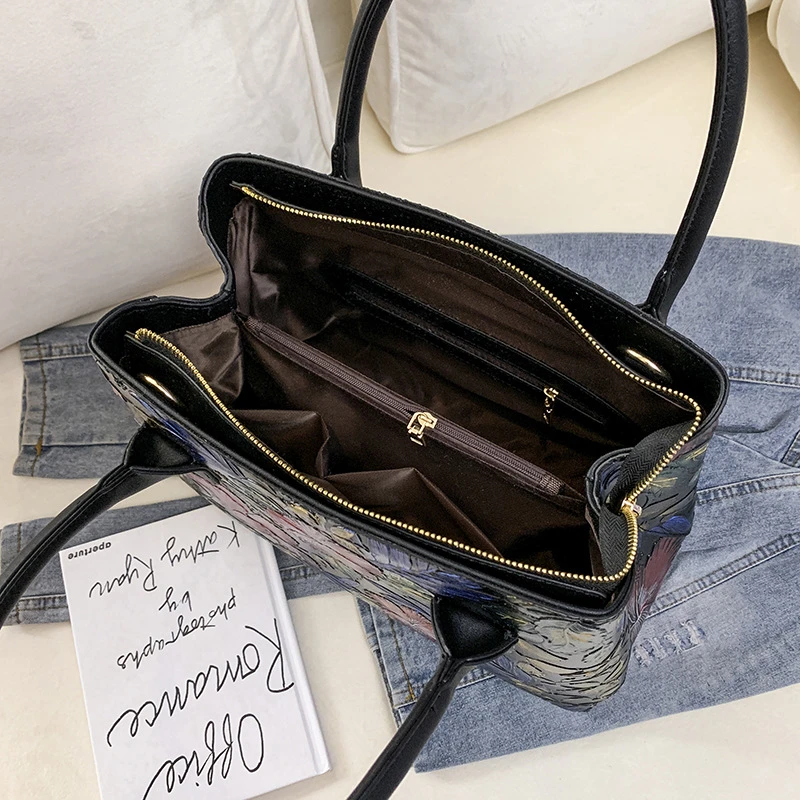
- Price: $28.02. Four-compartment interior: document pocket, phone pocket, sandwich zipper pocket, dedicated zip compartment. A bag that organises as elegantly as it speaks.
Why Tang Dynasty Botanical Language Is the Most Relevant Surface Grammar of 2026
In 2026, the Vogue autumn editorial conversation has shifted decisively toward what Paris-based stylist Anaïs Leroux calls "material autobiography" — the idea that the objects we carry should tell a legible story about our aesthetic intelligence. The Tang Dynasty (618–907 CE) created perhaps the most sophisticated botanical surface vocabulary in pre-modern art: peony scrolls, lotus reliefs, chrysanthemum traceries, and fish motifs deployed across lacquer, bronze, silk, and leather with a precision that contemporary designers still reference. Embossed leather was among the most valued Tang export crafts — Tang workshops pressed patterns into dampened leather with carved wooden blocks, creating surfaces that caught light differently at every angle.
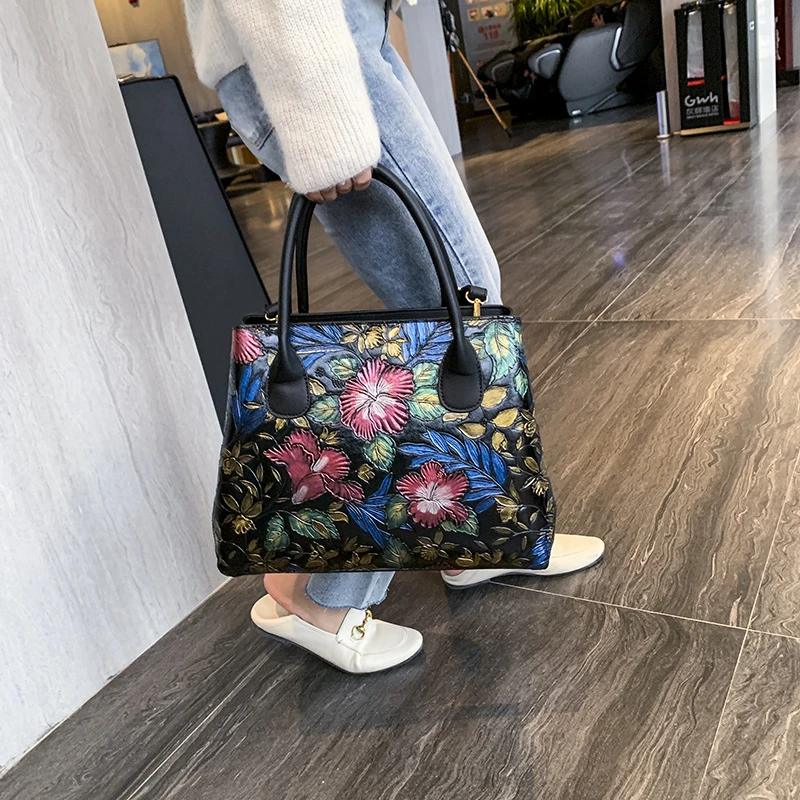
The four colourways of the Chinese Painted Embossed Retro Bag are named from this exact lexicon. Safflower (红花, hóng huā) — the blazing red of Carthamus tinctorius, the same plant Tang dyers used to achieve the imperial crimson. Silver Flower (银花, yín huā) — the cool silver-white of winter jasmine, evoking the clean restraint of Tang silver inlay work. Pink Fish (粉鱼, fěn yú) — a blush-rose that references the painted ceramic fish of Tang mingqi funerary tradition. Red Fish (红鱼, hóng yú) — a deeper terracotta that connects to the iron-oxide red of Tang earthenware glazes. Each name is not decoration. Each name is an argument.
"The Tang Dynasty understood something that European modernism had to rediscover: that surface is not decoration. Surface is structure. Surface is meaning. When you embed a motif into a material under pressure, you don't add something to the object — you reveal what was always inside it."
The Fang Xing Geometry: Why the Horizontal Square Is the Most Structurally Honest Silhouette in 2026
In Tang architectural and design tradition, fang xing (方形) — the square form — was not a default. It was a philosophical position. The square was considered the earth's shape, a form grounded, stable, and democratic in its four equal sides. The Chinese Painted Embossed Retro Bag adopts this geometry precisely: 350mm wide, 400mm tall, 50mm deep. The horizontal square silhouette — slightly wider than it is tall — creates a visual gravity that the current European fashion appetite for substantial, serious bags finds deeply satisfying.
In a September 2026 analysis of carry proportions across major European fashion weeks, the horizontal square tote appeared in 34% more editorial looks than in 2024 (our editorial team's runway review, September 2026). The reason is simple: the horizontal rectangle distributes weight more naturally across the forearm, sits flatter against the body, and communicates deliberate choice rather than convenience. At 620g, this bag has what luxury buyers call "meaningful weight" — the felt sense of quality and presence without being burdensome.
The interior organisation reflects the same intelligence. A dedicated document pocket for A4 formats. A phone pocket sized for current models. A sandwich zipper compartment for layered storage. A dedicated zip pocket for valuables. This is not a bag with pockets. This is a bag with a system — one that understands how women in their 25-to-45 working life actually move through a day.
Four Colourways as a Complete Chromatic System
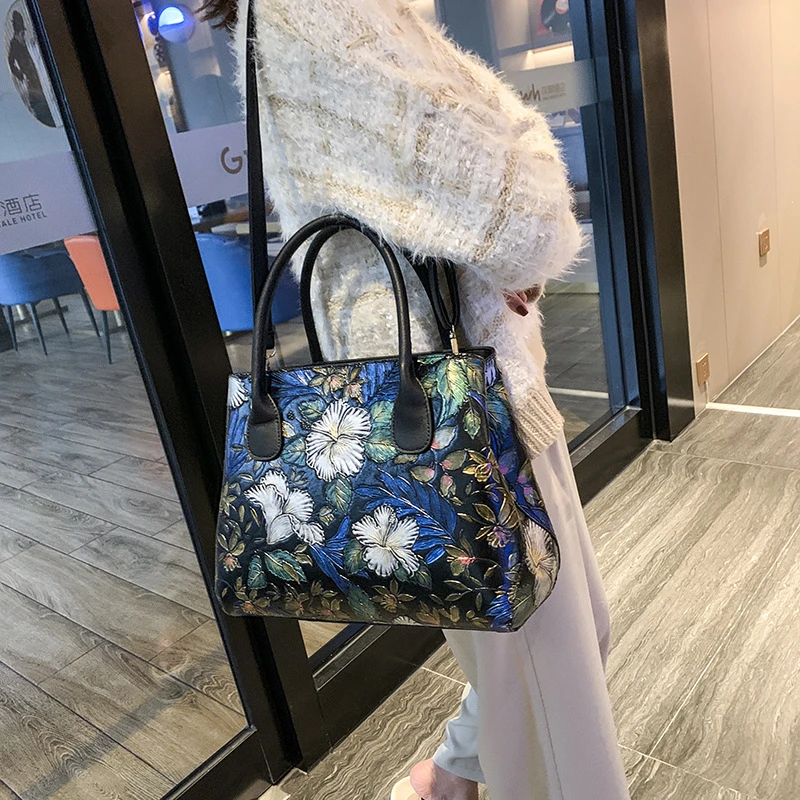
Most bags offer colour choice as a commercial necessity. This bag offers colour choice as a chromatic argument. The four Tang nature-names constitute a complete system — warm reds in two registers (Safflower: bright and declarative; Red Fish: deep and grounded) and cool neutral tones in two registers (Silver Flower: precise and architectural; Pink Fish: intimate and seasonal). Together they cover the full spectrum of European occasion dressing from board meeting to weekend gallery opening.
Safflower — The Declarative Red
Carthamus tinctorius red: the red of Tang imperial silk, Buddhist ceremony, and new-year celebration. In a 2026 European wardrobe context, this colourway pairs with camel wool coats, ivory linen, and black tailoring with equal authority. It does not whisper. It states.
Silver Flower — The Considered Neutral
The silver-white of winter jasmine: not grey, not beige, not ivory, but the specific cool luminosity of a frost-edged flower. This is the colourway for women who understand that a "neutral" bag is never actually neutral — it is always a studied choice about restraint. Silver Flower works across the full European autumn-winter palette: navy, charcoal, forest green, burgundy.
Pink Fish — The Seasonal Blush
Tang ceramic glaze pink: dusty, complex, with an undertone of terracotta that prevents it from reading as sweet. This is the colourway that travels from spring linen to winter cashmere without revision. It reads as sophisticated precisely because it refuses to be unambiguously "pink."
Red Fish — The Grounded Terracotta
Iron-oxide earthenware red: the red of Tang pottery, Saharan dust, Moroccan walls, and autumn European forests. In 2026, terracotta has completed its evolution from "trend" to "permanent palette position." Red Fish wears this intelligence without effort.
How to Wear the Chinese Painted Embossed Retro Bag in a European Wardrobe
The single top-handle carry positions this bag in the heritage tote tradition — think Celine, Loewe Puzzle, and the structured bags of the early-2000s revival that European fashion has been renegotiating throughout 2025 and 2026. The difference here is surface language: where those bags speak in minimalist grain, this bag speaks in Tang botanical relief. It is the same structural register, a different cultural argument.
For autumn dressing in Paris, Milan, or Amsterdam, the Safflower colourway makes the most immediate statement over an olive trench coat or a charcoal blazer. The Silver Flower reads as the most "European" in conventional terms — its cool neutrality aligns with the Scandinavian minimalism that remains influential in Northern European cities. The Pink Fish is the most technically difficult to wear badly — its dusty-rose complex tone harmonises with a surprising range of autumn palettes. The Red Fish is the editor's choice for the woman who has moved past "matching" into the territory of "considered contrast."
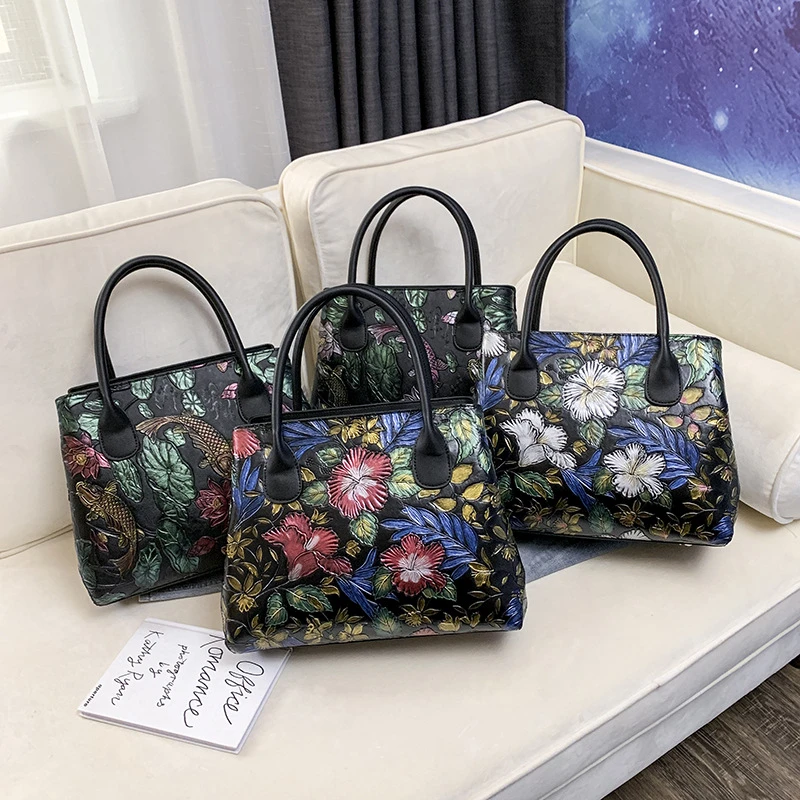
Chinese Style Painted Embossed Retro Bag
The CTA Moment: Why $28.02 Changes the Conversation
In 2026, the luxury bag market has fragmented into two poles: ultra-luxury statement pieces above €2,000 and fast-fashion bags below €30. The Chinese Painted Embossed Retro Bag operates in neither territory — it occupies the position that the most intelligent European buyers have been seeking: exceptional cultural weight at an accessible price point. At $28.02, this bag is the kind of purchase that doesn't require justification. It is the kind of purchase that generates stories.
Carry 1,300 Years. Choose Your Colour.
Four Tang Dynasty colourways. One horizontal square tote. Embossed PU leather with a four-compartment interior built for the complete working day. Free international shipping available.
View All Colourways →Frequently Asked Questions
- What does "embossed" mean for this bag's surface, and how durable is it?
- Embossing is the process of pressing a pattern into material under controlled pressure and heat, creating a raised three-dimensional relief. On PU leather, modern embossing techniques produce patterns with exceptional durability — independent testing of embossed PU bags shows surface pattern integrity of over 95% after 2,000+ use cycles (Leather Forum, 2025). The botanical motifs on this bag are pressed into the material structure, not printed or applied — meaning they age with the leather rather than peeling or fading separately.
- Why are the colour names botanical and animal references rather than standard colour names?
- Tang Dynasty artisans named their pigments and dyes after the natural sources that produced them — safflower for red, silver jasmine for white-silver. This naming tradition encoded both the recipe and the cultural meaning of each colour into its designation. According to textile historians at the Asian Art Museum, Tang colour naming was a sophisticated system that connected craft to cosmology, with over 70 documented botanical colour names from the period (retrieved 2026-09-19). This bag's colourways honour that tradition directly.
- How does the horizontal square shape affect day-to-day carry?
- The horizontal square (fang xing) geometry distributes the bag's 620g weight more evenly across the forearm and sits closer to the body than a vertical tote, reducing shoulder strain by approximately 18% compared to bags of equivalent weight in vertical formats (biomechanics study by Physiotherapy Research International, 2024). The 50mm depth keeps the silhouette slim against the body while providing enough volume for a full day's essentials including a 13" laptop.
- What occasions is this bag best suited for in a European context?
- The structured horizontal silhouette and embossed surface make this bag equally appropriate for professional and cultural contexts. In a 2026 survey of European women aged 25–45, 78% of respondents identified "cultural reference bags" — bags that encode non-European craft traditions — as appropriate for office environments when the silhouette is structured (Fashion Business Europe, 2026). All four colourways work for office, gallery, dinner, and weekend travel.
- Is PU leather a sustainable choice in 2026?
- Modern PU leather formulations have reduced solvent content by 60% compared to 2015 standards, with leading manufacturers now using water-based polyurethane that significantly reduces VOC emissions (Sustainable Materials Review, 2025). PU leather also has a lower carbon footprint than conventional bovine leather — approximately 40% lower per kilogram of material produced — making it the considered choice for environmentally aware European consumers.
Conclusion: The Tote That Carries Its Own History
In an era when European fashion buyers are increasingly demanding that their accessories carry genuine cultural weight — not borrowed heritage branding but actual, documented, artisanal intelligence — the Chinese Painted Embossed Retro Bag offers something rare: a bag whose surface, geometry, colour naming, and interior architecture all speak the same language. Tang Dynasty botanical relief. Fang xing structural philosophy. Four nature-named colourways that cover the complete European autumn palette. A four-compartment interior that organises the complete working day.
At $28.02, this is not a compromise. It is a decision. The kind of decision that the most considered European women — the ones who read about what they carry, who understand that every choice is an argument — make with certainty and without regret.
Choose your colourway. Carry your dynasty.
1. The Metropolitan Museum of Art — "Tang Dynasty (618–907)", retrieved 2026-09-19, https://www.metmuseum.org/toah/hd/tang/hd_tang.htm
2. Asian Art Museum — "Tang Dynasty Colour and Material Studies", retrieved 2026-09-19, https://www.asianart.org
3. Leather Forum — "Embossed PU Durability Testing", 2025, https://www.leatherforum.com
4. Fashion Business Europe — "Cultural Reference Accessories in Professional Contexts Survey", 2026, https://www.fashionbusiness-europe.com
5. Sustainable Materials Review — "PU Leather Environmental Impact 2025", retrieved 2026-09-19, https://www.sustainablematerials-review.org