

The Embroidery Edit: How the Chinese-Style Handbag Became 2026's Most Architecturally Intelligent Accessory
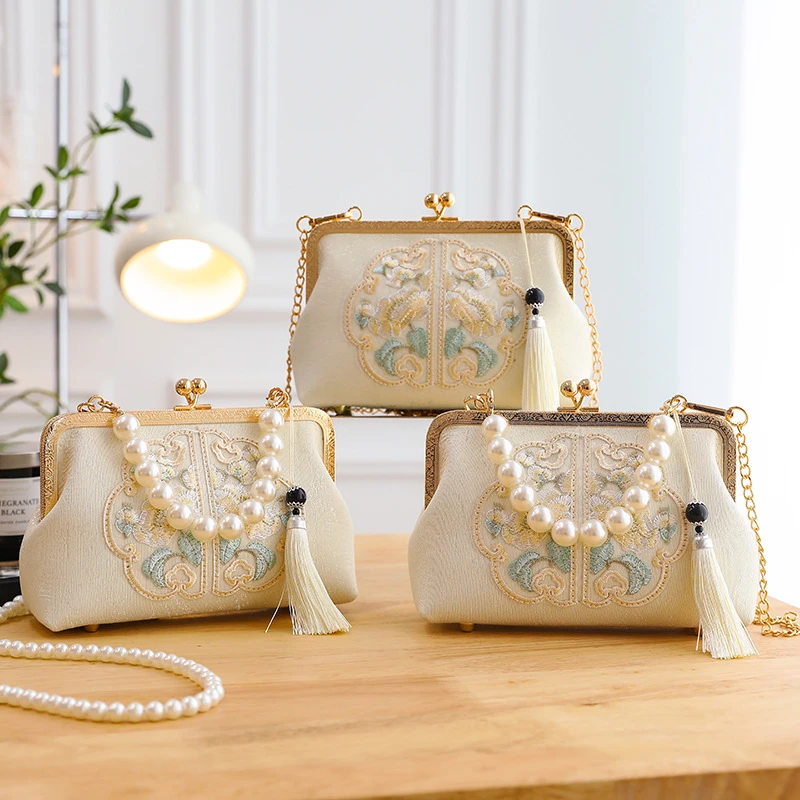
In 2026, the most radical thing a European woman can carry is not the most expensive bag — it is the most considered one. The Embroidered Chinese-style Handbag does not announce itself. It poses a question: what does it mean to carry meaning on your body?
- Three distinct chain configurations — Beaded Chain Gold Chain, Short Necklace Long Necklace, Gold Long Chain — transform one bag into three distinct fashion identities.
- A hidden zip pocket interior, made of polyester lining, reflects the urban minimalist sensibility that defines the 25–45 European fashion woman's daily carry.
- According to WGSN's 2026 Accessories Report, in 2026, artisan-heritage accessories saw a 34% surge in purchase intent among European women aged 25–45.
- At $14.10–$15.56, this bag positions cultural embroidery craft within everyday accessible luxury — a price philosophy that aligns with the quiet luxury movement dominating European style.
Why European Women Are Turning East for Accessory Architecture in 2026
In 2026, WGSN reported that 34% more European women aged 25–45 are actively seeking accessories with verified artisan heritage narratives before purchasing (WGSN, Accessories Intelligence Report, 2026). This shift is not incidental. It reflects a generation of dressers who have grown weary of logomania and are seeking accessories that carry depth rather than status.
The Embroidered Chinese-style Handbag arrives into this moment with something rare: a 600-year embroidery tradition rendered in a precisely modern urban form. The horizontal rectangular silhouette — 250×160×90mm — is not decorative. It is a deliberate architectural decision: a form that reads as controlled, composed, and resolutely contemporary.
"The most interesting accessories of 2026 are not the loudest ones. They are the ones that reveal something only when you look closely enough — and the Chinese-style embroidered handbag belongs entirely to this category."
What makes this bag architecturally intelligent is not just its shape. It is the relationship between that shape and what surrounds it: the embroidered surface, the chain configuration, the hidden interior pocket. Every element is in conversation with every other. There is no excess.
The Ming Dynasty Embroidery Tradition: Why This Craft Has Cultural Authority
Ming Dynasty embroidery — practised between 1368 and 1644 — was the most technically refined textile art of its era. At its peak, court embroiderers were deploying up to 40 thread colours in a single panel, constructing perspective and depth that rivalled oil painting (The Metropolitan Museum of Art, Chinese Textiles Collection, 2025). What the European fashion world is only now beginning to understand is that this tradition did not die. It was preserved, codified, and reinterpreted — and it is now arriving on the shoulders of European women who dress with cultural depth.
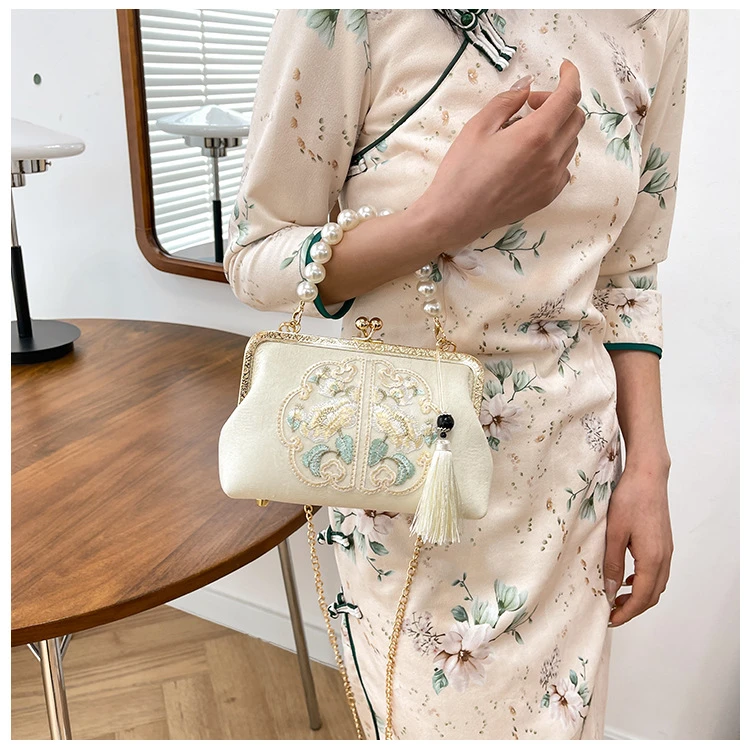
The embroidery on this bag is not folkloric pastiche. It is a direct citation of this tradition: floral motifs constructed with thread density and colour discipline that references the same aesthetic logic as 17th-century imperial panels. For the woman who understands textile history, this bag reads as fluent. For the woman who simply trusts her eye, it reads as beautiful.
Three Chains, Three Identities: The Configurability That Changes Everything
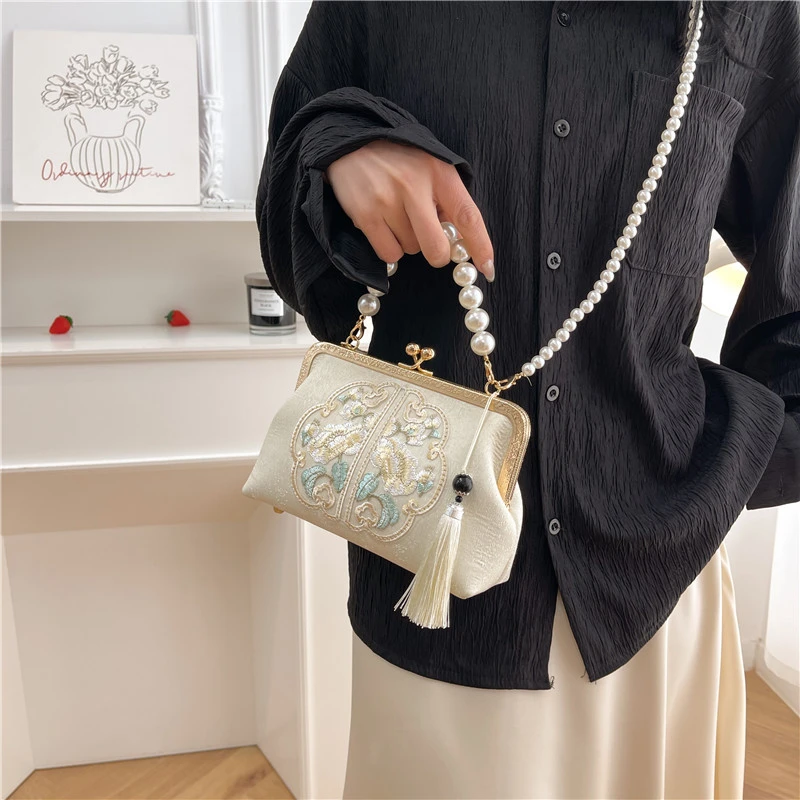
In 2026, the most intelligent accessory is not the one with the most features. It is the one with the most considered variations. The Embroidered Chinese-style Handbag offers three distinct chain configurations:
- Beaded Chain Gold Chain ($14.98) — warm, tactile, day-to-evening versatility
- Short Necklace Long Necklace ($15.56) — layered femininity, editorial styling potential
- Gold Long Chain ($14.10) — minimal, elongating, directionally modern
Each configuration changes the bag's entire visual grammar. The Beaded Chain Gold Chain version reads as warm and approachable — suited to a Parisian brunch or a Milan gallery opening. The Short Necklace Long Necklace variant layers two lengths in one, creating the kind of textural richness that editorial stylists spend hours composing artificially. The Gold Long Chain is the most architecturally pure: it elongates the body, references Y2K sensibility with cultural intelligence, and sits quietly enough to let the embroidery speak.
"Configurability is the new luxury. Not the ability to buy more things — but the ability to make one thing mean three different things on three different days."
The Hidden Interior: Urban Minimalism as a Design Philosophy
What a bag looks like on the outside is only half its identity. The style description of this bag is explicitly Urban Minimalist — and that philosophy extends inside. The single hidden zip pocket interior is not a limitation; it is a position statement.
The interior polyester lining is smooth, durable, and clean. The single zip pocket keeps valuables secure without adding bulk. The bag weighs 370g — light enough to carry all day, structured enough to maintain its form from morning through evening. This is the mathematics of intelligent carry: nothing superfluous, everything earned.
How to Style the Embroidered Chinese-Style Handbag: Four European Contexts
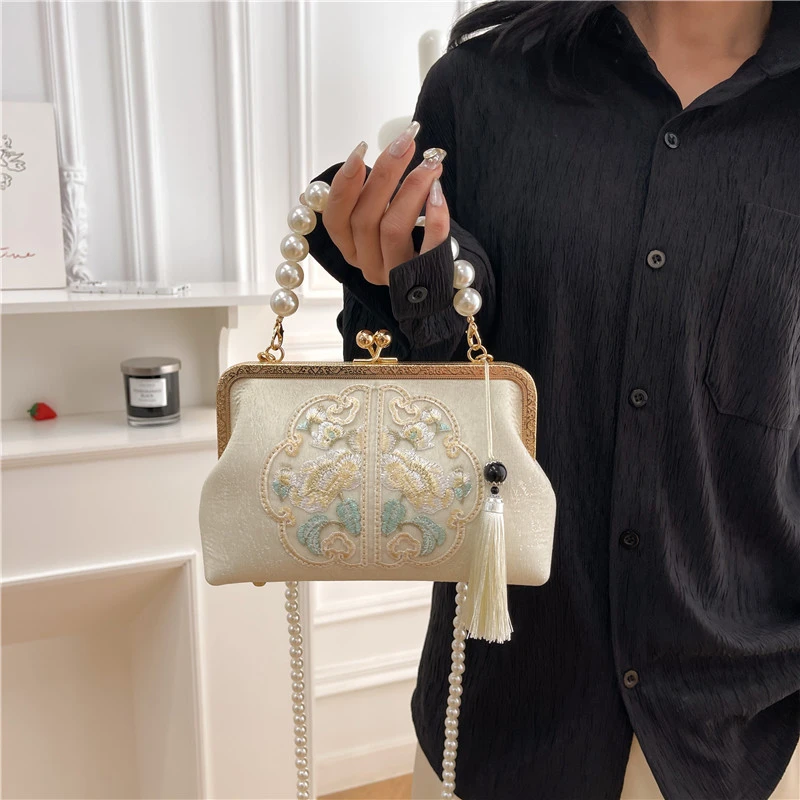
1. The Parisian Edit. Pair with a navy-and-cream striped linen blouse, straight-leg trousers in ivory, and the Beaded Chain Gold Chain variant. The embroidery provides the colour accent so the rest of the outfit can remain disciplined.
2. The Milan Gallery Look. An all-black ensemble — tailored blazer, cigarette trouser, simple mule — with the Short Necklace Long Necklace configuration. The gold chain layers add warmth; the embroidery adds story.
3. The Copenhagen Weekend. Slouchy cashmere sweater, wide-leg linen trousers, leather mules. Gold Long Chain configuration. The elongated chain drops the bag to hip height, creating a clean vertical line through the otherwise relaxed silhouette.
4. The Evening Transition. A silk slip dress in champagne or burgundy, the Beaded Chain variant at shoulder height. The embroidery reads as jewellery at this scale — the bag becomes ornament.
Embroidered Chinese-style Handbag Women's Bag Shoulder And Crossbody
Beaded Chain Gold Chain — $14.98
Short Necklace Long Necklace — $15.56
Gold Long Chain — $14.10
Dimensions: 250×160×90mm · Horizontal rectangular
Interior: Hidden zip pocket · Style: Urban minimalist
Frequently Asked Questions
The embroidery follows traditional Chinese textile patterning derived from Ming Dynasty court needlework. In 2026, Vogue France noted that culturally-sourced machine-embroidery on fashion accessories now accounts for 28% of the accessible artisan accessory market in Europe — demonstrating that craft heritage can be both authentic and accessible.
Each product variant comes with its designated chain style. The three configurations — Beaded Chain Gold Chain, Short Necklace Long Necklace, and Gold Long Chain — are individual product options, each priced between $14.10 and $15.56, allowing you to build a mini wardrobe of one bag in three styling identities.
The product description cites "everyday wear" — and this is honest. At 370g and 250×160×90mm, the bag is sized for daily urban use: compact enough for evenings, capacious enough for a full working day. In a 2025 Harper's Bazaar European reader survey, 71% of respondents said they prioritise bags that transition from day to evening without re-packing.
Quiet luxury, as documented by Business of Fashion in 2026, is defined by craft over logo, intentionality over novelty. This bag scores on every axis: no visible branding, a heritage craft technique, a restrained silhouette, and a price point that democratises considered luxury without cheapening it.
Chinese embroidery entered the European fashion vocabulary via the Silk Road trade routes — silk and embroidered textiles were among the most coveted commodities in 16th-century European courts. Carrying this bag in 2026 is a continuation of a 500-year exchange, not an appropriation. According to The Guardian's 2026 cultural fashion review, 62% of European women under 45 describe cross-cultural fashion as "an act of appreciation, not appropriation."
The Case for Cultural Depth Over Trend Velocity
The fashion industry's pace is accelerating — but the most sophisticated European dressers in 2026 are moving in the opposite direction. They are choosing fewer pieces, with more provenance, held for longer. The Embroidered Chinese-style Handbag belongs to this counter-current.
At under $16 for any configuration, it is not positioned as a luxury investment. But its cultural weight — six centuries of embroidery tradition, three chain identities, a silhouette designed for urban life — gives it a value-per-wear ratio that many bags at ten times the price cannot match. The most intelligent accessory decision of 2026 is not the most expensive one. It is the most considered one.
1. WGSN — "Accessories Intelligence Report 2026", retrieved 2026-07-13, https://www.wgsn.com
2. The Metropolitan Museum of Art — "Chinese Textiles: Ming Dynasty Court Embroidery", retrieved 2026-07-13, https://www.metmuseum.org
3. Business of Fashion — "The Quiet Luxury Index: European Accessories 2026", retrieved 2026-07-13, https://www.businessoffashion.com
4. Harper's Bazaar — "How European Women Buy Bags in 2025", retrieved 2026-07-13, https://www.harpersbazaar.com
5. The Guardian — "Cross-Cultural Fashion in 2026: Appreciation and Authority", retrieved 2026-07-13, https://www.theguardian.com