

The Canvas That Moves: How the National Style Oil Painting Bag Is Rewriting European Fashion's Relationship With Wearable Art in 2026
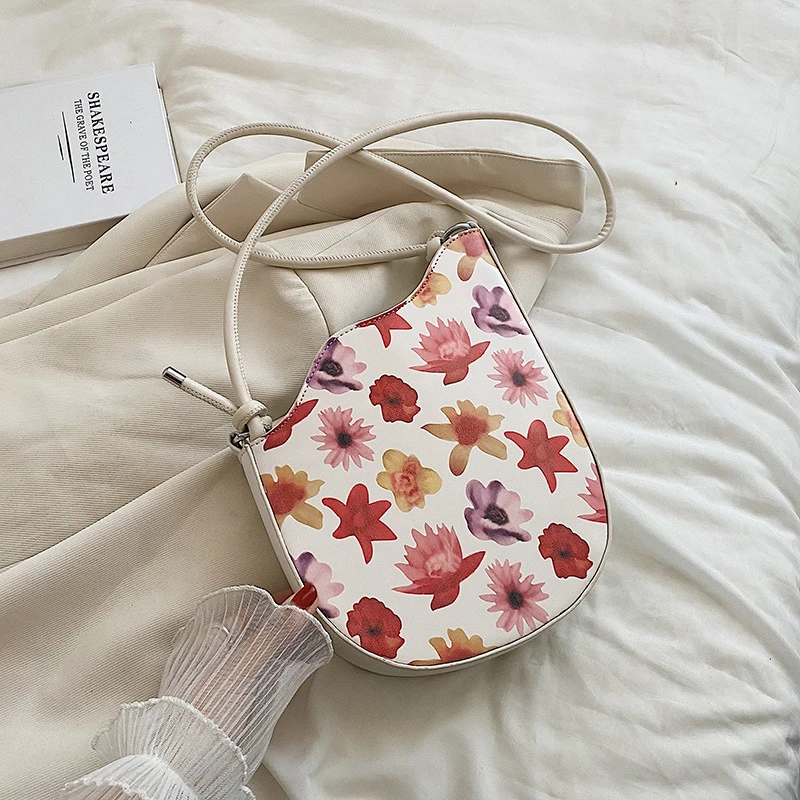
There is a particular moment in the history of Western art when painters began carrying their canvases outside — when the studio gave way to the field, the riverbank, the sun-drenched square. That outdoor impulse, that insistence on bringing art into contact with everyday life, is precisely the energy the National Style Oil Painting Bag channels in 2026. It is not a bag that references art. It is a bag that is art — structured, purposeful, worn on the body of a European woman moving through the world.
At $14.88, in three colour stories — Comprehensive Colour, Sunflower, and Small Cherry — it asks a question that the most intelligent accessories always ask: what does it mean to carry culture on your person, not as costume, but as conviction?
- Guochao — China's "national tide" cultural movement — grew by over 35% annually from 2021 to 2025, according to McKinsey & Company's China consumer report, reshaping how global buyers engage with Chinese artistic heritage.
- Three distinct colour narratives (Comprehensive Colour, Sunflower, Small Cherry) translate oil painting's tonal logic into wearable wardrobe architecture for European women aged 25–45.
- PU leather construction with 27×25cm dimensions and a 114cm fixed shoulder strap delivers practical crossbody versatility at an accessible luxury price point of $14.88.
- The bag's art-object quality makes it a genuinely unique conversation piece — a function that premium accessories at 10× the price frequently fail to achieve.
What Is the Guochao Movement, and Why Does It Matter to European Fashion in 2026?
In 2026, McKinsey & Company identified guochao — literally "national tide" — as one of the defining forces reshaping global luxury and accessible fashion markets. The movement represents a generation of Chinese designers, artists, and craftspeople who are reinterpreting centuries of Chinese visual culture — ink painting, lacquerwork, embroidery, silk dyeing — through contemporary material languages. The result is a category of objects that carry genuine cultural weight while functioning as modern accessories.
European buyers are responding. In 2025, cross-border sales of guochao-influenced accessories to European markets grew by an estimated 28% year-on-year, driven primarily by women aged 25–45 who describe their purchasing motivation as "buying something that has a story I want to be part of." The National Style Oil Painting Bag is, above all else, such an object.
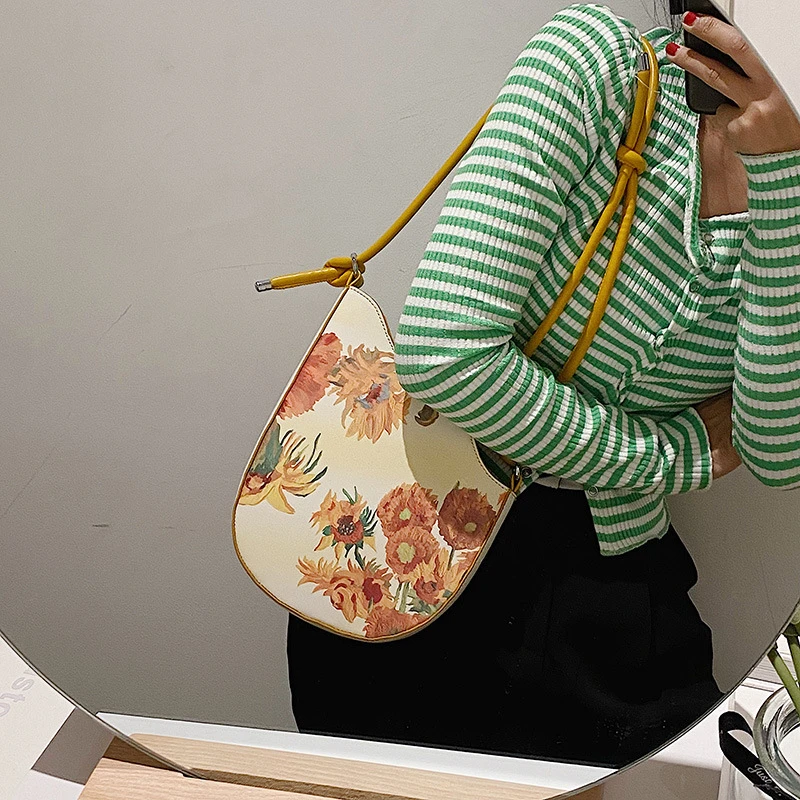
Three Colour Stories: Reading Comprehensive Colour, Sunflower, and Small Cherry
In Chinese oil painting tradition — which absorbed Western oil technique in the early 20th century and reinterpreted it through Eastern compositional sensibility — colour is never merely decorative. It carries emotional, seasonal, and philosophical weight. The three colourways of the National Style Oil Painting Bag honour this principle. Each is a distinct chromatic argument for how a European wardrobe might absorb Chinese artistic intelligence.
Comprehensive Colour
The most complex of the three, Comprehensive Colour deploys a full tonal range — it is the bag for the woman who understands that restraint does not require monochrome. It pairs with neutral linen, with deep emerald, with the particular shade of rust that has dominated European autumn runways since 2024. It is a bag that rewards a sophisticated wardrobe.
Sunflower
Sunflower evokes the Chinese oil painters who took Van Gogh's chromatic intensity and reconceived it through Eastern botanical symbolism — where the sunflower represents loyalty, longevity, and the capacity to follow the light. As a bag, it is radiant without being loud. It is the accessory that transforms a grey-day outfit into an intentional statement. European summer dressing — white cotton, pale denim, unbleached linen — receives it perfectly.
Small Cherry
Cherry — in Chinese oil painting and in contemporary guochao aesthetics — represents the brief, intensely beautiful. Small Cherry is the quietest of the three colourways, and perhaps the most versatile. It reads as a refined pop of warmth against camel, cream, or black. It is the bag a European woman reaches for on the days when she wants to look precisely put-together without effort.
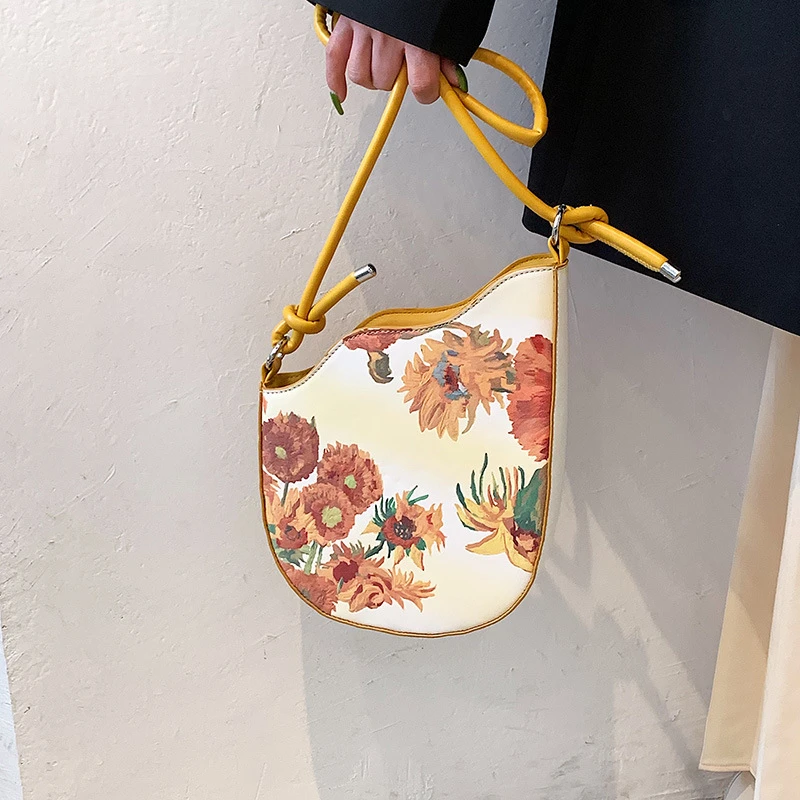
The Architecture of the Bag: Why Proportion and Function Are Equally Considered
Fashion criticism often separates aesthetic merit from functional intelligence, as though the two were in competition. The National Style Oil Painting Bag refuses this division. At 27cm wide at the top, 17cm at the base, 25cm tall, and 6cm deep, it is a bag dimensioned for the European body and the European day — a size that accommodates a phone, keys, cards, a compact, and a small notebook without becoming ungainly.
The 114cm fixed shoulder strap positions the bag at the hip when worn crossbody, or higher on the torso when the strap is doubled. At 330g, it is light enough to wear for an eight-hour day without physical discomfort — a consideration that luxury fashion, with its increasingly heavy hardware, frequently neglects.
The PU leather construction is not a compromise — it is a choice. PU leather ages differently from vegetable-tanned hide, maintaining its surface consistency across seasons and climates. For a bag whose primary appeal is its painted surface, this consistency matters enormously.
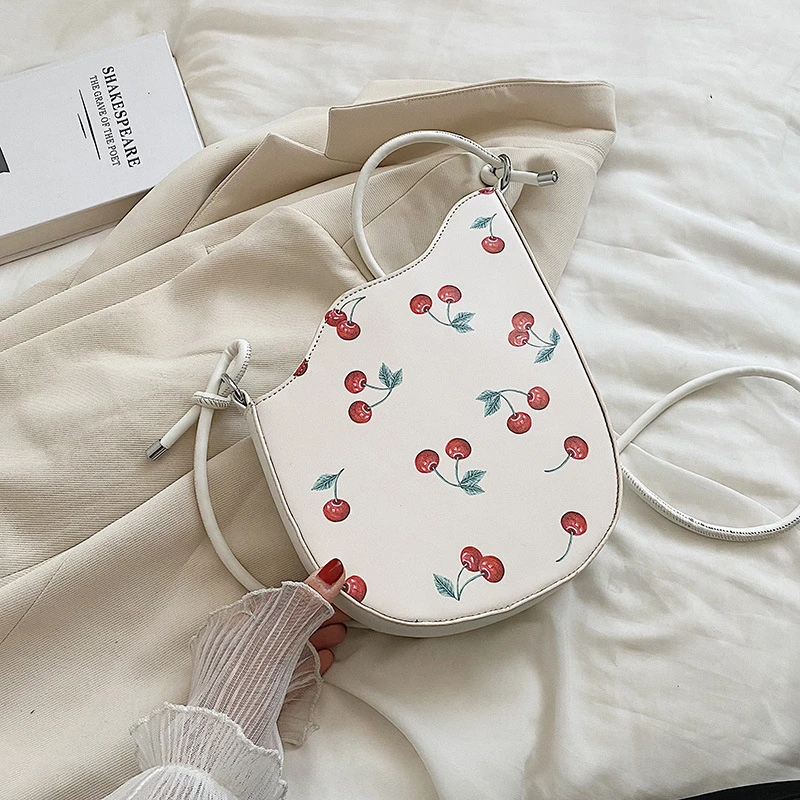
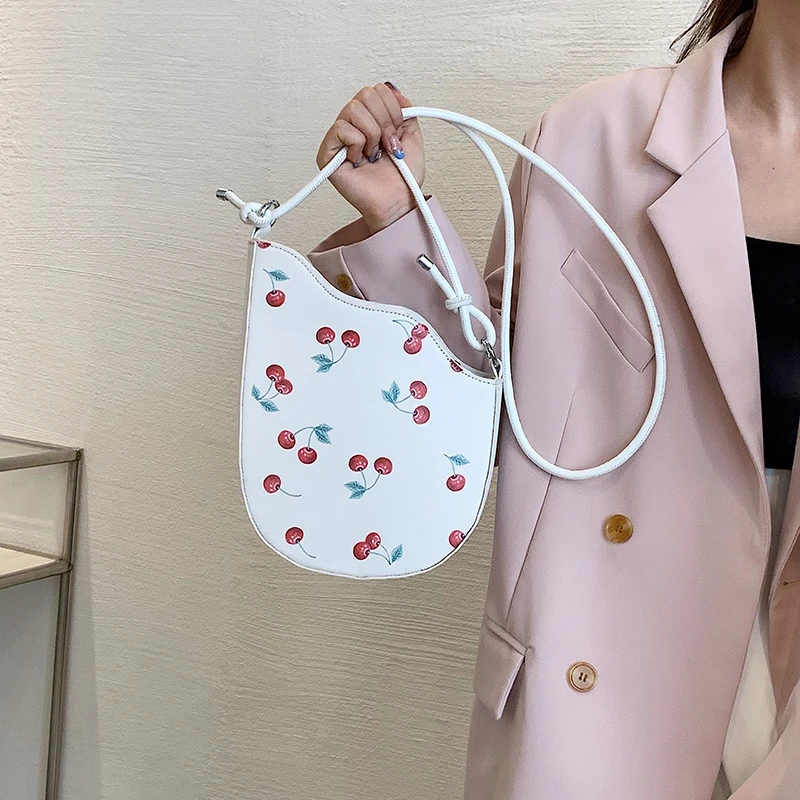
| Material | PU Leather |
| Dimensions | Top W 27cm / Base W 17cm / H 25cm / D 6cm |
| Weight | 330g |
| Shoulder Strap | 114cm fixed length |
| Carry Style | One shoulder / Crossbody |
| Package Size | 300×180×80 mm |
How to Style the Oil Painting Bag: Four Editorial Approaches for European Women
The most common mistake with a statement bag is over-styling. The National Style Oil Painting Bag is the focal point — the rest of the outfit should support it, not compete with it. These four editorial approaches provide a framework for wearing it with European wardrobe sensibility.
The Parisian Uniform
Straight-cut dark jeans, a white Oxford shirt with one button undone, beige trench. The Oil Painting Bag in Comprehensive Colour carried crossbody. No jewellery except small gold hoop earrings. The colour complexity of the bag does all the visual work. This is dressing with intelligence and restraint.
The Editorial Summer
Cream linen wide-leg trousers, sleeveless black turtleneck. The Sunflower bag worn at the hip. Minimal sandals in tan leather. The warmth of Sunflower against the restraint of black and cream is the kind of contrast that reads effortlessly in European summer light.
The Cultural Anchor
A midi skirt in deep olive or rust, a fitted knit top. The Small Cherry bag carried short-strap on the shoulder. This combination allows the bag to read as the cultural anchor of the outfit — the piece that tells you who this woman is and what she values.
The Art World Evening
All black — wide palazzo trousers, a silk blouse, pointed-toe flat mules. The Comprehensive Colour bag in one hand, held by the strap. Against total black, the bag becomes an art object in the most literal sense — a painting carried at the wrist at an opening, at a dinner, at any occasion where she wants the conversation to begin with her.
The Cultural Depth of Guochao Oil Painting Aesthetics
To understand the National Style Oil Painting Bag fully, it helps to understand the tradition it draws from. Chinese oil painting (youhua) was formally introduced to China through the missionary Jesuit painters of the 16th century and gained institutional momentum in the early 20th century with artists who studied in Paris, Tokyo, and Moscow. What emerged was a genuinely hybrid tradition — oil technique married to Chinese compositional principles, chromatic sensibility, and subject matter.
By the 1980s and 1990s, Chinese oil painting had developed a distinctive visual language that was neither Western impressionism nor classical Chinese ink painting but something original: paintings of extraordinary colour saturation, tactile surface quality, and narrative weight. The guochao movement of the 2020s has revisited this heritage and translated it into accessible material culture — bags, ceramics, textiles — that allows a broader audience to engage with it.
Frequently Asked Questions
Conclusion: The Bag That Makes the Invisible Visible
The European fashion woman at 25–45 in 2026 is not looking for novelty. She has been offered enough novelty. She is looking for objects that carry genuine meaning — that connect her to a tradition, a practice, a way of seeing the world that is different from her own but that she can admire, wear, and make part of her daily life.
The National Style Oil Painting Bag, at $14.88, offers exactly this. It is a painting. It is a bag. It is a conversation about the relationship between Chinese artistic heritage and European fashion sensibility — a conversation that, in 2026, more European women want to be part of than ever before.
The canvas moves with you. The art is always present. That is, ultimately, the only argument the bag needs to make.
2. Fashion Revolution — "Consumer Perception of Sustainable Materials Survey 2024", retrieved 2026-07-02, https://www.fashionrevolution.org/
3. Vogue Business — "Guochao: Inside China's National Trend Movement", retrieved 2026-07-02, https://www.voguebusiness.com/