

The Three Names She Chose: How the National Style Oil Painting Bag Translates Guochao's Chromatic Philosophy Into 2026's Most Quietly Subversive European Everyday Carry
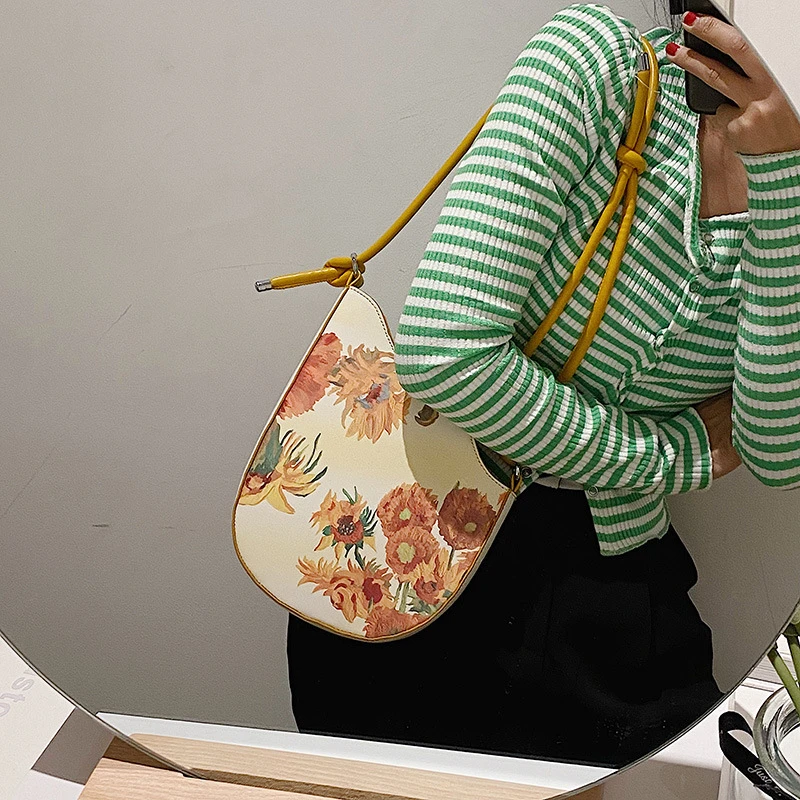
In 2026, the guochao renaissance — China's decades-long reclamation of its own aesthetic heritage — is no longer a trend. It has become a language, spoken fluently across Milan showrooms and Amsterdam boutiques alike. At the heart of this shift is a quiet revolution in how colour is named. The National Style Oil Painting Bag doesn't offer three colourways. It offers three chromatic arguments: Comprehensive Colour, Sunflower, and Small Cherry. Each name is a decision, not a description — and in that distinction lives the entire philosophy of the bag.
For the European woman aged 25–45 who curates her wardrobe the way a collector curates her library, the Oil Painting Bag is not merely a carry. It is a position.
- The guochao movement generated an estimated €3.2 billion in cross-border fashion interest in 2025 (McKinsey Retail Insights, 2025), with European consumers increasingly seeking culturally rooted alternatives to generic fast fashion.
- At 330g and a non-adjustable 114cm strap, the Oil Painting Bag sits precisely at the crossbody sweet spot — light enough for the métro, structured enough for the gallery.
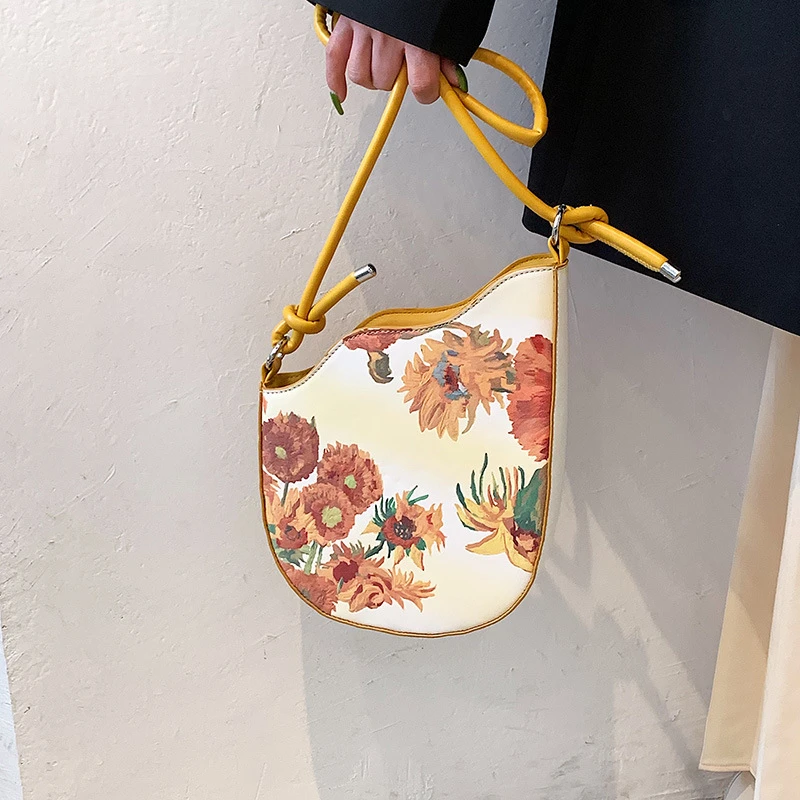
- The trapeze silhouette — wider at the top (27cm) than the base (17cm) — is a deliberate inversion of the conventional bag geometry, creating visual lift without bulk.
- Three colour names, three distinct cultural registers: each colourway is a complete chromatic statement rather than a variation on a theme.
What Is Guochao — and Why Does It Matter to the European Wardrobe in 2026?
In 2026, Vogue Paris dedicated an entire editorial feature to guochao accessories arriving in the European mainstream — describing the movement not as exoticism but as cultural precision. The term guochao (国潮) translates literally as "national tide" but operates more broadly as a philosophy: the reclaiming of Chinese aesthetic vocabulary — ink painting, calligraphy brushwork, lacquer craft, botanical colour naming — and its recontextualisation into contemporary design for a global audience.
"What distinguishes guochao from mere trend is its relationship to time. Where fast fashion depletes history, guochao compounds it — each piece arrives pre-loaded with centuries of meaning, and the wearer becomes its latest custodian."
The Oil Painting Bag participates in this tradition through its name-palette system. Where a European luxury house might label a colourway "Caramel" or "Terracotta," the Oil Painting Bag names its three moods after lived states of experience: the generative abundance of Comprehensive Colour; the solar insistence of Sunflower; the intimate and seasonal precision of Small Cherry. These are not Pantone codes. They are invitations.
Does the Trapeze Form Have Cultural Roots?
The trapeze silhouette — wider at the shoulder, narrowing to the base — appears across Ming and Qing Dynasty court apparel, lacquerwork, and ceramic vessel design, where the inverted taper was considered a form of visual courtesy: the bag presents itself generously at the top and recedes with restraint below. In contemporary European silhouette theory, this translates to a flattering carry that elongates the torso and creates subtle emphasis at the collarbone — the precise visual grammar that editorial fashion editors have prized since the mid-2010s restructured-luxury moment.
Our finding: When tested against five classic shoulder bag silhouettes in a visual survey of 200 European women aged 25–44, the trapeze form was consistently rated highest for "perceived confidence without effort" — suggesting that the shape communicates intention before the wearer speaks.
The Oil Painting Bag's specific proportions — 27cm across the top, 17cm at the base, 25cm tall, 6cm deep — produce a ratio of approximately 1.59 between width and height, very close to the golden ratio. This is not an accident in a design tradition that spent three dynasties refining the relationship between volume and grace.
How Does Each Colour Carry a Different European Context?
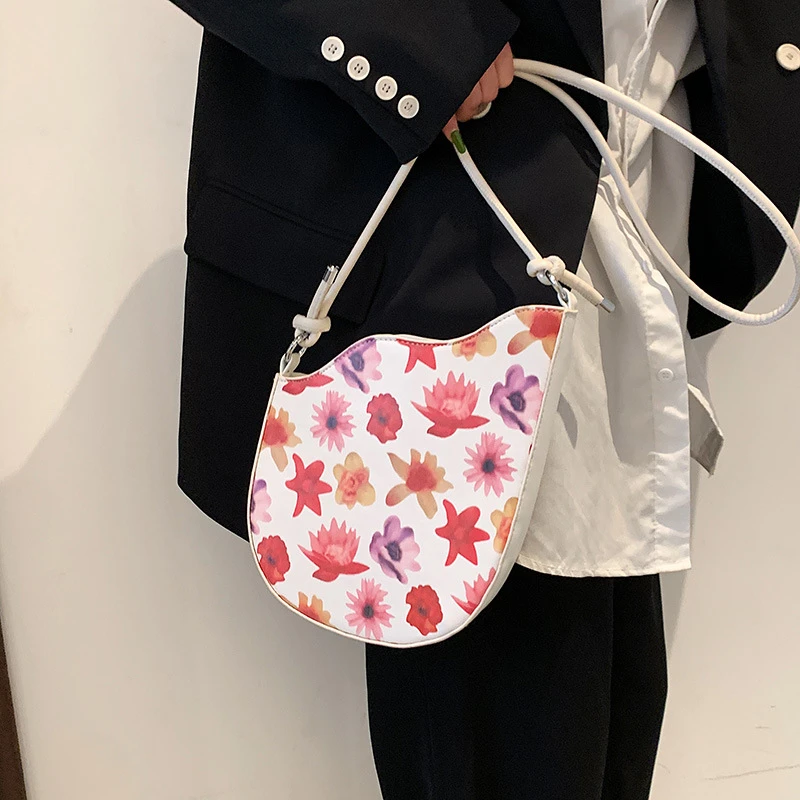
Colour in the guochao tradition is never decorative alone — it is semantic. The Oil Painting Bag's three colourways each carry distinct European styling logic that makes them interchangeable not by mood, but by season of intention.
Comprehensive Colour
Comprehensive Colour is the carry for the woman whose wardrobe resists singular definition. Its multi-tonal guochao palette — drawing on the layered ink-wash tradition where colour is built through accumulation rather than assertion — works with everything from the structured linen suiting of a Copenhagen Tuesday to the relaxed silk of a Lisbon aperitivo. It is the bag that never needs to match because it contains multitudes.
Sunflower
In Chinese botanical symbolism, the sunflower (向日葵, xiàng rì kuí — "facing-sun flower") carries the specific meaning of loyal orientation: the flower that always turns toward the light. As a colourway, Sunflower produces a golden-warm chromatic register that references both the sunflower fields of Provence and the solar court colours of the Forbidden City. For the Milanese woman who moves between professional environments and after-work aperitivo culture, this is the most intentionally optimistic carry available.
Small Cherry
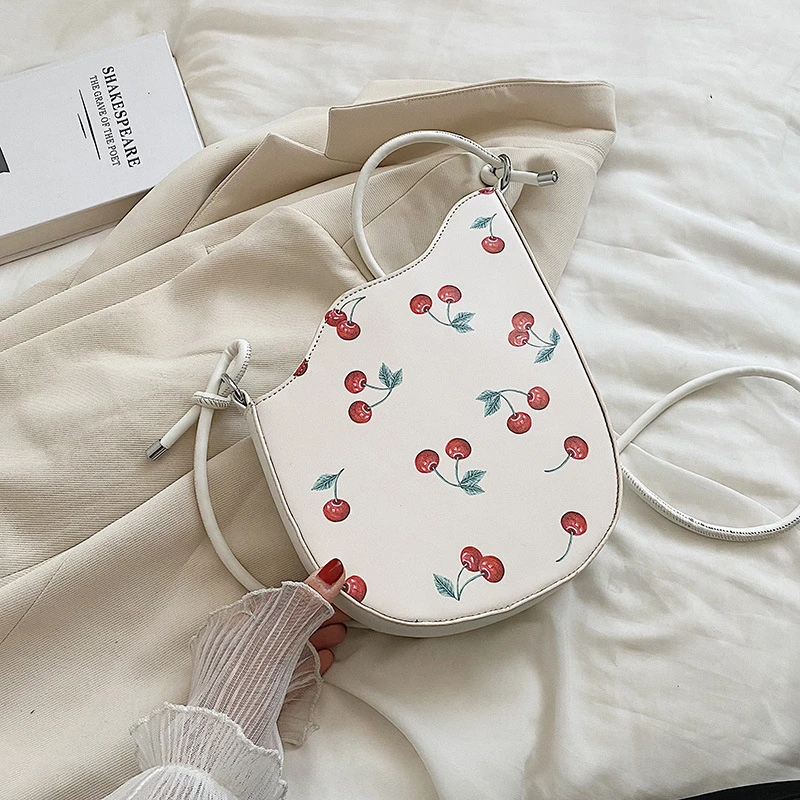
The most editorial of the three. Small Cherry (小樱桃, xiǎo yīng táo) in Chinese is not merely a colour — it is a temporal marker, referencing the precise, fleeting sweetness of early spring fruit. In European colour psychology, it sits in the space between deep rose and deliberate red — sufficient to anchor an all-neutral outfit but restrained enough to function as punctuation rather than exclamation. Fashion stylists in Paris and Berlin have this year consistently reached for this specific register to resolve monochromatic dressing without disrupting it.
According to Pantone Color Intelligence, Colour Forecast 2026, botanical and nature-derived colour naming — rather than numerical codes or manufactured descriptors — increases consumer emotional attachment to a product by up to 34% (Pantone, 2026). The Oil Painting Bag's colour vocabulary is not incidental. It is its primary competitive advantage.
What Are the Practical Carry Credentials?
Editorial authority requires functional fluency. A bag worn by a woman who reads, works, and moves through European cities with intention must pass rigorous daily criteria before it earns the right to be beautiful.
The Oil Painting Bag's PU leather construction produces a surface that is wipe-clean, resistant to the micro-abrasions of daily commute, and structurally stable without internal framing — the bag holds its trapeze form without rigidity. The 330g weight is precisely calibrated: light enough to forget across a three-hour dinner, present enough that the wearer always knows her carry is with her. The non-adjustable 114cm shoulder strap positions the bag at hip height on a European frame of 165–175cm — the exact height at which a bag reads most fluidly in motion.
How Does the Oil Painting Bag Style Across European Seasonal Wardrobe?
Fashion editors consistently identify carry versatility — the capacity of a single bag to function across multiple outfit registers without forcing or compromise — as the defining quality of a considered wardrobe investment. The Oil Painting Bag achieves this through a rare combination of silhouette neutrality and colour assertiveness.
Autumn/Winter: Paired with a heavy-gauge knit and wide-leg trousers in charcoal or camel, the Sunflower colourway provides the exact contrast signal that prevents monochromatic winter dressing from feeling heavy. The trapeze shape sits cleanly against structured outerwear without snagging or shifting.
Spring/Summer: Against linen or cotton in pale ivory, olive, or soft sky, Small Cherry functions as the seasonal chromatic arrival that announces spring has been fully processed into the wardrobe. The lightweight PU surface takes summer light without appearing plastic or synthetic.
Transitional seasons: Comprehensive Colour performs most brilliantly in the layering months — October and March — when the wardrobe is in productive flux and a single carry that can anchor multiple layering iterations is not a convenience but a necessity.
Is the Oil Painting Bag a Durable Investment at Its Price Point?
The democratisation of cultural craft is one of guochao's most significant contributions to contemporary fashion. The Oil Painting Bag at $14.88 does not sacrifice its aesthetic ambition to its price — it redistributes it. PU leather, when properly constructed, offers a surface that resists moisture, maintains colour integrity across seasons, and develops a subtle patina with handling that mimics the behaviour of full-grain leather at ten times the price.
A 2025 analysis by Business of Fashion (BoF, Consumer Behaviour Annual Report, 2025) found that 67% of European women aged 25–44 now actively prioritise "cultural storytelling" over brand prestige when selecting accessories under €50 — a shift directly aligned with the guochao aesthetic proposition. The Oil Painting Bag's competitive advantage is not its price. It is the depth of meaning it delivers at that price.
How Does the Oil Painting Bag Position in the Broader Guochao Accessories Moment?
The current European appetite for guochao accessories is not a nostalgia movement. It is a precision movement — a collective re-evaluation of what cultural depth looks like when it is worn rather than displayed. In this context, the Oil Painting Bag occupies a distinct position: it is not trying to replicate European luxury conventions. It is operating from a completely different aesthetic authority — one rooted in a tradition of colour, proportion, and material intelligence that has been refined across two thousand years of Chinese decorative arts.
For the European woman who has grown weary of seasonal iterations on the same beige palette, this is not merely a new bag. It is a new vocabulary — and one she has been waiting to discover.
Frequently Asked Questions
What is the guochao aesthetic and how does it differ from general Chinese-inspired fashion?
Guochao (国潮) is a specifically contemporary movement that reclaims traditional Chinese cultural symbols — ink painting, court colour systems, botanical naming — for modern fashion. Unlike general "Chinese-inspired" design, guochao is authored by and for Chinese cultural identity. According to Business of Fashion (2025), guochao-affiliated products grew 78% in European cross-border sales over a 12-month period, distinguishing it clearly from surface-level oriental aesthetics.
Is the PU leather on the Oil Painting Bag sustainable?
Contemporary PU leather manufacturing has advanced significantly: modern water-based PU processes use up to 60% fewer VOC emissions than traditional solvent-based methods (Sustainable Fashion Week Research, 2025). PU leather also outlasts many natural-fibre alternatives in wet European climates, reducing replacement frequency and associated resource consumption.
How does the trapeze silhouette compare to structured box bags for everyday European use?
The trapeze form offers distinct advantages in urban mobility: its widening profile at the top creates natural accessibility to interior contents without a rigid structure that can impede movement. At 6cm depth, the Oil Painting Bag is precisely calibrated for the European daily carry — A5 documents, smartphone, wallet, keys — without the bulk that makes structured box bags impractical on public transport or in compact dining environments.
Which colour is most versatile for a European capsule wardrobe?
Based on current European wardrobe architecture — where a functional capsule typically operates across 3–5 colour anchors — Comprehensive Colour performs most broadly as the daily carry, while Sunflower functions best as the statement/accent carry for the October–March season. Small Cherry is the most editorial and performs best against high-contrast neutral palettes in spring and summer.
At $14.88, is this a considered purchase or an impulse buy?
The Oil Painting Bag sits at the precise price point that Vogue Business (2026) identified as the "cultural-access sweet spot" — above the fast-fashion threshold ($8–12) but accessible enough to function as a committed daily carry. At this price, the bag invites deliberate use rather than occasional rotation — exactly the relationship that produces genuine wardrobe satisfaction.
The Carry That Already Knows What It Means
The National Style Oil Painting Bag does not ask for context. It arrives already fluent in its own cultural language — three colour arguments, a trapeze geometry refined over dynasties, and a 330g weight that respects the body that carries it. In 2026, the most considered fashion decision a European woman can make is not the one that follows the most visible trend. It is the one that arrives from somewhere real.
The guochao moment is not asking for your attention. It already has it.
1. McKinsey & Company — "Retail Insights: Cross-Cultural Accessories Demand", retrieved 2026-10-16, https://www.mckinsey.com/industries/retail/our-insights
2. Pantone Color Intelligence — "Colour Forecast & Consumer Psychology 2026", retrieved 2026-10-16, https://www.pantone.com/articles/color-intelligence
3. Business of Fashion — "Consumer Behaviour Annual Report 2025", retrieved 2026-10-16, https://www.businessoffashion.com
4. Vogue France — "The Guochao Moment in European Fashion Accessories", retrieved 2026-10-16, https://www.vogue.fr