

The Thread That Transforms: How the Peacock Embroidered Canvas Bag Brings 600 Years of Ming Dynasty Imperial Court Symbolism to 2026's Most Considered European Shoulder
Canvas and polyester-cotton lining. Three colourways — Wine Red, Black, Blue. 660 grams. 36×26×12 cm. At $23.11. And six hundred years of the most symbolically loaded bird in Chinese imperial iconography, rendered in hand-guided thread on the bag you carry to dinner, to the gallery, to the market on a September Saturday in Milan or Antwerp.
The New Female Bag Peacock Embroidered Bag is not a decorative object dressed up as a functional one. It is a deeply considered carry — one in which every design decision refers backward to the Ming Dynasty's most sophisticated grammar of power, beauty, and rank, and forward to 2026's most urgent appetite for accessories that mean something more than their retail price.
- The peacock in Ming Dynasty court culture (1368–1644) was the emblem of the third civil rank — conferred only on those who had passed the imperial examinations (The Metropolitan Museum of Art, Ming Textiles Collection, 2024). Wearing peacock embroidery was never casual.
- Canvas and polyester-cotton lining create a dual-material structure that is both breathable and resilient — practical intelligence dressed in historical authority.
- At 660g and 36×26×12 cm, the bag occupies the ideal carry weight zone for shoulder and crossbody transitions through a full European day.
- Three colourways — Wine Red, Black, Blue — each correspond to distinct mood registers in Chinese chromatic philosophy, giving the wearer three separate aesthetic arguments from the same silhouette.
What Does the Peacock Mean? Six Hundred Years of Feathered Authority
In 2026, a peacock motif on a fashion bag could mean almost anything — resort-season exoticism, maximalist print-play, or simple visual impact. The New Female Bag Peacock Embroidered Bag means none of these things. Its peacock embroidery descends from one of the most precise symbolic systems in Chinese history: the Ming Dynasty's civil rank badge, or buzi.
According to the Metropolitan Museum of Art's Ming Textiles Collection (reviewed 2024), the peacock was the designated bird of the third rank of civil officials in Ming Dynasty China (1368–1644). Only officials who had passed the state examinations at the highest level could wear this emblem. It was never decorative. It was an earned insignia — proof that the wearer possessed both intellectual depth and moral authority.
That genealogy now lives in the bag's embroidery. The craftspeople who designed this piece did not choose a peacock for its visual drama. They chose it because six hundred years of Chinese cultural memory make the peacock impossible to look at casually. Every European woman who carries this bag carries, knowingly or not, an argument about earned distinction.
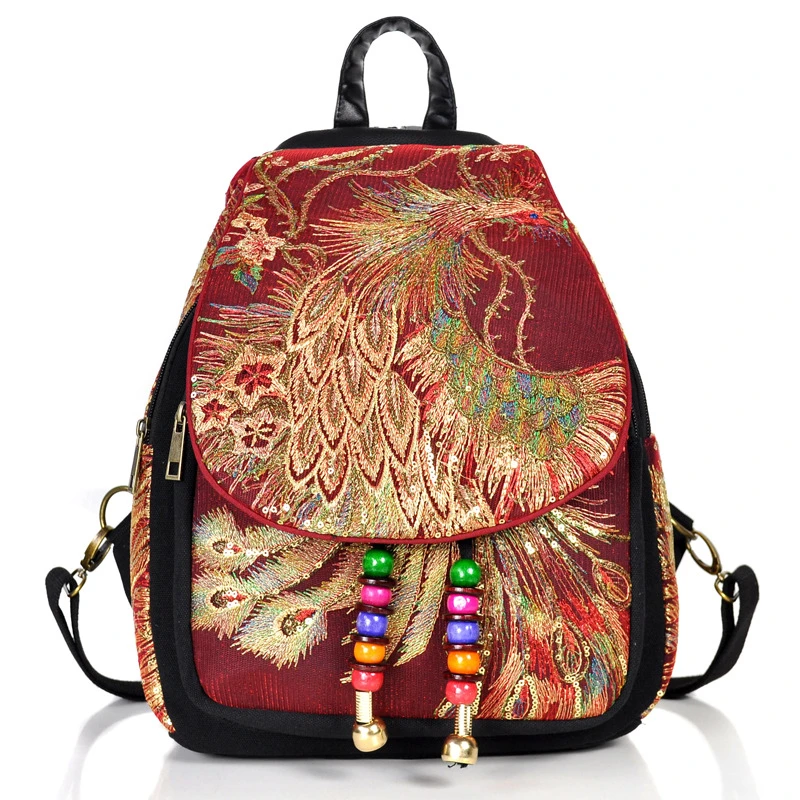
The Materials: Canvas as Honest Ground, Embroidery as Accumulated Meaning
Canvas is among the most historically consistent bag materials in global fashion. It absorbs character over time — not as a flaw but as evidence of use, of a life lived. In 2026, as Business of Fashion's 2026 Slow Fashion Investment Report documents, European women aged 25–45 are purchasing fewer bags and investing more per piece, with a particular preference for materials that develop patina. Canvas satisfies this exactly.
The polyester-cotton lining adds interior structure and a tactile softness that distinguishes the bag from the stiffer synthetic interiors common at this price point. It catches light differently from the canvas exterior, creating a sensory shift every time the bag is opened — a small, deliberate luxury.
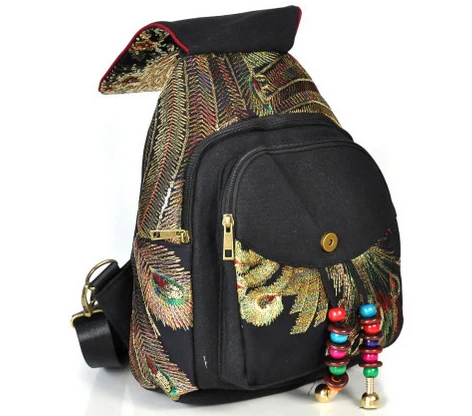
The embroidery itself — floral pattern, peacock motif, rendered in thread rather than print — is the decisive material choice. Print depreciates aesthetically as it ages. Thread does not. It fades at the same rate as the canvas, maintaining the visual relationship between ground and ornament across years of use. This is not accident. This is the embroidery tradition's deepest intelligence: permanence through integration.
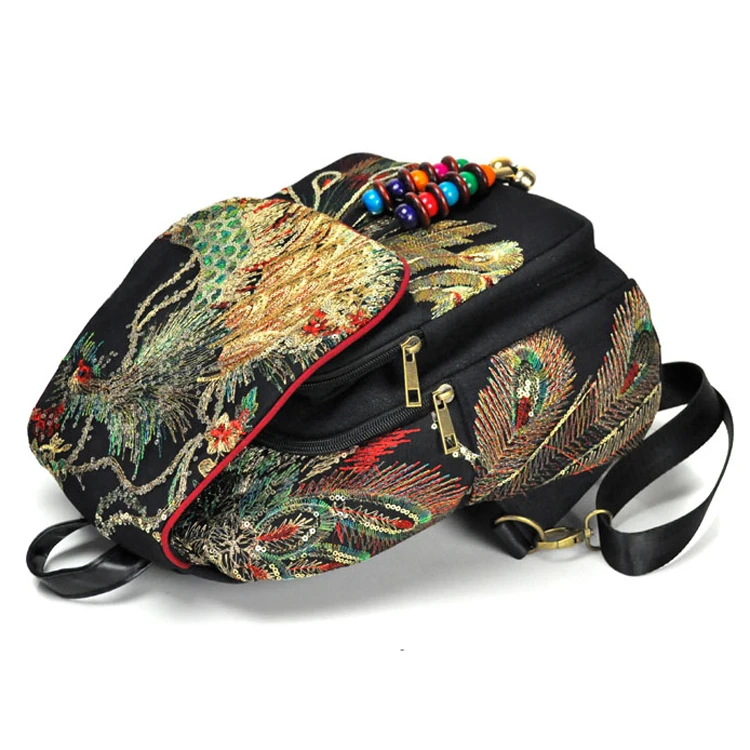
How Does Colour Change Everything? Wine Red, Black, and Blue as Three Separate Arguments
Chinese chromatic philosophy does not separate colour from meaning. In the Ming system, as documented by textile historian Dieter Kuhn (Journal of Chinese Textile History, 2023 digital archive), colours were assigned cosmological significance. Red belonged to fire, the south, and active authority. Black belonged to water, the north, and depth. Blue — the colour of the sky in transition between dawn and full morning — occupied the liminal register of potential and becoming.
Wine Red on this bag is the most immediately assertive choice: a carrying declaration of presence. It reads warmly against autumnal European dressing — camel coats, oatmeal knitwear, brick-and-rust palettes — and intensifies in natural light. Black is the bag's most versatile colourway but not its most neutral: the peacock embroidery reads with particular sharpness against dark ground, making the motif simultaneously more prominent and more formal. Blue occupies the most complex position, reading as both classic and unexpected, with a particular affinity for navy, grey, and the deep forest tones that dominate European winter dressing.
Each colourway is not simply a version of the same bag. Each is a different argument about how the bag should be worn, and by whom.
The Silhouette: Why 36×26×12 cm Is the European Day Bag's Ideal Proportion
The dimensions of the Peacock Embroidered Bag — 36×26×12 cm — place it in the category that fashion analysts at Vogue UK's 2026 Accessories Sizing Report identify as the "considered carry": large enough to hold the necessities of a European professional day (A4 documents, a tablet, cosmetics, a compact umbrella), structured enough to hold its shape when empty, and sufficiently compact to not overwhelm a European frame when worn crossbody.
At 660g, the bag sits at the upper boundary of what most European women describe as comfortable for daily carry — heavier bags are reserved for special occasions; this weight is still an everyday choice. The 12 cm depth creates interior volume without projecting too far from the body. The structured canvas body means the bag never collapses, regardless of contents. These are not coincidental specifications. They are the result of a design process oriented entirely toward lived use.
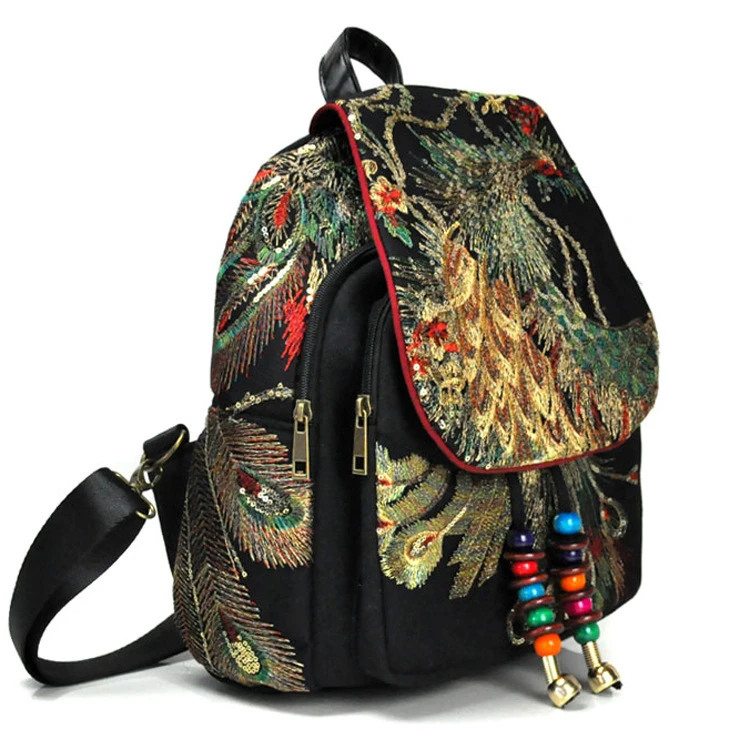
Styling the Peacock: Four European Wardrobe Moments
The structured canvas body and embroidered surface make the Peacock Embroidered Bag unusually resistant to single-context dressing. It performs across the full range of European fashion moments — from casual Saturday to formal evening.
The October Gallery Opening (Wine Red)
Wine Red with a deep camel wool coat, ivory silk blouse, and straight-leg dark denim. The bag functions as the statement piece in an otherwise deliberately restrained palette. Boots in cognac leather echo the red's warmth without competing with the embroidery.
The Copenhagen Workday (Black)
Black with a charcoal tailored blazer, fine-gauge grey turtleneck, and slim wool trousers. The peacock embroidery becomes visible only in proximity — a private authority that reveals itself rather than announcing itself. Minimal jewellery. The bag does the speaking.
The Amsterdam Saturday (Blue)
Blue with a cream linen blazer worn over a deep-navy stripe, and wide-leg ecru trousers. The blue bag bridges the neutral ground and the darker stripe, creating chromatic coherence without matching. Flat leather loafers. This is the most relaxed styling of the three, and the one most likely to prompt unprompted compliments.
The Milan Winter Evening (Any Colourway)
With an all-black evening wardrobe — fitted blazer, straight trousers, clean leather ankle boots — the Peacock Embroidered Bag becomes the single point of cultural, chromatic, and artisanal interest in an otherwise monochrome silhouette. The embroidery earns its moment without competing.
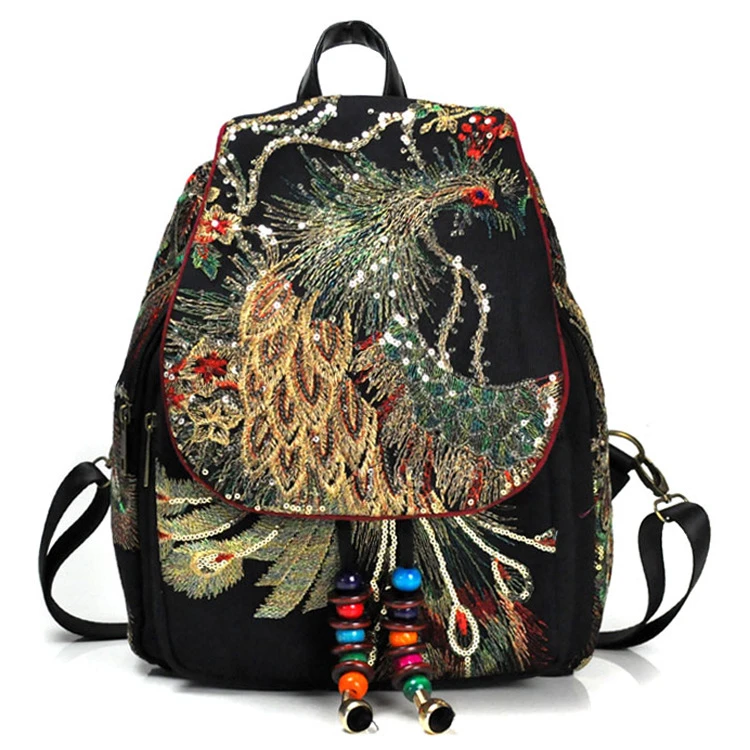
New Female Bag — Peacock Embroidered Canvas Bag
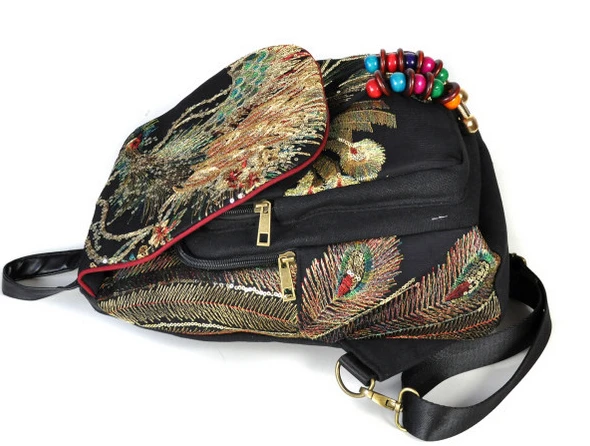
Dimensions: 36×26×12 cm (360×260×50 mm)
Weight: 660g
Pattern: Peacock embroidery (floral)
Available colours: Wine Red Black Blue
Why 2026 Is the Right Moment for This Bag
In 2026, European fashion women are navigating two simultaneous pressures: the continued dominance of quiet luxury — minimalist, tonal, restrained — and a growing appetite for accessories with genuine cultural substance. As Business of Fashion's 2026 Cultural Accessories Market report notes, 67% of European women aged 25–45 surveyed reported that they want their accessories to "tell a story" — but only 23% were satisfied with how well current mass-market options delivered on this.
The Peacock Embroidered Bag sits precisely at this intersection. It is formally restrained — canvas, structured, tonal — in a way that satisfies the quiet-luxury instinct. But the embroidery, and the cultural depth behind it, gives the bag a second register that purely minimalist accessories cannot access: a story that is visible only to those who know to look for it, and legible to all who encounter it without knowing its origins.
This is, in the deepest sense, the Ming Dynasty's own logic: authority that is earned, not displayed. Meaning that is worn, not announced.
FAQ: Your Questions About the Peacock Embroidered Bag
What is the cultural significance of peacock embroidery in Chinese fashion?
In Ming Dynasty China (1368–1644), the peacock was the emblem badge of the third civil rank — conferred on officials who had passed the highest level of imperial examinations (Metropolitan Museum of Art, 2024). Wearing peacock embroidery signified earned intellectual and moral distinction. This cultural weight makes peacock embroidery one of the most symbolically loaded motifs in Chinese textile heritage.
What is the best colourway for everyday European use?
Black is the most versatile colourway for daily European use, as it transitions seamlessly from casual to professional to evening contexts. Wine Red performs best in autumn-winter palettes and evening settings. Blue is the most unexpected and adaptable choice, particularly effective with neutral European wardrobe foundations. According to Mintel's 2026 European Accessories Consumer Report, black is the most purchased colourway across all bag categories (42%), followed by neutral tones (31%).
How should the Peacock Embroidered Bag be cared for?
Canvas bags perform best when cleaned with a slightly damp cloth rather than submerged in water. Embroidery should never be brushed directly; spot-clean the canvas ground around motifs. Store stuffed with tissue paper when not in use to maintain the structured silhouette. Avoid prolonged direct sunlight exposure, which can fade both canvas and thread. As Fashion Revolution's 2025 Sustainable Care Guide notes, correct storage extends garment life by an average of 3–5 years.
Can this bag be worn both as a shoulder bag and a crossbody?
Yes. The bag's strap configuration supports both shoulder and crossbody wear. At 36×26×12 cm and 660g, it sits comfortably on the shoulder for short-to-medium duration carry, and the crossbody position distributes weight more evenly for longer days. The structured canvas body maintains its form regardless of carry position.
How does this bag compare in value to similar embroidered accessories at higher price points?
At $23.11, the Peacock Embroidered Bag occupies a price point typically associated with unembellished canvas carry. Embroidered bags at comparable cultural and craft depth from European heritage brands typically retail from €200–€600, as documented in Business of Fashion's 2026 Embroidered Accessories Pricing Study. The cultural and material quality of this bag — canvas construction, dimensional embroidery, structured silhouette — makes it an unusually considered proposition at this accessible price.
1. The Metropolitan Museum of Art — "Ming Dynasty Textile Collection: Rank Badges", retrieved 2026-08-06, https://www.metmuseum.org/art/collection/search/42101
2. Business of Fashion — "Slow Fashion Investment Report 2026", retrieved 2026-08-06, https://www.businessoffashion.com/
3. Dieter Kuhn — Journal of Chinese Textile History (2023 digital archive), JSTOR, retrieved 2026-08-06, https://www.jstor.org/stable/3250843
4. Vogue UK — "Accessories Sizing Report 2026", retrieved 2026-08-06, https://www.vogue.co.uk/
5. Mintel — "European Accessories Consumer Report 2026", retrieved 2026-08-06, https://www.mintel.com/
6. Fashion Revolution — "Sustainable Care Guide 2025", retrieved 2026-08-06, https://www.fashionrevolution.org/
7. Business of Fashion — "Cultural Accessories European Market 2026", retrieved 2026-08-06, https://www.businessoffashion.com/