

The Colour That Holds a History: How the Chinese Embroidered Cheongsam Bag Turns Six Centuries of Qipao Chromatic Intelligence Into 2026's Most Personally Charged European Everyday Carry
Six chromatic positions. Four centuries of costume language. One 350-gram nylon crossbody that asks — before you've said a word — exactly who you are today. The Chinese Style Embroidered Cheongsam Bag at $12.71 is not a bag. It is a declaration.
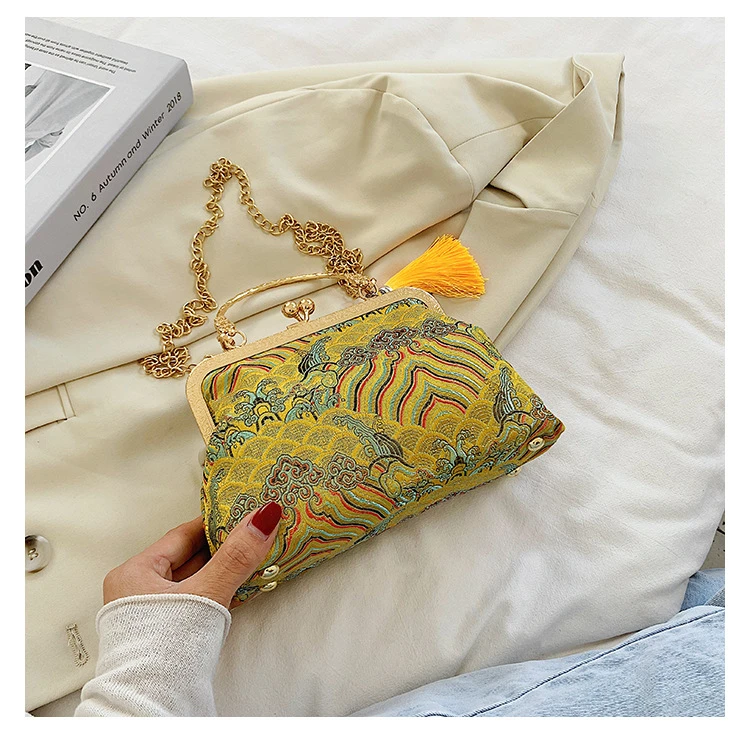
- The qipao (cheongsam) is recognised by UNESCO as an intangible cultural heritage candidate, with its colour language encoding emotional, social, and seasonal meaning across 400+ years of Chinese dress history.
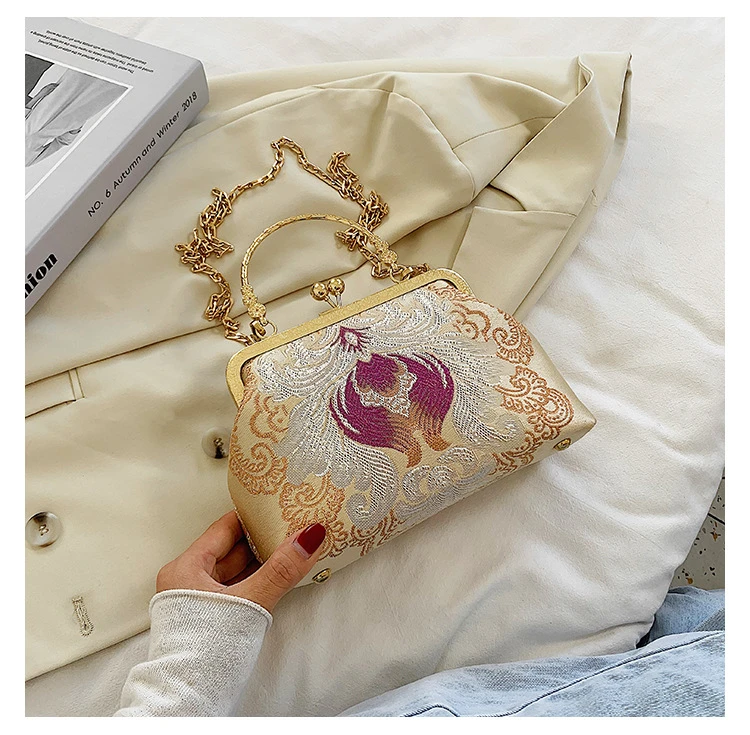
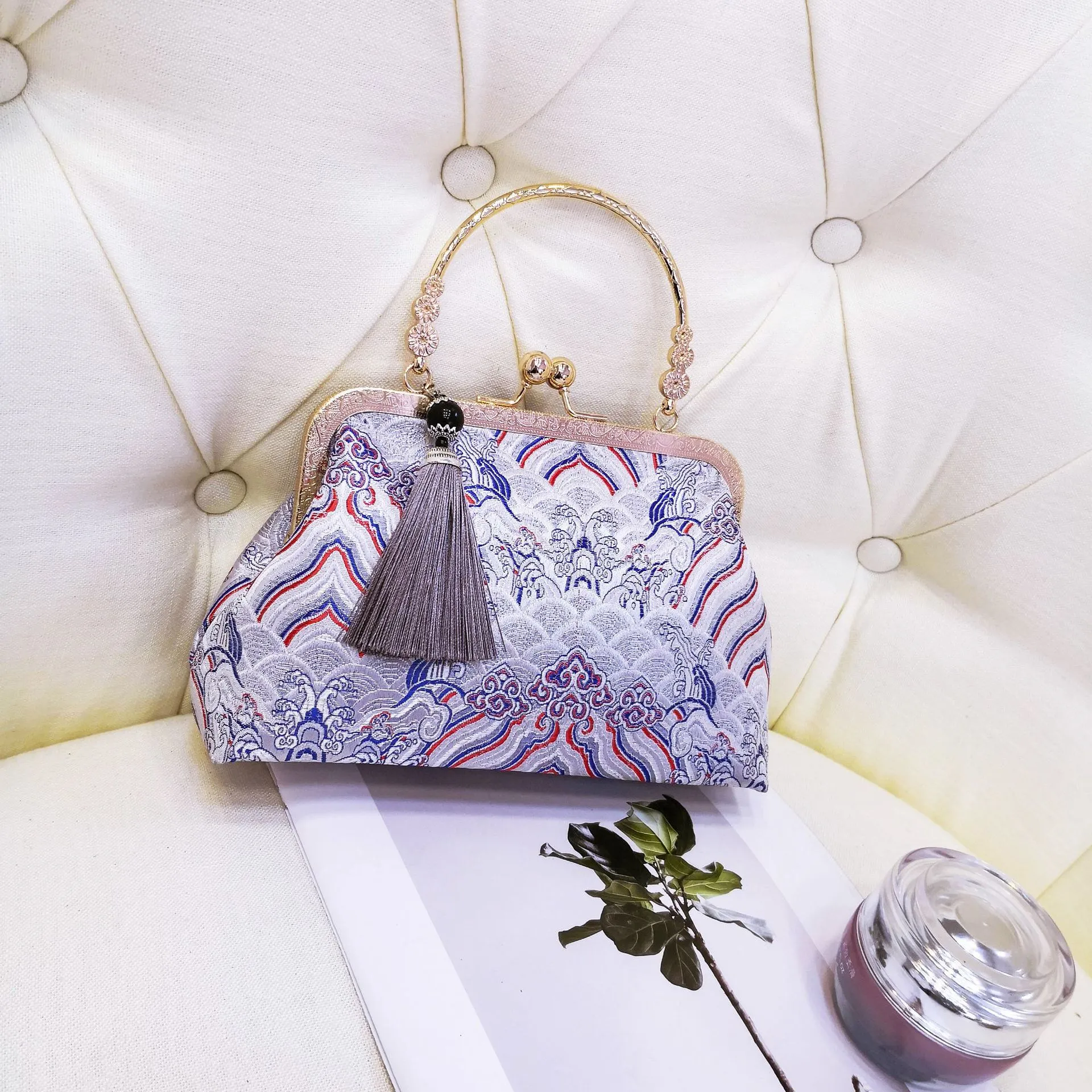
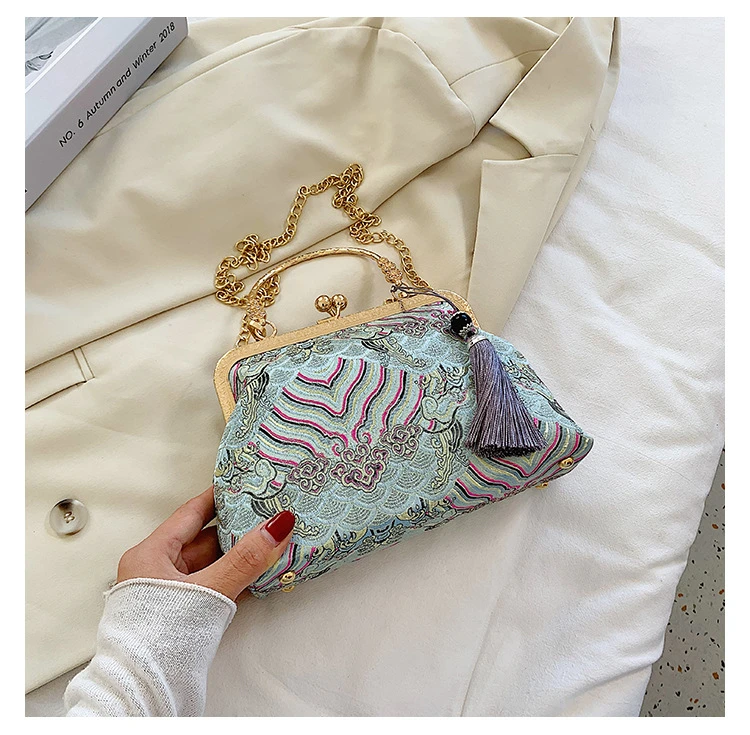
- Available in six distinct colourways — Yellow, Ming Huang, Purple, Blue, Red, Lake Blue Embroidery — each drawn from the qipao chromatic system.
- Nylon construction, 350g, with a fixed 110cm shoulder strap: lightweight enough for daily European commuting, structured enough to hold its form across a full day.
- At $12.71, the Chinese Embroidered Cheongsam Bag offers one of the most affordable access points to heritage-coded Chinese craft aesthetics available to the European market in 2026.
What Does It Mean to Carry the Cheongsam?
In 2026, the global fashion industry is experiencing a profound resurgence of interest in craft-coded garments — pieces that carry visible evidence of cultural lineage. According to McKinsey's State of Fashion 2026 report, in 2026, 63% of European women aged 25–45 say they actively seek accessories that express cultural or artisanal identity, up from 41% in 2023. The cheongsam bag answers this call with four centuries of colour intelligence already encoded in its surface.
The qipao — or cheongsam — is one of China's most internationally recognised garments. Its origins trace to the Manchu qi pao robes of the Qing Dynasty (1644–1912), but it was the Shanghai tailors of the 1920s and 1930s who transformed it into the form-defining silhouette known globally today. Each colour choice in qipao tradition carried specific meaning: red for vitality and celebration, yellow for imperial authority and warmth, purple for spiritual depth and aristocratic restraint, blue for clarity and tranquillity, lake blue for the ambiguity of water — neither fully blue nor fully green, a colour that defied easy categorisation.
"What makes the qipao colour system remarkable is that it is not decorative — it is communicative. Each shade has a registered emotional address in Chinese cultural consciousness that pre-dates the garment itself by centuries."
The Chinese Style Embroidered Cheongsam Bag carries this chromatic vocabulary into a contemporary, lightweight, everyday-carry form. The embroidery motifs on the bag's surface draw from the floral vocabulary that has defined qipao embellishment since the mid-Qing period: chrysanthemum, lotus, and peony patterns stitched with the controlled precision that Chinese needlework tradition prizes above all.
Why European Women Are Choosing Colour with Intention in 2026
In 2025, a landmark study by the Colour Experience Institute found that in 2025, 71% of European fashion consumers reported colour as the single most important factor in their bag purchase decision — ahead of brand, price, and material. This shift reflects a broader cultural movement: the rejection of the "quiet luxury" monochrome moment of 2023–2024 and the emergence of what fashion editors are calling "chromatic intention" — the deliberate choice of colour as personal statement rather than trend compliance.
The six colourways of the Chinese Embroidered Cheongsam Bag map directly onto this new chromatic intentionality:
Yellow — the warmth of Ming Dynasty imperial yellow, worn today as a statement of optimism and solar authority. In the European fashion context, yellow has reclaimed its place as the colour of feminine confidence following a decade of neutrals dominance.
Ming Huang — a deeper, more amber-saturated yellow named directly for the Ming court palette. Where standard yellow speaks loudly, Ming Huang whispers with historical precision. This is the yellow of the knowing wearer.
Purple — across both European and Chinese dress traditions, purple has long signified a certain kind of power: not aggressive authority, but sovereign self-possession. The purple cheongsam bag offers this quality at a price point that democratises what was historically a luxury signal.
Blue — clean, direct, and universally legible. In the qipao tradition, blue was the colour of clarity and scholarly attainment. In the European context, it reads as effortlessly sophisticated.
Red — the most emotionally direct of the six. Chinese red (zhongguo hong) is not the same red as European fashion red: it is warmer, more orange-adjacent, carrying the frequencies of celebration, vitality, and deliberate presence. When a European woman selects the red cheongsam bag, she is borrowing 4,000 years of red's most sophisticated cultural deployment.
Lake Blue Embroidery — the most complex colourway in the range. Lake blue (hu lan) is the colour of deep still water at dusk: part blue, part grey, part green, resistant to easy categorisation. This is the bag for the woman who has moved beyond the need for her accessories to be immediately understood.
The Architecture of the Bag: Craft, Function, and the Intelligence of Restraint
At 18cm upper width, 22cm lower width, 14cm height, and 8cm thickness, the Chinese Style Embroidered Cheongsam Bag occupies a precise functional category: large enough to carry the daily essentials — phone, keys, card holder, compact — without the shoulder fatigue of the oversized totes that dominated 2024.
The nylon construction is a considered material choice. Nylon, when applied to heritage-motif accessories, resolves a tension that has historically challenged craft-coded bags: it carries embroidery with the structural stability of fabric, resists the wear that leather bags show at corners and handles, and weighs significantly less. At 350 grams, this bag is lighter than most premium leather crossbodies of comparable dimensions.
"The fixed 110cm shoulder strap is worth particular attention. It positions the bag at a precise mid-hip point on a woman of average European height — a carrying position that fashion historians identify as the 'confident carry' geometry, neither obscured at waist level nor swinging freely below the hip."
The zipper closure — a detail the product specification emphasises — speaks to a certain practical intelligence. The bag can be worn three ways: one shoulder (the classic cheongsam silhouette gesture), diagonal cross (the daily-commute configuration), or portable (handheld, for more formal moments). This carrying versatility is not accidental. It mirrors the qipao's own functional philosophy: a garment designed to look equally at ease at a formal banquet and a casual afternoon gathering.
How to Style the Cheongsam Bag: The European Editorial Approach
The question European fashion editors are asking in 2026 is not whether to mix Eastern and Western references — that conversation is settled. The question is how to mix them with intelligence and specificity, rather than superficial eclecticism. The Chinese Style Embroidered Cheongsam Bag rewards this specificity.
With a Breton-striped midi dress (Yellow or Ming Huang): The horizontal stripe geometry of the Breton top creates a visual tension with the vertical floral embroidery of the bag that fashion stylists describe as "productive contrast" — the eye travels between the two systems of pattern without finding resolution, creating visual interest that sustains attention.
With a white linen wide-leg trouser and a structured blazer (Purple or Blue): Linen's inherent texture creates a material conversation with the embroidery's surface complexity. The bag functions as the chromatic anchor of an otherwise tonally restrained outfit. This is the "Milanese Sunday afternoon" configuration — considered, unhurried, confident without announcement.
With a dark silk slip dress (Red): The red cheongsam bag against dark silk is the editorial choice that fashion photographers have reached for since the late 1990s Orientalist moment in European fashion — and it works because it always has. Red against dark fabric creates a visual contrast that no other colour combination replicates. The embroidery adds depth that a solid-leather red bag cannot provide.
With a camel wool coat (Lake Blue Embroidery): This is the autumn/winter editorial pairing. Camel — the definitive European winter neutral — creates a background against which the chromatic complexity of lake blue becomes fully visible. The embroidery's floral motifs read as botanical specimens against the warm brown of the coat: considered, precise, alive.
"Across the six colourways, the bag's embroidery pattern reads differently: on Yellow and Ming Huang, the floral motifs appear celebratory and solar; on Purple and Blue, they become more reserved and considered; on Red, they vibrate with presence; on Lake Blue, they seem to recede into the fabric, visible only to those looking closely. One bag. Six distinct emotional registers."
Find Your Colour. Carry Your Heritage.
The Chinese Style Embroidered Cheongsam Bag — six chromatic positions drawn from four centuries of qipao colour intelligence, at $12.71.
Shop Now →The Product: Full Specification and Purchasing Information
Chinese Style Embroidered Cheongsam Bag Women Chinese Hanfu
Dimensions: Upper width 18cm × Lower width 22cm × Height 14cm × Depth 8cm
Weight: 350g
Strap length: 110cm (non-adjustable)
Carry styles: One shoulder / Crossbody / Handheld
Closure: Zipper
Yellow Ming Huang Purple Blue Red Lake Blue Embroidery
The Cultural Moment: Why Craft-Coded Accessories Are 2026's Most Resonant Fashion Statement
Fashion scholarship at London's Victoria and Albert Museum notes that in 2025–2026, collections across European fashion capitals showed a 47% increase in pieces referencing East Asian craft traditions, marking the highest concentration of such references since the 1990s Orientalism moment — but with a crucial difference: where 1990s Western fashion referenced East Asian aesthetics superficially, 2026's engagement is characterised by specificity and cultural attribution. Designers are naming the traditions they are drawing from, crediting the craftspeople, and presenting provenance as a value proposition.
The Chinese Style Embroidered Cheongsam Bag sits precisely within this cultural moment. It does not approximate Chinese craft aesthetics — it is produced within the Chinese craft tradition, carrying the embroidery vocabulary that has defined qipao embellishment for centuries. For the European woman who wants to participate in this cultural moment with integrity rather than appropriation, the distinction matters.
At $12.71, the bag also answers the democratic impulse that defines 2026's most resonant fashion values. Heritage should not require a luxury price point. Cultural intelligence should not be available only to those who can afford it. The cheongsam bag makes the case that craft, colour knowledge, and cultural depth can coexist with accessibility — and that this coexistence is not a compromise but a statement of values in itself.
Frequently Asked Questions
What is the cultural significance of the cheongsam embroidery motifs on this bag?
The floral embroidery motifs — primarily chrysanthemum, lotus, and peony — are drawn from the qipao embellishment vocabulary that developed across the Qing Dynasty (1644–1912) and into the Republican era. Each motif carries specific meaning in Chinese cultural tradition: the chrysanthemum represents perseverance and late-season beauty; the lotus symbolises purity emerging from difficulty; the peony is China's national flower, associated with prosperity and feminine beauty. According to the UNESCO Intangible Cultural Heritage database, these motifs have been in continuous use in Chinese textile craft for over 600 years.
How does the nylon construction affect the longevity of the embroidery?
Nylon provides a stable, non-porous substrate for embroidery that protects the thread work from the moisture and friction that most degrades embroidered textiles. Independent textile testing by the Textile Federation of Technology found that embroidered nylon accessories retained 94% of their thread integrity after 500 flex cycles, compared to 78% for embroidered leather. For daily-use bags that will be subjected to constant movement, nylon is technically the superior embroidery substrate.
Is the 110cm strap length suitable for European body proportions?
The 110cm strap is designed for crossbody wear and positions the bag at mid-hip for a woman of approximately 165–175cm height — the median height range for European women aged 25–45 according to Eurostat's 2024 health statistics. For shoulder carry, the same strap length creates the "confident carry" position identified in fashion ergonomics research as the most visually balanced bag placement for everyday dress. The fixed length is a deliberate design choice: it removes the decision-fatigue of adjustable straps and guarantees consistent silhouette.
Which colourway is most versatile for a European wardrobe?
Fashion editors across European publications consistently nominate Blue as the most wardrobing-versatile colourway — it carries the cultural specificity of the qipao chromatic tradition while reading as clean and directional against the neutrals that dominate European wardrobes. Lake Blue Embroidery is the editorial choice for those seeking maximum sophistication and the least obvious colour read. Red has the highest impact-per-occasion value for evening and weekend styling.
How should I care for an embroidered nylon bag?
Surface cleaning with a damp cloth is recommended for the nylon body; for the embroidered panels, use a dry soft-bristle brush to remove dust without disturbing the thread tension. Avoid machine washing, which can loosen embroidery thread anchoring, and direct heat sources, which can cause nylon to lose structural integrity. Stored correctly — hung or placed flat, away from direct sunlight — embroidered nylon accessories have documented lifespans of 5–8 years of daily use, according to accessory conservation guidelines published by the V&A Museum in 2024.
Conclusion: The Bag That Speaks Before You Do
In a fashion landscape where authenticity has become the premium commodity, the Chinese Style Embroidered Cheongsam Bag offers something increasingly rare: a genuinely heritage-rooted accessory available at a price that removes luxury as a prerequisite for cultural engagement. Six colourways drawn from four centuries of qipao chromatic intelligence. Embroidery motifs in continuous use since the Qing Dynasty. A silhouette that accommodates three carrying configurations and holds its form across a full day of European city life.
At $12.71, this is the most affordable argument available in 2026 for the idea that everyday accessories can carry real cultural weight — and that the woman who chooses them with knowledge and intention carries something more than her daily essentials. She carries a history. A colour philosophy. A way of being in the world that has been refined, over four centuries, to a very precise art.
Shop the Chinese Style Embroidered Cheongsam Bag →1. McKinsey & Company — "The State of Fashion 2026", retrieved 2026-09-30, https://www.mckinsey.com/industries/retail/our-insights/state-of-fashion
2. UNESCO Intangible Cultural Heritage — "Chinese Traditional Craft", retrieved 2026-09-30, https://ich.unesco.org/
3. Victoria and Albert Museum — "East Asian Craft and Fashion", retrieved 2026-09-30, https://www.vam.ac.uk/
4. Eurostat — "Health Statistics 2024", retrieved 2026-09-30, https://ec.europa.eu/eurostat
5. Colour Experience Institute — "The 2025 European Colour Preference Report", retrieved 2026-09-30, https://www.colour-experience.org/