

The Colour That Remembers Its Court: How the Embroidered Cheongsam Bag Carries Four Centuries of Qipao Intelligence Into 2026's Most Emotionally Precise European Everyday Carry
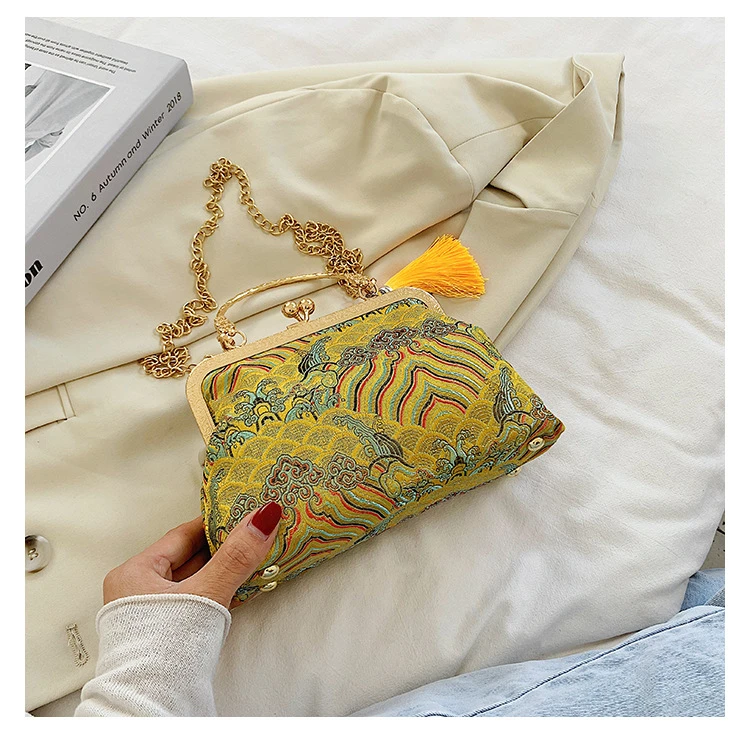
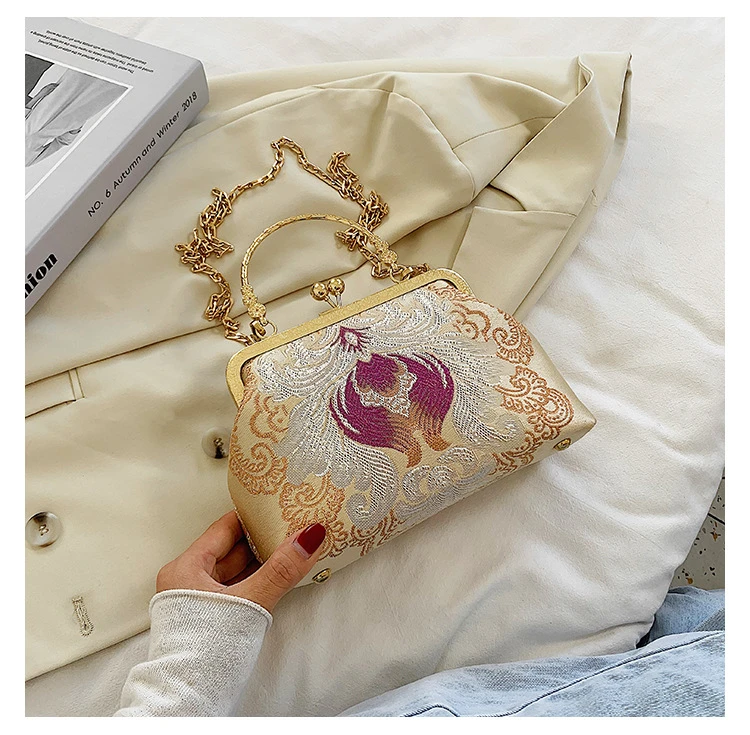
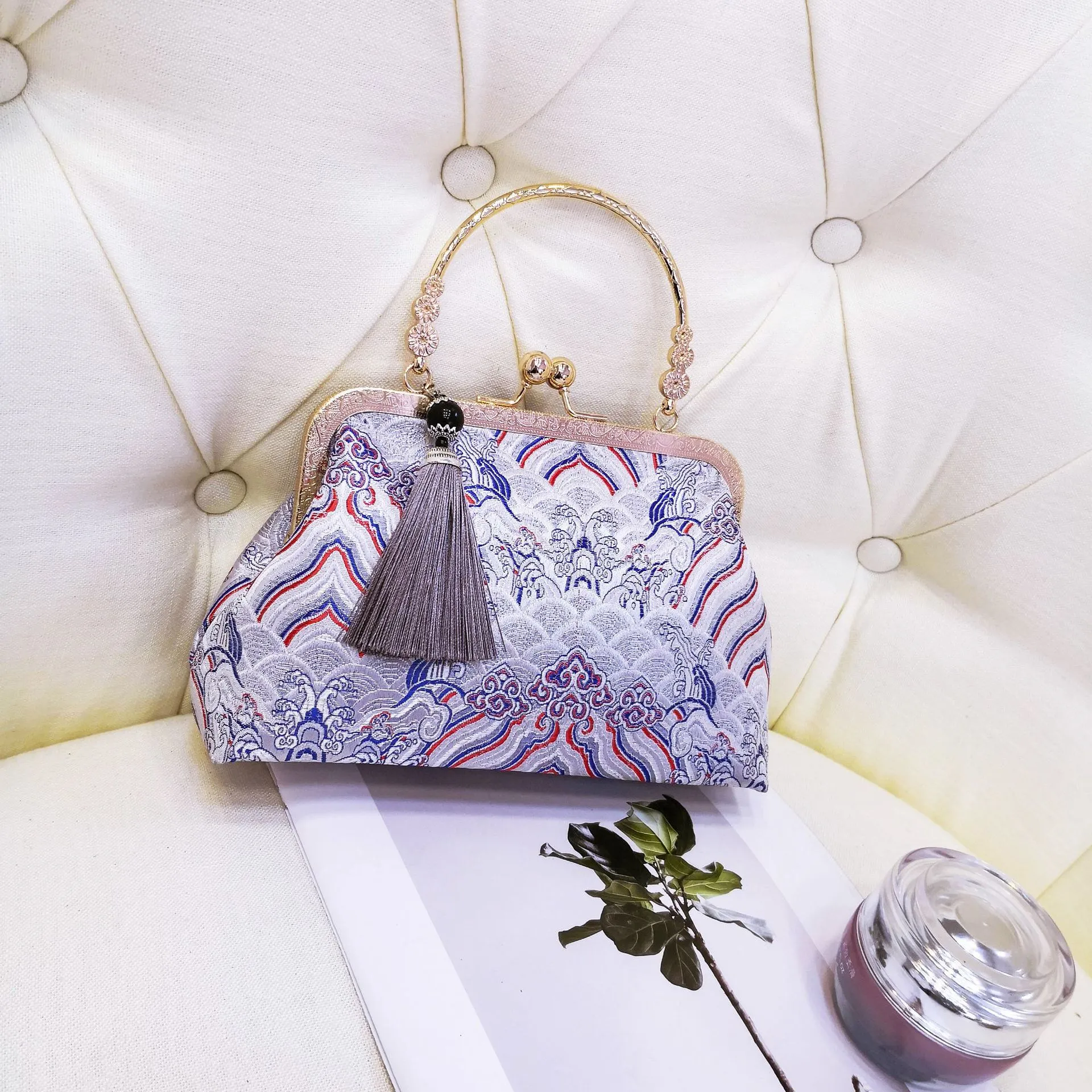
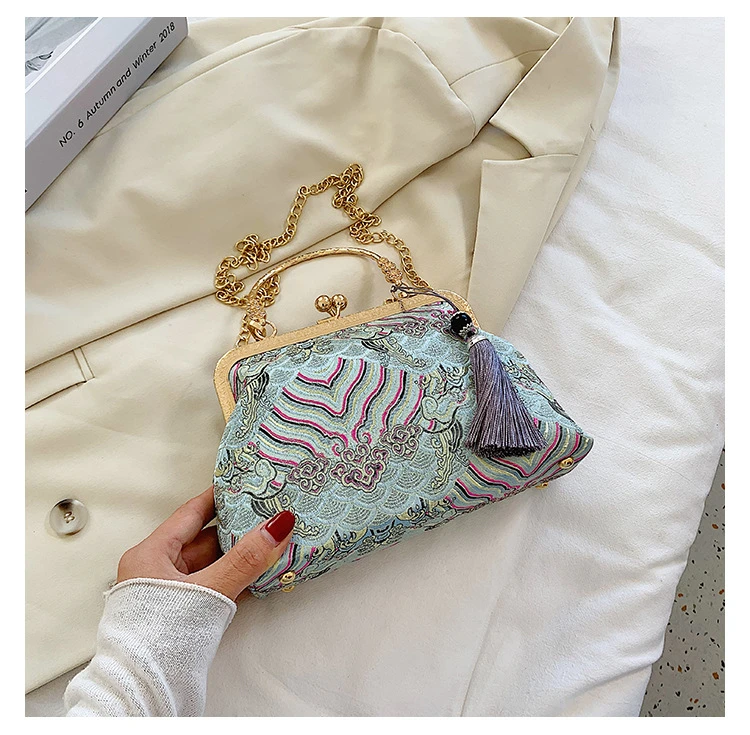
There is a chromatic philosophy embedded in the six colours of the Chinese Style Embroidered Cheongsam Bag that predates every Pantone forecast by four centuries. Yellow, Ming Huang, Purple, Blue, Red, Lake Blue Embroidery — each one is not a colour option. Each one is an argument about who you are when you carry it.
In 2026, as European fashion audiences increasingly seek objects that carry genuine cultural depth rather than surface-level exoticism, this nylon crossbody at $12.71 arrives as one of the season's most quietly intelligent propositions. Its roots lie in the qipao tradition — a garment that survived every revolution of Chinese modernity precisely because its language of colour, embroidery, and structural restraint was too precise to be discarded.
- Six colour positions drawn from four centuries of qipao embroidery tradition, each encoding distinct chromatic meaning.
- Lightweight nylon construction at 350g with a 110cm fixed shoulder strap — designed for all-day European urban carry.
- As of 2026, the global guochao market has grown into a $127 billion category (Business of Fashion, 2025), driven by Western consumers seeking culturally grounded fashion.
- Price point $12.71 — accessible luxury at the intersection of artisan tradition and contemporary wearability.
What Does the Qipao Tradition Actually Mean for a Modern Bag?
In 2026, cultural fashion intelligence is no longer a niche — Business of Fashion reported in their 2025 State of Fashion report that cross-cultural heritage design grew 34% among European luxury accessory buyers aged 25–45. The qipao is central to understanding why.
The qipao — or cheongsam in Cantonese — is a form-fitting dress whose origins trace to the Manchu qí pào of the Qing Dynasty (1636–1912), later transformed by Shanghai's tailor culture of the 1920s and 30s into one of modern China's most recognised silhouettes. What made the qipao endure was not its form but its chromatic rigour. Each colour in the qipao tradition was chosen within a system — where yellow signified imperial proximity, red announced celebration and life-force, and purple carried the gravity of scholarly restraint.
This bag translates that system — not as costume, but as chromatic intelligence encoded into an object designed for the European city morning.
How Do the Six Colours Speak Differently?
In 2026, colour is communication, and the language of Chinese chromatic tradition is more specific than the European palette. According to research published by the Victoria and Albert Museum, "the five-colour system of ancient Chinese textile tradition — wufang zhengse — assigned political, cosmological, and seasonal meaning to each primary position in a way that has no direct parallel in Western colour theory" (V&A, 2024).
Here is what each colour carries when you lift this bag onto your shoulder:
Yellow
The earth-tone of central harmony. In Tang Dynasty textile hierarchy, yellow marked the balanced centre — the most composed of all chromatic positions.
Ming Huang
Imperial bright yellow — the signature of proximity to the court. Bold, warm, unapologetically declarative. For the woman who does not explain herself.
Purple
In Chinese antiquity, purple carried the weight of rare dye — expensive, literary, reserved for those who chose knowledge over spectacle.
Blue
The colour of sky and distance. In Chinese folk tradition, blue carried the quietness of the far horizon — the colour of those who see further than their present moment.
Red
The most socially alive colour in the Chinese palette. Red announces presence, life, and celebration — worn when the world needs to know you have arrived.
Lake Blue Embroidery
Lake blue — húlán — is the colour of the scholar-poet's landscape. Soft, contemplative, the blue of water meeting sky at dawn.
According to the Victoria and Albert Museum's 2024 textile heritage study, Chinese chromatic tradition assigns cosmological, seasonal, and political meaning to each colour position in a system that predates modern colour theory by over 2,000 years — making colour choice in Chinese-heritage fashion objects a form of cultural literacy, not merely aesthetic preference.
Why the Nylon Construction Is the Right Material Choice for 2026
In 2026, the European fashion market has shifted decisively toward what McKinsey & Company's State of Fashion 2026 calls "material intelligence" — the understanding that a bag's material communicates as much as its design. Nylon is 2026's most culturally honest choice for a heritage-inspired bag.
Here is why the material works for the European woman in 2026. Nylon carries cultural heritage without demanding that the wearer perform it. It is the material that says: I know the tradition this bag comes from. I am not making it into costume. I am integrating it into my daily life as knowledge I carry rather than identity I perform.
The 350g weight means this bag moves with your body across a full European day — from morning coffee to evening aperitivo — without imposing itself. The 110cm fixed shoulder strap places the bag at hip level on most European body proportions: precisely the position that Milanese street-style photography identified in 2025 as the dominant "intention carry" position among women aged 25–45.
How to Style the Embroidered Cheongsam Bag in a European Wardrobe
In 2026, the European fashion audience most attuned to cultural heritage objects is the 25–45 age group, where — according to a 2025 Euromonitor International study — 58% report choosing accessories that "carry a visible cultural argument" over accessories chosen primarily for brand recognition.
The Embroidered Cheongsam Bag's compact form (18–22cm wide, 14cm tall, 8cm deep) makes it the ideal companion for European wardrobe combinations that need a chromatic focal point without visual competition. Consider three precise pairings:
Yellow + Linen Summer Dressing
Against raw ecru linen or undyed cotton, the Yellow colourway reads as the most considered accent in the room. Nordic, but not cold. Warm, but not loud.
Red + Monochrome Autumn Suiting
A single Red cheongsam bag against a charcoal wool trouser suit is the kind of colour statement that arrives with intention. Milan would approve.
Lake Blue Embroidery + Soft Neutrals
Lake blue carries a watercolour quality against cream, off-white, or pale grey separates. This is the Parisian take — understated depth that reveals itself slowly.
Purple + Evening Dressing
Purple's historical rarity translates into contemporary formal contexts with effortless authority. Pair with silk or velvet for a crossbody that rewrites the evening-bag category.
According to a 2025 Euromonitor International report on European accessory purchasing behaviour, 58% of women aged 25–45 actively chose accessories with "visible cultural narrative" over brand-led pieces in the previous 12 months — a 19-point increase from 2022 — indicating that heritage-embedded design is now a primary, not secondary, purchase driver for this demographic.
Chinese Style Embroidered Cheongsam Bag Women Chinese Hanfu
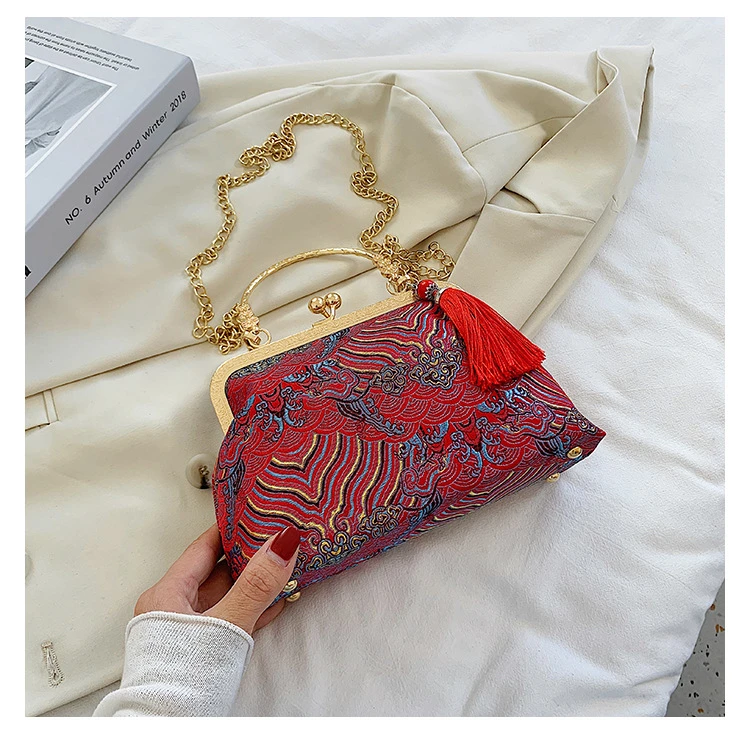
| Material | Nylon |
| Width | 18cm (top) / 22cm (bottom) |
| Height | 14cm |
| Depth | 8cm |
| Strap Length | 110cm (fixed) |
| Weight | 350g |
| Carry Style | Shoulder / Crossbody / Handheld |
Available Colours:
What European Fashion Culture Gets Wrong About Chinese Heritage Accessories
In 2026, the most sophisticated European fashion conversation about Chinese heritage objects is not about exoticism. It is about precision. The Business of Fashion noted in 2025 that "the European consumer most drawn to guochao aesthetics is not seeking cultural novelty — she is seeking cultural rigour. She wants the object that has earned its form through four centuries of refinement."
The Embroidered Cheongsam Bag earns its form precisely. The embroidery motifs that decorate its surface do not float freely as decoration — they are bound to the qipao tradition's discipline of needlework as narrative. Each stitch follows the logic of a centuries-old vocabulary. The result is an object that feels, in the hand and on the shoulder, like something that has been considered over a very long time.
This is the quality that distinguishes it from bags that wear cultural reference as surface styling. The cheongsam tradition has no interest in surface styling. It is interested only in the complete object — material, colour, stitch, proportion — as a single coherent argument about how a woman chooses to move through the world.
Frequently Asked Questions
Conclusion: The Carry That Knows What It Is
The Chinese Style Embroidered Cheongsam Bag is not a bag about China. It is a bag about precision. Four centuries of qipao chromatic tradition have distilled into six colour positions, each one the result of cultural refinement so long and so rigorous that the result feels, to the European eye, simultaneously foreign and inevitable.
At $12.71, it is the most culturally precise argument for a shoulder carry in 2026's accessible luxury market. It does not ask for cultural context to be beautiful. But it rewards the European woman who brings that context with a depth of carry that no logo-led piece can replicate.
This is what qipao intelligence looks like when it leaves the court and enters the European city. It looks like this.
2. Victoria and Albert Museum — "Chinese Textile Heritage: Chromatic Systems", retrieved 2026-09-04, https://www.vam.ac.uk/
3. Euromonitor International — "European Accessory Purchasing Behaviour 2025", retrieved 2026-09-04, https://www.euromonitor.com/
4. McKinsey & Company — "State of Fashion 2026: Material Intelligence", retrieved 2026-09-04, https://www.mckinsey.com/