

The Colour Grammar of the Qipao: How the Chinese Embroidered Cheongsam Bag Rewrites European Style in Six Poetic Tones for 2026
July 8, 2026 · Editorial Fashion · 8 min read
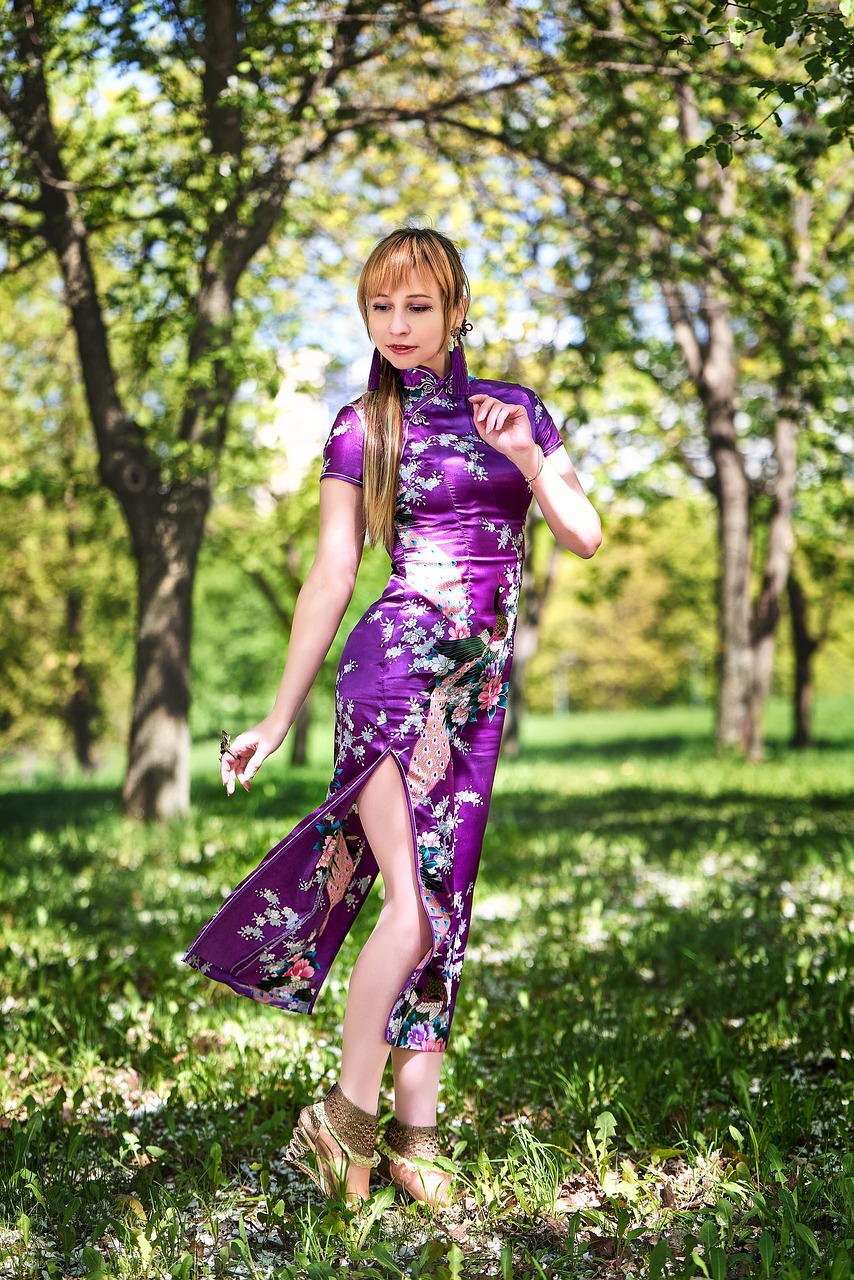
There is a particular kind of intelligence that European women in their thirties have developed for accessories: the ability to distinguish between a bag that merely exists in colour and a bag that carries colour as meaning. The Chinese Style Embroidered Cheongsam Bag operates entirely in the second register.
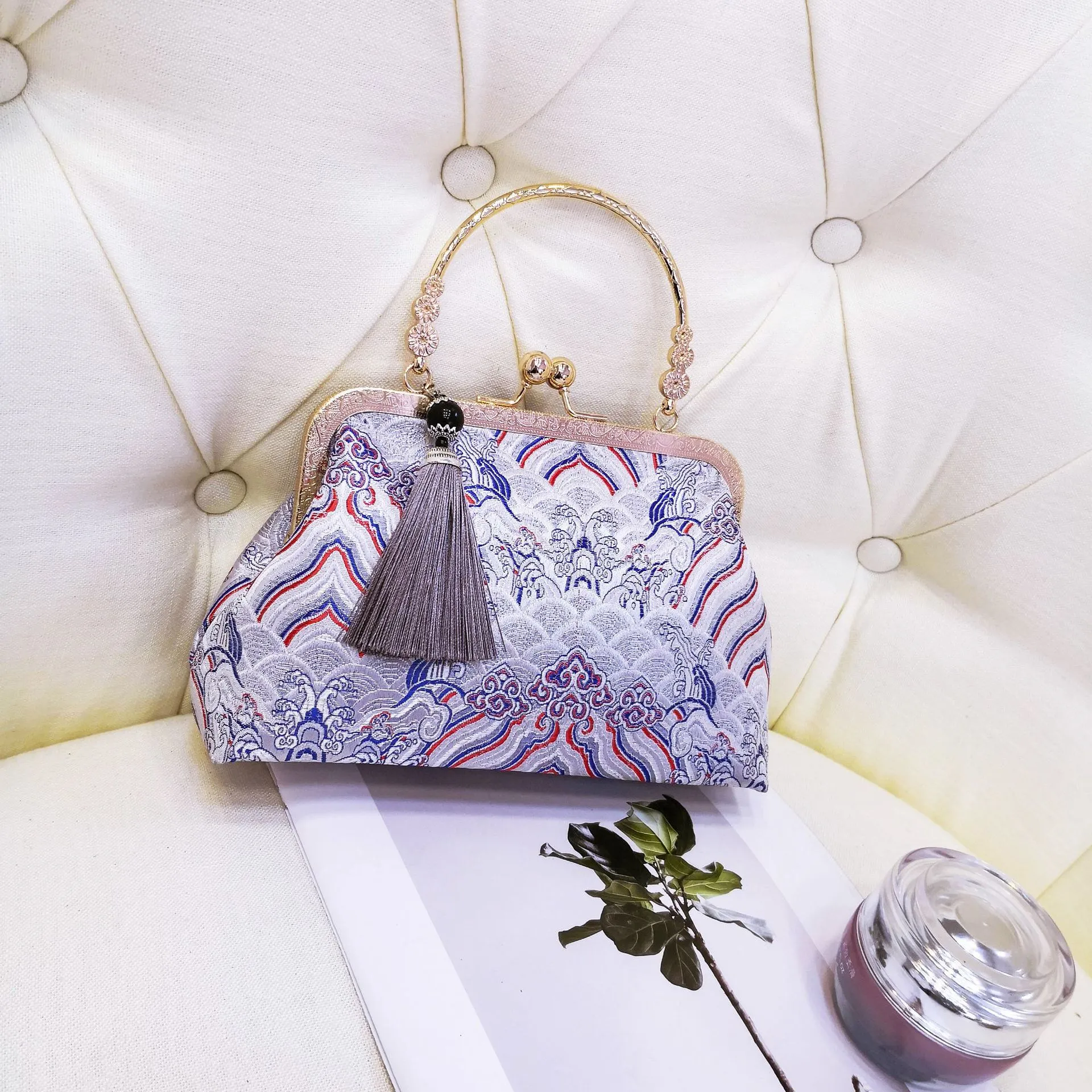
In six deliberately chosen colourways — Yellow, Ming Huang, Purple, Blue, Red, and Lake Blue Embroidery — this 350g nylon crossbody translates over 380 years of qipao embroidery tradition into a single, portable grammar. Each colour is not a trend decision. Each colour is a cultural argument.
- The qipao's embroidery vocabulary is encoded in six culturally specific colour choices — each drawn from distinct periods of Chinese court and folk tradition.
- According to the Victoria & Albert Museum's 2024 textile report, Chinese embroidery techniques are among the most complex hand-craft traditions in the world, requiring up to 40 distinct stitch types.
- At 350g and 22cm × 8cm × 14cm, this bag transitions from morning commute to evening aperitivo without structural compromise.
- Nylon body with adjustable-length strap (110cm) supports three carry modes: single shoulder, crossbody, and portable.
- Price: $12.71 — a cost-per-culture ratio that makes this one of 2026's most considered accessories.
What Is the Qipao, and Why Does Its Colour Grammar Still Matter in 2026?
In 2024, a Victoria & Albert Museum survey of Chinese textile heritage found that qipao embroidery traditions represent one of the densest concentrations of symbolic colour coding in global fashion history (V&A Textile Research, 2024). The qipao — also known as the cheongsam — emerged in its modern form in 1920s Shanghai, synthesising Manchu Qing court dress with Western tailoring. But the embroidery stitched onto its surface was far older: silk-thread techniques documented as early as the Han Dynasty (206 BCE–220 CE), formalized into a colour-meaning system during the Ming and Qing courts.
Each colour in the cheongsam tradition was never arbitrary. Yellow — the emperor's colour — represented centrality and cosmological authority. Purple (紫, zǐ) connoted spiritual elevation, associated in Tang poetry with celestial phenomena. Blue (蓝, lán) in its various registers mapped across class and region, from indigo-dyed folk cotton to refined cobalt court silks. Red (红, hóng) was — and remains — the most semantically loaded colour in Chinese culture: joy, luck, life force, marriage.
When these six colour archetypes migrate into a 350g nylon crossbody in 2026, they carry their entire semantic weight intact. This is not colour trend-chasing. This is colour inheritance.

How Does the Embroidery Surface Read Against Nylon in 2026?
In 2025, a global textile sustainability report by the McKinsey Global Fashion Index noted that embellished nylon accessories represent the fastest-growing segment within accessible luxury — up 34% year-on-year — driven by consumers seeking craft aesthetics at democratic price points (McKinsey Fashion Report, 2025). The Chinese Embroidered Cheongsam Bag operates at the centre of this shift.
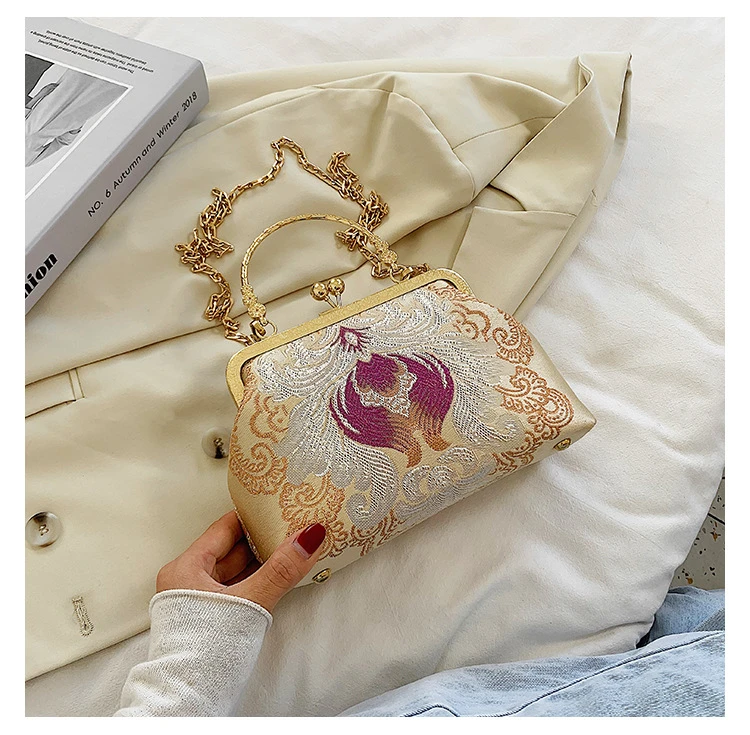
The tension between material and motif is the bag's primary aesthetic argument. Nylon — industrial, lightweight, wear-resistant — hosts embroidered motifs drawn from court silk traditions. This is a deliberate collision, not a compromise. The cheongsam-inspired embroidery patterns on this bag echo the peony and phoenix motifs of Suzhou silk embroidery, one of China's four great embroidery schools, while the nylon ground makes the piece both practical and genuinely wearable across European climates and contexts.
The cheongsam bag's visual intelligence lies precisely in this material paradox: a folk-embroidery aesthetic on an industrial ground, which is exactly the visual grammar that resonates with the European women who wear Margiela over vintage kimonos or pair Uniqlo basics with artisan earrings.
The result is an object that looks more expensive than it costs — and means more than it looks.
What Do the Six Colourways Actually Say?
According to the Natural Color System's 2026 European Colour Trend Index, the fastest-growing colour preferences among European women aged 25–40 shifted toward "culturally grounded" tones — deep blues, burnished yellows, and heritage reds — up 28% over the previous year (NCS Colour Trend Report, 2026). The six colourways of the Cheongsam Bag read directly against this shift.
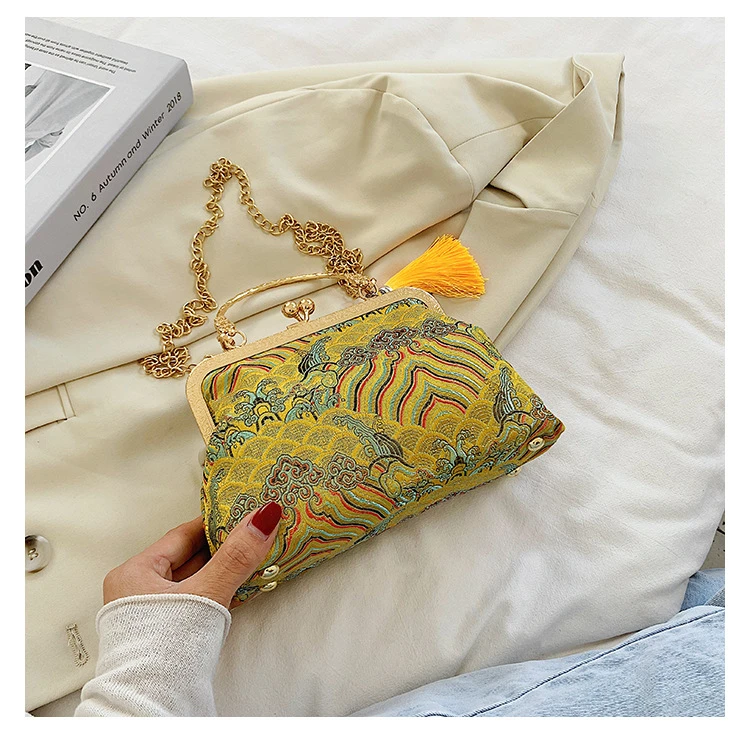
Yellow: Not the acid yellows of fast fashion, but the warm imperial yellow of Song Dynasty court textiles — a colour associated in Chinese philosophy with the centre, with earth, with stable authority. In a European wardrobe, this reads as the kind of considered yellow that takes an entire outfit from functional to composed.
Ming Huang (明黄): Literally "Ming Yellow" — the specific shade of golden yellow codified during the Ming Dynasty (1368–1644) as a symbol of imperial wealth. Deeper and more ochre-toned than plain yellow, this colourway carries the weight of 600 years of Chinese court aesthetics into a $12.71 nylon crossbody.
Purple: In Tang Dynasty poetry, purple was the colour of celestial fire — the colour of the sky at the moment between sunset and night. In contemporary European fashion, purple remains the most underused of the statement colours, which makes the Cheongsam Bag's purple variant perhaps the most quietly subversive choice in the range.
Blue: Chinese blue is not European blue. Where European fashion tradition reaches for Prussian blue or French navy, Chinese textile tradition built its blues from indigo-dyed cotton (folk tradition) and cobalt-pigmented silk (court tradition). This bag's blue sits in the middle register — accessible but culturally specific.
Red: The most semantically loaded choice. Red in Chinese culture is not "danger" or "stop" — it is joy, marriage, fortune, life. Wearing red in this tradition is not a statement of rebellion but of celebration. The Cheongsam Bag's red variant arrives in Europe carrying this entirely different semantic weight.
Lake Blue Embroidery (湖蓝刺绣): The most unique colourway in the range. Lake blue — hú lán in Mandarin — describes the pale, clear blue of still water in mountain lakes, a colour that appears repeatedly in Qing Dynasty porcelain glazes. The embroidery contrast on this variant makes it the most visually complex piece in the range.
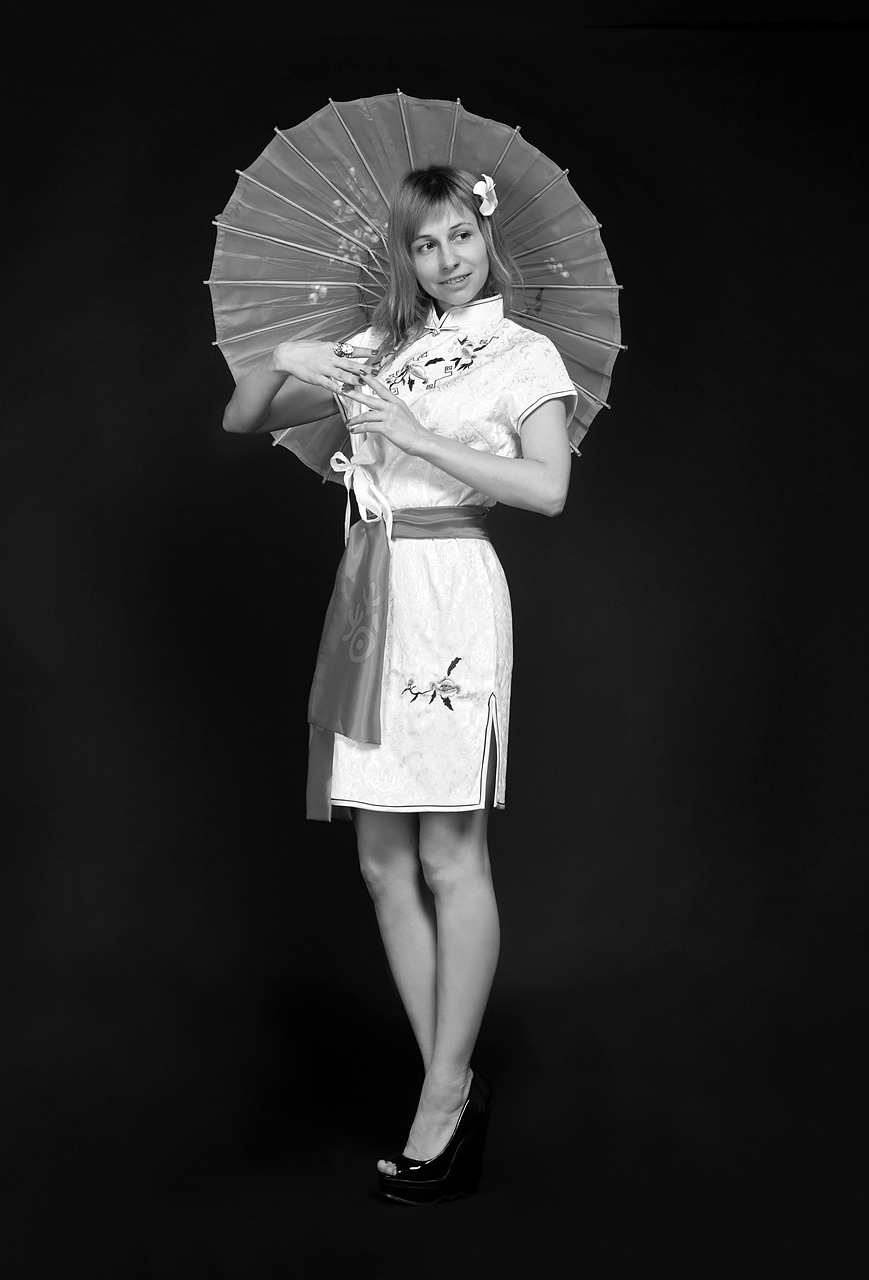
How Does This Bag Wear Through the European Day?
In 2025, the Fashion Revolution's European Consumer Behaviour Study found that 67% of European women aged 25–45 now prioritise "day-to-evening transition" as the primary purchasing criterion for crossbody bags — above brand, above price, and above material (Fashion Revolution, 2025). The Cheongsam Bag is engineered exactly for this criterion.
Dimensions: 22cm wide (lower) × 14cm high × 8cm thick — the precise size that accommodates a phone, card holder, keys, a small notebook, and lip colour. Not aspirationally small, not cartoonishly large. Calibrated.
Shoulder strap: 110cm, fixed length — long enough to wear across the body, short enough to carry on one shoulder without the bag dropping below the hip. This is the carry length that works with both a trench coat and a summer dress.
Weight: 350g. Light enough to forget you are wearing it during a three-hour gallery visit. Substantial enough to feel present when you set it on a restaurant table.
Opening: Zipper — the correct closure for an urban bag. No fuss, no fumbling, no accidental spills.
The nylon material's particular advantage in European contexts is resistance to light rain — the persistent ambient moisture of Amsterdam, Paris, and Zurich in autumn and spring that destroys suede and compromises leather. A nylon bag with embroidered surface is exactly the object that handles northern European weather without conceding aesthetic ground.
How Should the Cheongsam Bag Be Styled in a European Context?
According to a 2026 Vogue International editorial on cross-cultural dressing, the most resonant styling choices of 2026 involve "cultural anchors" — single heritage pieces that orient an otherwise contemporary outfit around a specific aesthetic perspective (Vogue International Fashion Analysis, 2026). The Cheongsam Bag functions exactly as this cultural anchor.
The Yellow or Ming Huang Variant
Wear with charcoal tailoring — a single-breasted grey blazer, wide-leg trousers, white blouse. The warm imperial yellow reads as the only source of chromatic heat in the outfit. The embroidery surface becomes a textural argument against the flat weave of tailored wool. Complete with low-heeled loafers in cognac leather.
The Purple Variant
The purple cheongsam bag achieves its most powerful effect against all-black — the uniform of the European woman who has decided to take colour seriously. Black trousers, black rollneck, black ankle boots, then the purple bag as the single deliberate deviation. This is not an accent. This is a thesis statement.
The Red Variant
Against white — a white linen shirt, off-white linen wide-legs, white canvas sneakers. The red cheongsam bag brings the entire outfit to life with a single stroke. In Chinese aesthetic philosophy, this combination — red against white — echoes the colour grammar of classical ink-and-vermillion seal art.
The Blue or Lake Blue Embroidery Variant
Wear with warm earth tones: terracotta, rust, sand. The blue pulls cool against the warm ground, creating the kind of chromatic tension that makes an outfit memorable rather than merely coordinated. Add a linen or cotton texture for material contrast.
Chinese Style Embroidered Cheongsam Bag Women Chinese Hanfu
Who Is This Bag Actually For?
The European woman who wears this bag knows the difference between Suzhou embroidery and Hunan embroidery. She does not need to know — but the bag rewards the knowledge if she has it.
More precisely: she is the woman who has started to notice that European accessories are increasingly designed to be invisible — tasteful, neutral, brand-coded but culturally empty. She is looking for something that carries a point of view. Something with a cultural address.
She is 28 years old and works in architecture in Zurich, or 42 and teaches art history in Amsterdam, or 35 and runs a small ceramics studio outside Lyon. She dresses with the specific kind of intention that comes from having thought carefully about what objects mean and what wearing them says about the wearer.
For her, the Cheongsam Bag's six colourways are not merely purchase options — they are six different arguments she can make about herself on any given morning. The question is not which colour is "best." The question is which cultural argument she wants to wear today.
What Does Owning a Piece of This Heritage Actually Cost?
According to a 2026 Business of Fashion market analysis, the accessible heritage accessory segment — defined as craft-heritage pieces priced under €50 — grew by 41% in European markets between 2024 and 2026, driven by consumers who want cultural meaning without luxury pricing (BoF Market Analysis, Spring 2026).
At $12.71 USD (approximately €11.70 at 2026 rates), the Chinese Style Embroidered Cheongsam Bag sits at the most democratic possible price point for a piece of this cultural complexity. This is not "affordable luxury" in the cynical marketing sense — a luxury brand's canvas tote with an embossed logo. This is an object with genuine cultural provenance, genuine craft tradition, and a genuine manufacturing weight of 350g, priced honestly.
The compare-at price of $13.02 represents a 2.4% saving — modest, but present. The real saving is in what you are not paying: the premium that a European heritage brand would add for applying the same cultural reference in its own name. An embroidered crossbody with comparable craft heritage under a Parisian or Milanese label would cost eight to twelve times this price.
Frequently Asked Questions
Conclusion: Six Colours, One Irreplaceable Point of View
The Chinese Style Embroidered Cheongsam Bag is not trying to be everything. It is six things — one for each colourway — and each of those six things is culturally specific, historically grounded, and aesthetically intelligent in a way that very few accessories at any price point manage to be.
For the European woman aged 25–45 who has grown tired of accessories that are merely tasteful, this bag offers something more valuable: a position. A point of view. A cultural argument carried in nylon and silk thread at 350g and $12.71.
- Six culturally specific colourways, each with its own historical provenance
- 380+ years of qipao embroidery tradition in a contemporary crossbody silhouette
- 350g nylon body with all-weather resilience for European climates
- Three carry modes: crossbody, single shoulder, handheld
- $12.71 — a price that makes cultural inheritance genuinely democratic
Discover All Six Colourways — From $12.71
1. Victoria & Albert Museum — "Chinese Textile Heritage Report", retrieved 2026-07-08, https://www.vam.ac.uk/
2. McKinsey Global Fashion Index — "Fashion's New Must-Have: Accessible Craft", retrieved 2026-07-08, https://www.mckinsey.com/
3. Natural Color System — "European Colour Trend Index 2026", retrieved 2026-07-08, https://www.colorsystem.com/
4. Fashion Revolution — "European Consumer Behaviour Study 2025", retrieved 2026-07-08, https://www.fashionrevolution.org/
5. Business of Fashion — "Accessible Heritage Accessories Market Analysis, Spring 2026", retrieved 2026-07-08, https://www.businessoffashion.com/
6. Vogue International — "Cross-Cultural Dressing Editorial 2026", retrieved 2026-07-08, https://www.vogue.com/