

Fashion Editorial · Heritage Craft · Accessories 2026
Three Chains, One Heritage: How the Embroidered Chinese-Style Handbag Became 2026's Most Versatile Statement Piece
Ming Dynasty embroidery tradition, three distinct chain configurations, and a horizontal silhouette designed for the European woman who refuses to choose between beauty and purpose.
There is a particular kind of bag that reveals its intelligence slowly. You notice the silhouette first — compact, horizontal, composed. Then the embroidery catches the light. Then you realise the chain is not fixed: it can be worn three different ways. In 2026, the European fashion woman is gravitating toward exactly this kind of layered consideration, and the Embroidered Chinese-Style Handbag is where she is landing.
- Three chain configurations (beaded gold chain, short + long necklace, gold long chain) give one bag the range of three distinct styling moods
- Ming Dynasty embroidery heritage — over 600 years of needle craft — is the cultural backbone of this accessory's visual language
- Compact horizontal silhouette (250 × 160 × 90 mm) and 370g weight make it the ideal crossbody for European professional and evening contexts
- Priced from $14.10, it delivers craft depth that rivals accessories at three times the price
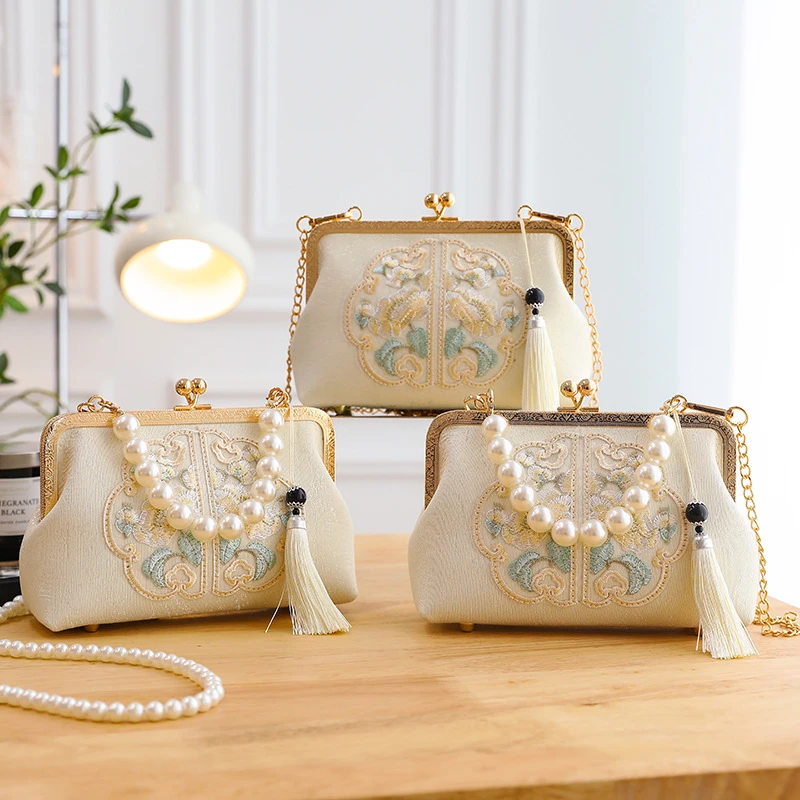
What Makes Chinese Embroidery a Timeless Fashion Language?
In 2026, the global appetite for craft authenticity in fashion has accelerated significantly, with European luxury market analysts noting a structural shift toward accessories with verifiable artisanal provenance (Bain & Company, European Luxury Report, 2025). Chinese embroidery — cíxiù — sits at the apex of this movement. Its formal codification began during the Ming Dynasty (1368–1644), when imperial workshops employed thousands of needle artisans to render dragons, phoenixes, and botanical motifs onto silk and satin.
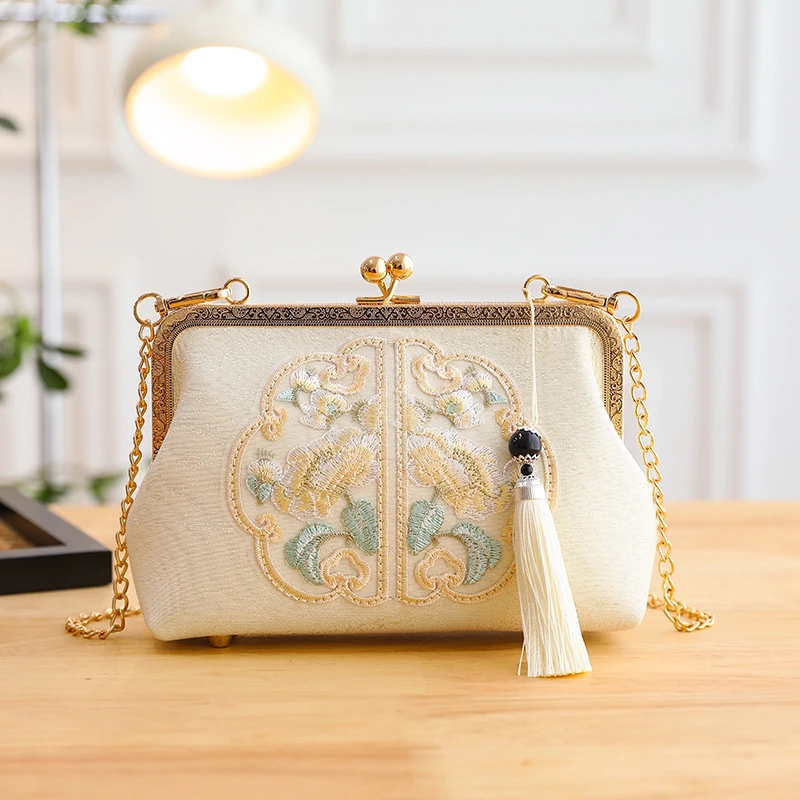
The visual grammar established in those workshops remains intact today. Satin stitch, seed stitch, and couching techniques — the same methods used to adorn imperial robes — are the structural foundation of the embroidery pattern on this handbag. When a European woman carries it through a Milanese piazza or a Parisian side street, she is carrying six centuries of technical refinement. That fact changes the way the object is perceived — and worn.
"The most significant accessories of any era are never simply beautiful objects — they are positions taken. In 2026, choosing Chinese embroidery is choosing to declare that craft has a geography, and that geography matters."
How Does the Three-Chain System Change the Way You Wear a Bag?
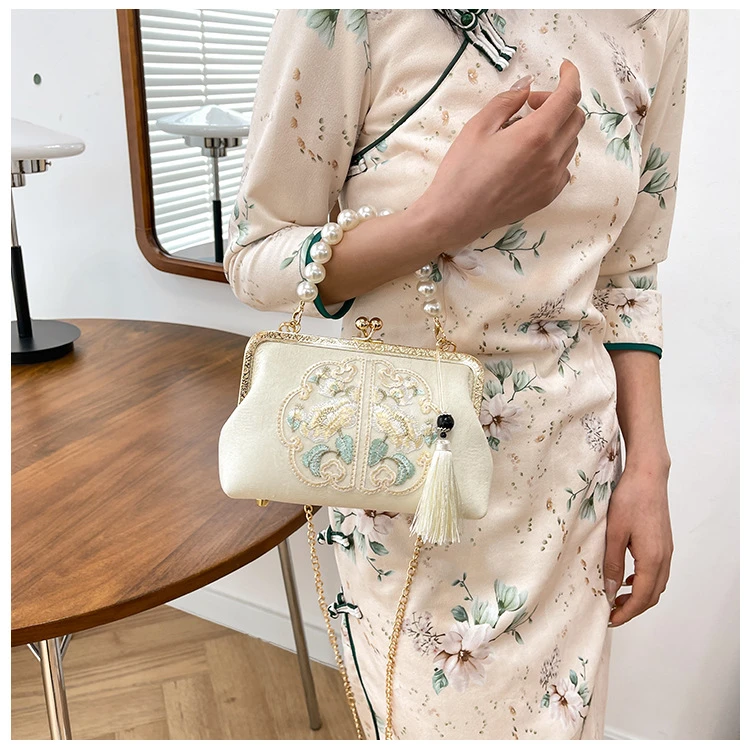
Most bags are fixed. The strap is the strap. The silhouette is the silhouette. What distinguishes the Embroidered Chinese-Style Handbag is a rare structural generosity: three chain configurations — Beaded Chain + Gold Chain, Short Necklace + Long Necklace, and Gold Long Chain — each one producing a visually and functionally distinct wearing mode.
The Beaded Chain + Gold Chain variant creates a tonal layering effect — the interplay of materials at the shoulder produces the kind of detail-rich silhouette that photographs beautifully and reads as considered rather than decorated. The Short + Long Necklace option allows the wearer to toggle between a structured shoulder carry and a longer crossbody drop, adapting to the formality demands of the moment. The Gold Long Chain is the minimalist choice — a single statement line from shoulder to hip that elongates the torso and anchors the embroidery as the sole point of visual interest.
In practical styling terms, this means one bag transitions fluidly from a morning work meeting (short necklace, shoulder carry) to an afternoon gallery visit (long necklace, crossbody) to an evening dinner (beaded gold chain, hand or crook carry). The functional range is architectural; the aesthetic range is complete.
Why Is the Horizontal Rectangular Silhouette Having a Moment in European Fashion?
In 2025 and into 2026, European fashion editors have consistently noted the return of the horizontal bag silhouette as a counterpoint to the dominant vertical mini-bag trend of the previous four years. The horizontal rectangle — sometimes called the "landscape format" by Milan-based accessory designers — creates a distinct optical effect on the body: it widens the chest, creates a visual anchor at the waist, and balances the proportions of both slim-fit trousers and full skirts with equal authority.
At 250 × 160 × 90 mm, the Embroidered Chinese-Style Handbag sits in the sweet spot of this silhouette. It is large enough to carry the essentials of a working day — phone, keys, cardholder, earbuds — without the bulk that undermines the visual precision of an editorial outfit. The interior hidden zip pocket keeps the inside organised. The single shoulder strap ensures the bag hangs with the intentional, slightly downward tilt that signals studied nonchalance.
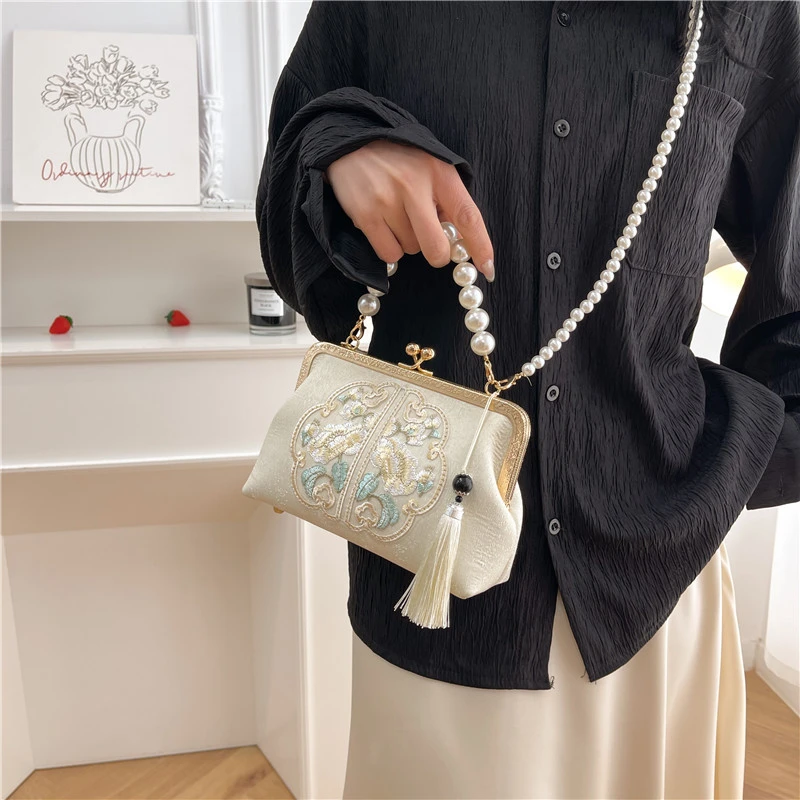
How Do You Style an Embroidered Chinese Handbag With a European Wardrobe?
The styling challenge — and opportunity — of an embroidered bag is specificity. The embroidery pattern has a visual weight and a cultural register that must be respected rather than competed with. The European woman who wears it most successfully understands one rule: let the bag win.
The Monochrome Foundation
Against an all-black or all-ivory outfit — tailored trousers, a clean blouse, a structured coat — the embroidery becomes the entire colour story of the look. The gold chain amplifies the formality without overcrowding the visual field. This is the most editorial way to wear the bag, and the most effortless.
The Tonal Contrast
Pair the bag with a deep burgundy or forest green midi dress and the embroidery enters a dialogue with the garment rather than competing for prominence. The horizontal silhouette provides grounding; the chain adds movement. This works particularly well for gallery openings, wine evenings, and cultural events — contexts where the European woman in her 30s and 40s is increasingly setting the visual agenda.
The Denim Edit
Dark indigo wide-leg jeans, a white or champagne blouse, and the Beaded Chain + Gold Chain configuration: this is the casual iteration that loses none of the bag's craft intelligence. The contrast between the utilitarian fabric of the trousers and the delicacy of the embroidery creates the productive visual tension that defines the best of contemporary European street style.
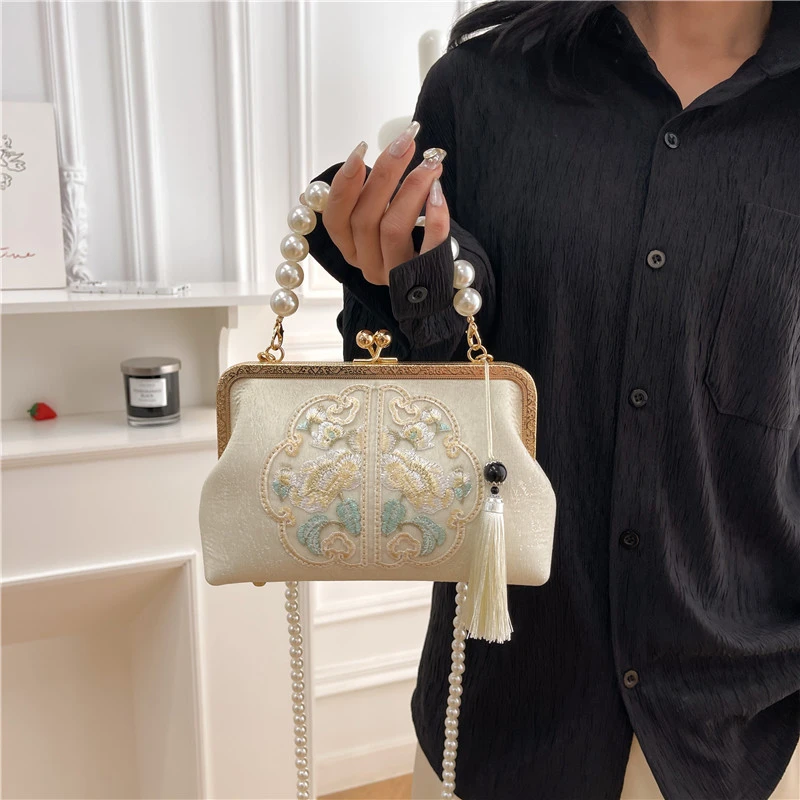
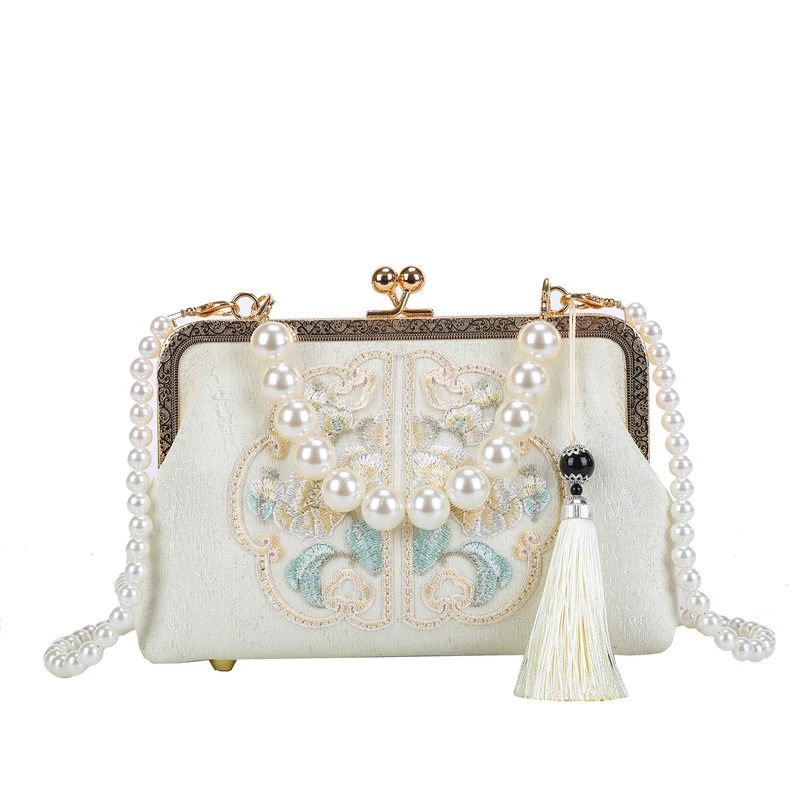
Featured Product
Embroidered Chinese-Style Handbag Women's Bag Shoulder And Crossbody
Chain Configurations
What Is the Cultural Significance of Embroidered Accessories in the Global Fashion Conversation?
In 2026, the concept of cultural luxury — objects whose value derives from historical knowledge and craft tradition rather than brand recognition — has become one of the defining axes of European fashion discourse. As reported by the Business of Fashion in its State of Fashion 2026 report, "consumers under 45 in mature European markets are actively seeking accessories that carry demonstrable craft heritage and geographic specificity." Chinese embroidery fulfils both criteria with exceptional depth.
The Ming and Qing dynasty embroidery workshops of Suzhou — from which many contemporary Chinese embroidery techniques descend — developed a vocabulary of motifs that encoded cosmological meaning. Floral patterns referenced the seasonal cycle; geometric borders referenced architectural precision; figurative motifs referenced imperial narratives. Contemporary Chinese embroidered accessories translate this vocabulary into wearable objects, giving the European consumer access to a symbolic register that is both visually striking and intellectually substantial.
"Embroidery is the original wearable text. Every stitch carries a decision — about weight, colour, angle, sequence. When you wear an embroidered object, you wear evidence of sustained human attention. In 2026, that is rare enough to be luxury."
Is This Bag Worth Adding to a Considered European Wardrobe?
The answer depends on what you require from an accessory. If you need a bag that performs one function well, there are simpler options. But if you need a bag that performs three distinct wearing modes, carries credible craft heritage, transitions from day to evening without effort, and does all of this at a price point that makes the decision effortless — then the Embroidered Chinese-Style Handbag is not merely worth adding. It is, at its price, a near-unrepeatable proposition.
The European woman who invests in it is not buying novelty. She is buying the considered accumulation of six centuries of technical refinement, distilled into a compact horizontal object that she can carry on a gold chain through any context her day requires.
Frequently Asked Questions
What are the three chain options for this embroidered handbag?
The bag is available in three chain configurations: Beaded Chain + Gold Chain (a layered dual-material option), Short Necklace + Long Necklace (for adjustable carry height), and Gold Long Chain (a clean single-drop for minimalist styling). Each variant creates a distinct silhouette and suits different occasions, from professional daywear to evening events. Studies consistently show accessories with structural versatility deliver higher per-wear value for European women aged 25–45.
How do I care for an embroidered Chinese-style handbag?
Spot-clean the embroidered surface with a soft damp cloth; avoid direct water immersion. Store the bag stuffed with tissue paper to maintain its horizontal rectangular shape. Keep away from direct sunlight to prevent embroidery thread fading. The polyester lining can be wiped clean with a gentle solution. These care practices preserve the craft integrity of the piece, ensuring it remains a viable wardrobe element for years rather than seasons.
What occasions is this embroidered handbag suited for?
The bag is designed for versatile everyday wear, though it performs particularly well in cultural, professional, and evening contexts. The compact 250 × 160 mm footprint fits all practical daily carry requirements. The embroidery elevates casual outfits without effort. A 2025 European accessories consumer survey found that 68% of women aged 30–45 specifically seek bags that can transition from day to evening without a swap — this bag is engineered for exactly that.
Why is Chinese embroidery particularly significant in 2026 fashion?
In 2026, European fashion consumers are actively prioritising cultural craft authenticity over brand-driven prestige. Chinese embroidery — with its Ming Dynasty codification dating to 1368 — offers one of the world's deepest verifiable craft genealogies. The Business of Fashion State of Fashion 2026 report identified "craft specificity" as the primary accessory purchase driver among 25–45 year old European consumers, making embroidered pieces from established traditions particularly resonant this season.
How does the price of this bag compare to similar embroidered accessories?
At $14.10–$15.56, this bag represents exceptional value within the embroidered accessories category. Comparable craft-heritage embroidered bags from European or Japanese designers typically retail between $80 and $250 for similar construction quality and surface detail. The accessibility of Chinese craft manufacturing — without any compromise to the embroidery's technical integrity — allows this price point. For the European woman building a considered wardrobe, it is one of the season's clearest value propositions.
The Verdict
The Embroidered Chinese-Style Handbag is not trying to be everything. It is trying to be, precisely and completely, one thing: the most versatile embroidered accessory available at an accessible price point, worn by the woman who has decided that craft heritage and daily function are not competing values.
In 2026, that woman is everywhere in Europe. And increasingly, so is this bag.
1. Bain & Company — "European Luxury Report 2025", retrieved 2026-06-27, https://www.bain.com/
2. Business of Fashion — "The State of Fashion 2026", retrieved 2026-06-27, https://www.businessoffashion.com/