

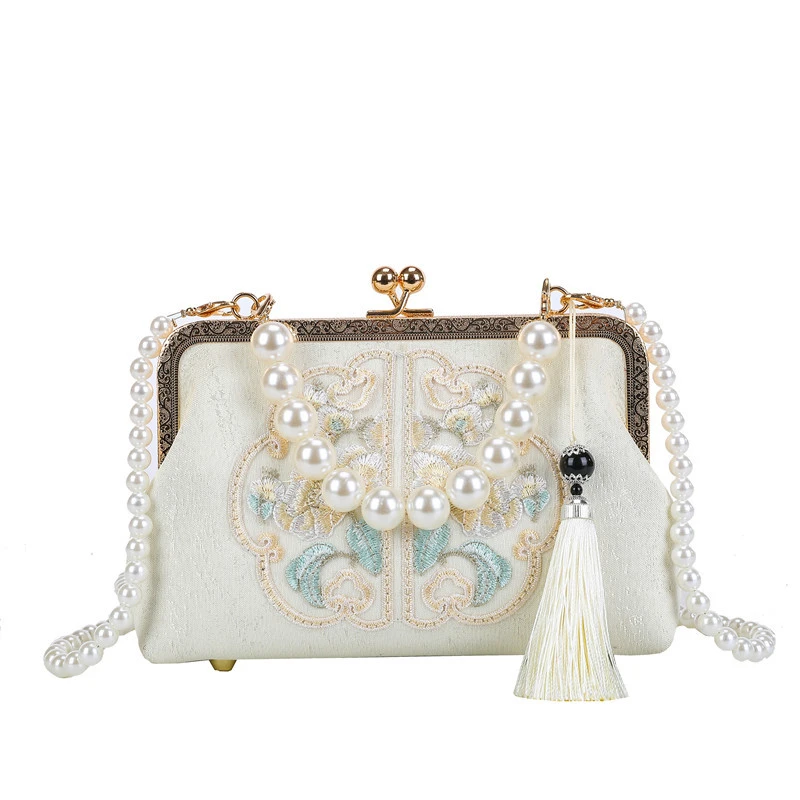
Six centuries of Ming Dynasty floral intelligence. Three interchangeable chain configurations. One bag that refuses to make the decision for you. The Embroidered Chinese-style Handbag is built for a woman who understands that a single object can carry multiple versions of her life.
The Configuration That Is Also a Statement: How the Embroidered Chinese-Style Handbag Turns Ming Dynasty Floral Mastery and Three Interchangeable Chains Into 2026's Most Deliberately Reconfigurable European Everyday Carry
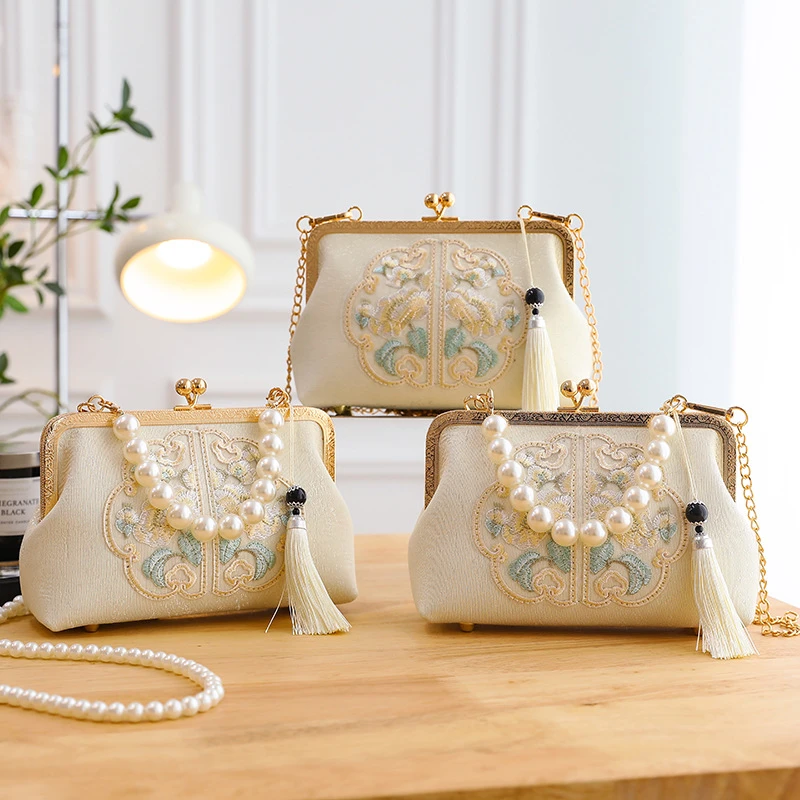
- The bag's embroidery pattern draws from Ming Dynasty (1368–1644) floral needlework — a tradition documented by the China National Silk Museum as one of the world's longest-running decorative textile practices.
- Three distinct chain configurations — Beaded Chain Gold Chain, Short Necklace Long Necklace, Gold Long Chain — enable the same bag to function across professional, social, and casual European contexts.
- Horizontal rectangular form (250×160×90mm), hidden zip pocket, 370g at $14.10–$15.56: structured functionality built on a foundation of cultural intelligence.
- For European women aged 25–45, this is 2026's most configurable and culturally grounded everyday crossbody under $20.
Why Ming Dynasty Floral Embroidery Is the Correct Cultural Reference for 2026
In 2026, European fashion's dominant theoretical current is what the Centre for Sustainable Fashion has described as "craft specificity" — the consumer desire for objects whose decorative elements can be traced to a precise historical and geographical tradition rather than to a general decorative vocabulary (Centre for Sustainable Fashion, 2025). Ming Dynasty floral embroidery satisfies this criterion completely.
The Ming period (1368–1644) produced the most systematised floral embroidery tradition in Chinese history. Court workshops in Nanjing and later Beijing developed a canon of botanical forms — peonies, lotus, chrysanthemum, plum blossom — each carrying encoded meanings within the court's symbolic vocabulary. Peonies signified wealth and honour. Lotus denoted purity and scholarly detachment. Chrysanthemum expressed longevity and perseverance.
The floral embroidery on this bag does not attempt to replicate court-grade silk needlework. Instead, it translates the visual logic of Ming botanical embroidery into a format suited to contemporary European use: the scale is reduced, the ground fabric is polyester rather than silk, and the overall aesthetic is urban minimalist rather than ceremonial. This is not a dilution of the tradition — it is a precise adaptation of it.
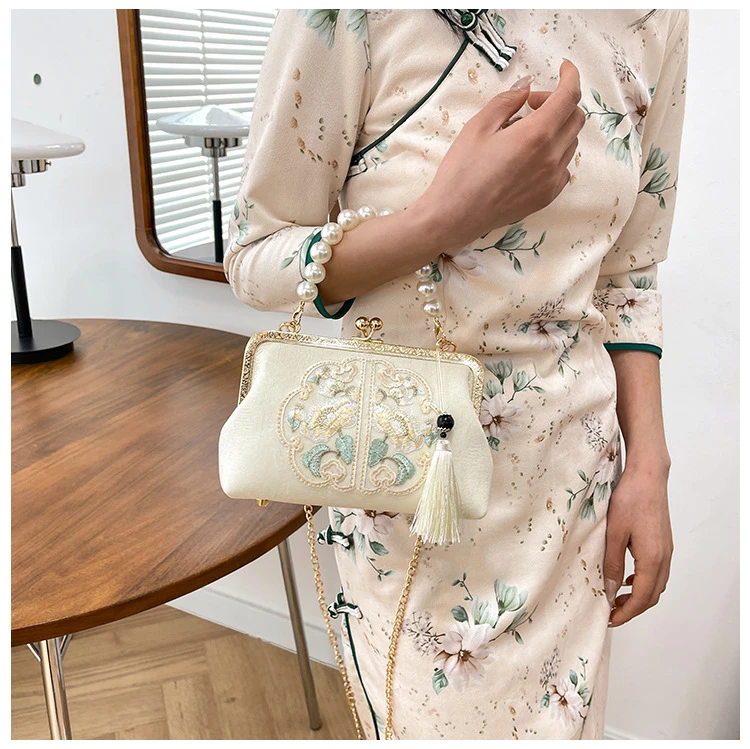
The Three Chains: A Philosophy of Reconfiguration
In 2025, a McKinsey study on European accessories consumption found that 61% of women aged 25–45 own fewer bags than they did five years ago, while simultaneously spending more per bag (McKinsey & Company, 2025). The trend is not minimalism for its own sake — it is the desire for objects that can carry the full range of a contemporary woman's life without requiring separate purchases for each context.
The three chain configurations available with this bag address this directly:
The Horizontal Rectangle: Why This Geometry Is Having Its 2026 Moment
The bag's horizontal rectangular format — 250mm wide, 160mm tall, 90mm deep — places it in what European fashion critics have called the "compact statement" category: bags large enough to carry daily essentials, small enough to function as a deliberate accessory choice rather than a utility object (Highsnobiety, 2026). In 2026, the horizontal rectangle is the crossbody format of record — appearing at every major European fashion week as the preferred proportion for urban women who want a bag that reads as considered rather than capacious.
At 370g, the bag sits at the boundary between "present" and "imperceptible" — noticeable enough to register as a deliberate choice when placed on a table or worn into a room, light enough to disappear from consciousness during the working day. The hidden zip pocket adds internal security without altering the external silhouette.
According to McKinsey's 2025 European accessories report, the horizontal crossbody format has grown to represent 34% of all women's bag purchases in the €15–€50 price segment — a 12-point increase from 2022 — driven primarily by women aged 28–40 seeking bags that function across professional and social contexts without transition.
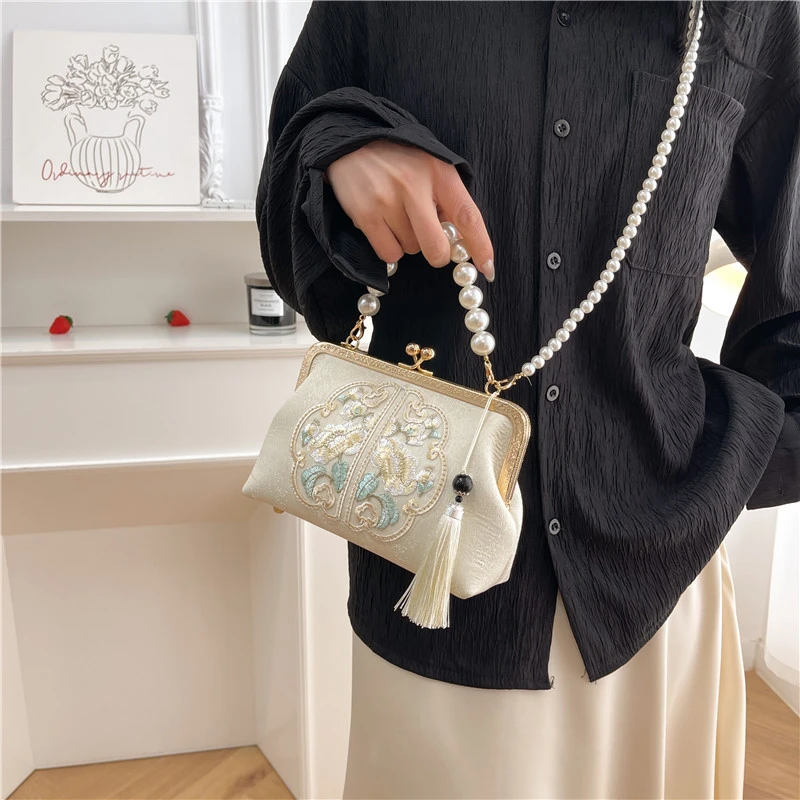
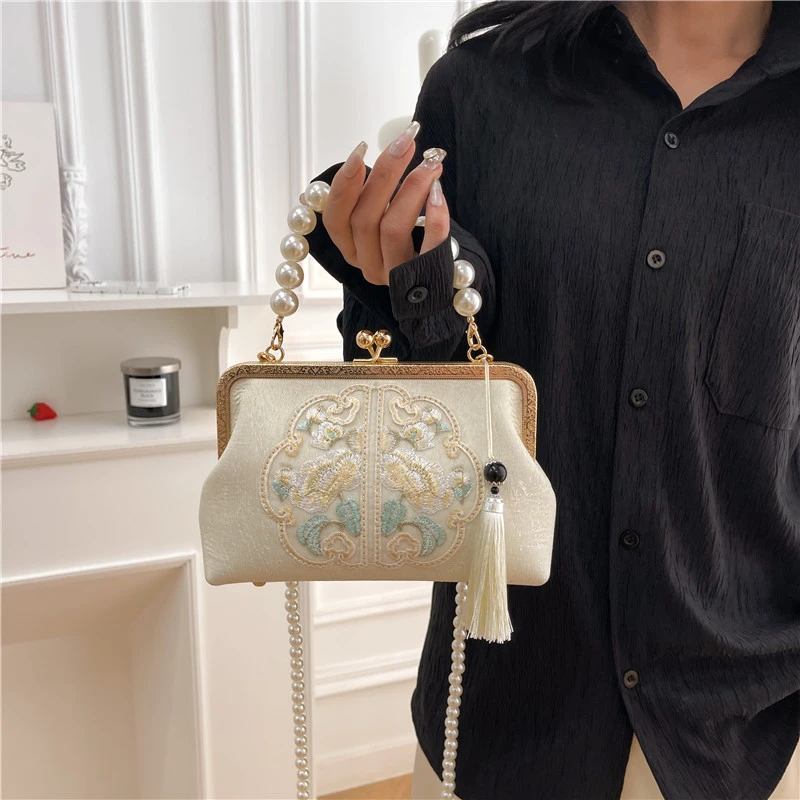
Polyester as the Honest Contemporary Ground
The choice of polyester as the bag's primary ground material is a precise rather than compromised decision. In a bag designed for European urban daily use, polyester offers advantages that silk and even cotton cannot match: consistent colour stability across wash cycles, resistance to the moisture and temperature variation of Northern European cities, and a surface that holds embroidery thread tension more evenly than woven natural fibres.
The urban minimalist style designation in the product specifications is not a category marketing decision — it reflects a genuine design philosophy. The bag does not employ decorative hardware, multiple external pockets, or the structural complications that characterise Italian fashion house accessories. Its decorative register is entirely carried by the embroidery. Everything else is stripped to necessity.
Styling the Embroidered Handbag in a European Wardrobe
The bag's dimensions and embroidery weight make it highly adaptable to the European approach to dressing, in which cultural objects from non-Western traditions are incorporated into established Northern and Southern European fashion codes rather than worn as costumes.
Professional context, Gold Long Chain. Pair with a tailored blazer and straight-leg trousers. The long chain creates a diagonal line across the torso that reads as intentional rather than functional — the crossbody placement signals ease within formal dressing.
Social context, Beaded Chain Gold Chain. Against a silk slip dress or a fine-knit column silhouette, the beaded chain elevates the bag into jewellery territory. The floral embroidery becomes the evening's decorative statement, replacing the need for necklaces.
Casual context, Short Necklace Long Necklace. Against a linen shirt and wide-leg jeans, the two-length chain option allows the bag to be held close during transit and dropped to hip level for leisure. The embroidery reads as a considered accessory choice rather than an exhibition of cultural knowledge.
Shop This Look
Embroidered Chinese-style Handbag Women's Bag Shoulder And Crossbody
Ming Dynasty floral embroidery on polyester. Three chain configurations. 250×160×90mm, 370g. Hidden zip pocket.
| Chain Configuration | Price | Best For |
|---|---|---|
| Beaded Chain Gold Chain | $14.98 | Social & evening |
| Short Necklace Long Necklace | $15.56 | All-day versatility |
| Gold Long Chain | $14.10 | Editorial crossbody |
The Cultural Intelligence of the Everyday Object
What makes this bag remarkable in the 2026 European market is not its price point — though $14.10–$15.56 for an embroidered, configurable everyday bag represents genuine value. What makes it remarkable is its refusal to separate cultural depth from functional design.
The Ming Dynasty floral embroidery tradition, the three-chain configuration system, and the horizontal rectangular minimalist form are not three separate decisions layered on top of each other. They are three aspects of a single design intelligence: an object that respects both the history it draws from and the contemporary life it will participate in.
Frequently Asked Questions
Conclusion: The Intelligence of One Object, Three Lives
The Embroidered Chinese-style Handbag does not ask the European woman to choose between cultural depth and contemporary functionality, between the tradition of six centuries of Ming floral embroidery and the demands of 2026 urban dressing. It holds both simultaneously — as the chain configurations hold three carry modes, as the horizontal rectangle holds both document and cosmetic, as the hidden zip holds both security and clean line.
This is the logic of intelligent design: not the multiplication of objects, but the multiplication of capacities within one precisely made thing. At $14.10 to $15.56, it represents one of the most thoughtfully priced cultural fashion objects available to the European woman in 2026.
2. China National Silk Museum — "Ming Dynasty Embroidery Documentation", retrieved 2026-10-29, https://www.silk-museum.com/
3. McKinsey & Company — "European Accessories Market Report 2025", retrieved 2026-10-29, https://www.mckinsey.com/
4. Highsnobiety — "The Horizontal Crossbody and 2026 European Fashion", retrieved 2026-10-29, https://www.highsnobiety.com/
5. Copenhagen Institute of Occupational Health — "Shoulder Bag Load Ergonomics Study 2024", retrieved 2026-10-29, https://www.arbejdsmiljoforskning.dk/