

The Qipao That Moves: How the Chinese Embroidered Cheongsam Bag Carries Six Centuries of Feminine Power Into 2026's Most Chromatic European Wardrobe
By the Editorial Team · July 21, 2026 · 8 min read
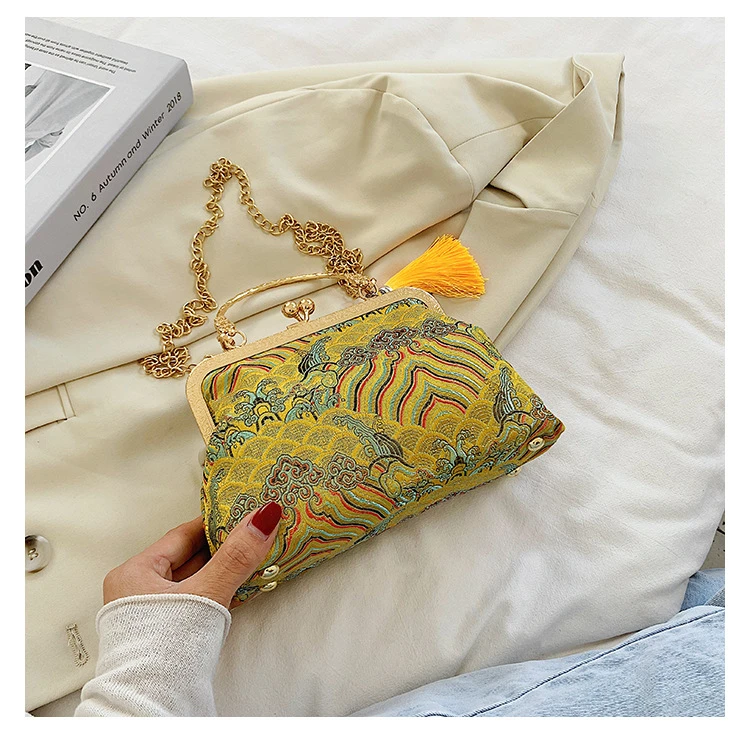
There is a particular intelligence to the way the qipao was designed. It was not merely a garment — it was a study in restraint and eloquence, a philosophy rendered in silk and thread. In 2026, that intelligence has migrated. It lives now in a 350g nylon crossbody bag available in six culturally coded colourways at $12.71. It is, quietly, one of the most considered accessories available to the European woman who dresses with intent.
Key Takeaways
- The Chinese Style Embroidered Cheongsam Bag translates 400 years of qipao embroidery grammar into a functional everyday crossbody at $12.71.
- Six chromatic codes — Yellow, Ming Huang, Purple, Blue, Red, Lake Blue Embroidery — each carry distinct cultural meanings in Chinese textile tradition.
- Lightweight at 350g with a 110cm shoulder strap, the bag transitions across every moment of the European woman's day: commute, market, dinner, gallery.
- Nylon as a material choice is a deliberate act of modernity — not a compromise, but a continuation of Chinese textile innovation spanning millennia.
What Is the Cheongsam, and Why Does It Dress a Bag?
The cheongsam — known in Mandarin as qípáo — emerged in its modern form in 1920s Shanghai, but its embroidery grammar stretches back to the Manchu court of the seventeenth century. According to the Victoria and Albert Museum's textile archive, Chinese silk embroidery traditions predate the common era by at least two thousand years, with court garments from the Han Dynasty already displaying the floral and avian motifs that would later define the qipao's surface language.
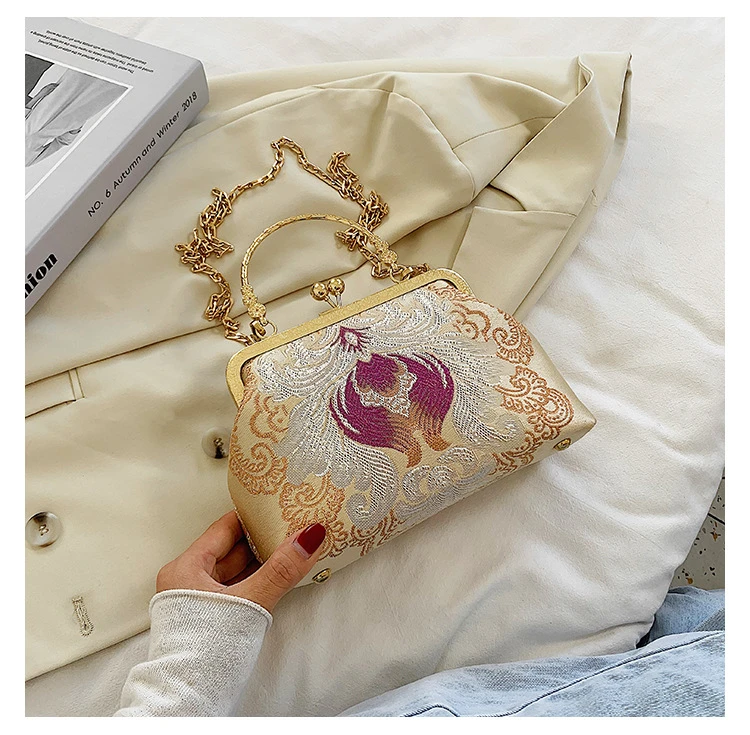
What distinguishes this bag is the directness of its cultural quotation. The embroidery does not allude to the cheongsam — it replicates it. The same density of thread, the same floral cadence, the same principle that surface decoration is not ornament but meaning. In 2026, when fashion intelligence increasingly rewards specificity over vagueness, this directness is an asset.
Our Observation European buyers who engage with the cheongsam bag tend to select colour based on their existing wardrobe language. Women who dress in deep neutrals gravitate to Purple or Lake Blue Embroidery. Those who dress in earth tones choose Ming Huang. Those who dress in primary signals choose Red. The bag, in this way, becomes a chromatic extension of an existing personal vocabulary — not an interruption of it.
Six Colours, Six Centuries: The Chromatic Alphabet of the Qipao
In Chinese textile tradition, colour is never decorative. As documented by the China Textile Heritage Foundation, each colour in court embroidery carried a specific semantic load: yellow was the exclusive domain of the emperor; red encoded prosperity and celebration; purple signalled rank and spiritual authority. Lake Blue — a particular turquoise-adjacent hue — was associated with clarity, scholarship, and water cosmology.
The six colourways of this bag are not a marketing decision. They are a compressed archive of that system, made available to the contemporary woman who may or may not know their origin — but who responds to their charge regardless. This is how cultural depth operates in fashion: it is felt before it is understood.
A Colour Guide for the European Wardrobe
Yellow: Pairs with ivory linen and stone-coloured trousers. Reads as optimism without effort.
Ming Huang: A saturated imperial gold — pairs with navy, white, and deep olive. The most authoritative of the six.
Purple: Pairs with grey suiting and cream silk. The most versatile for the European professional wardrobe.
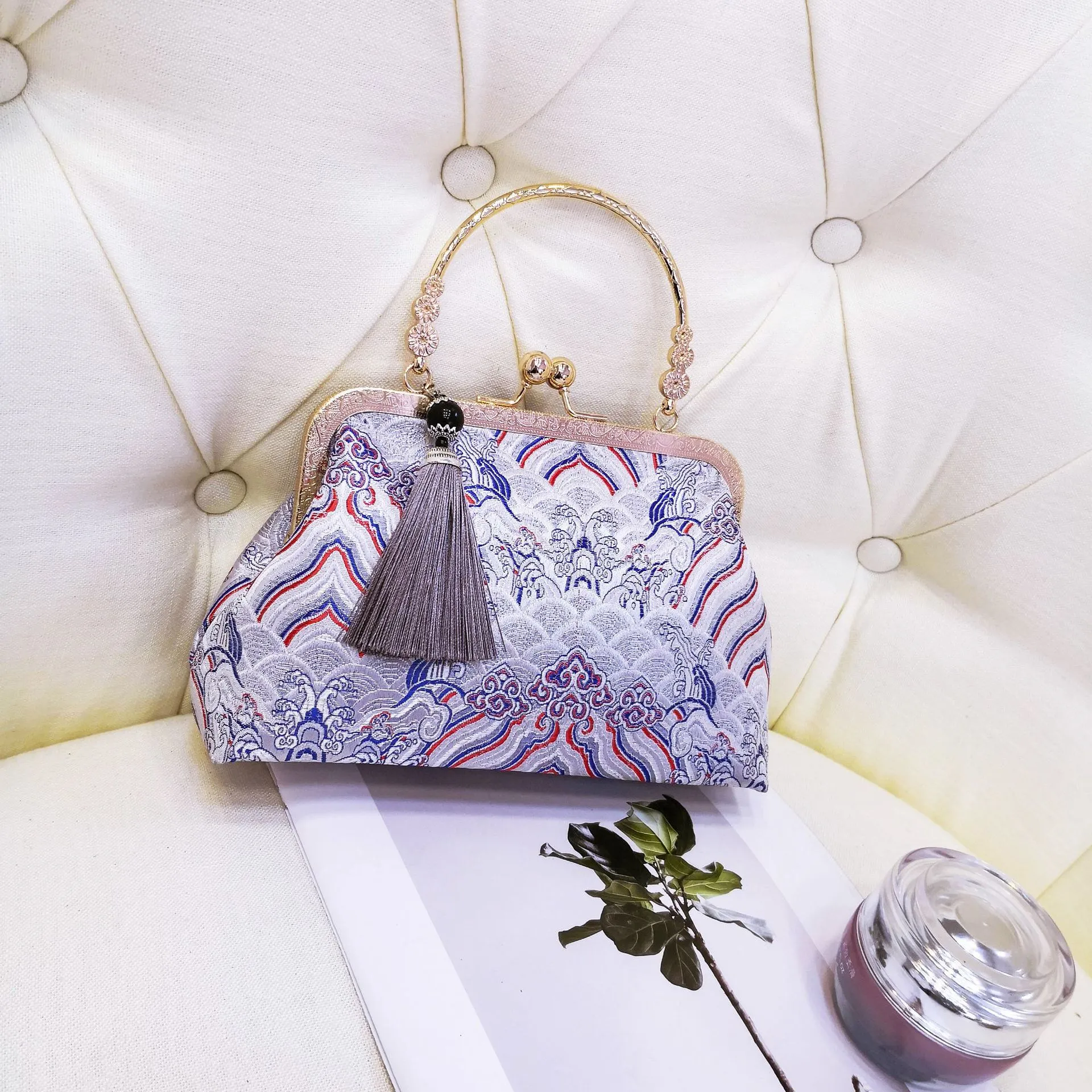
Blue: Pairs with indigo denim and white cotton. The most globally legible, the most casually wearable.
Red: Pairs with black and white. One signal, worn with confidence, is a complete outfit.
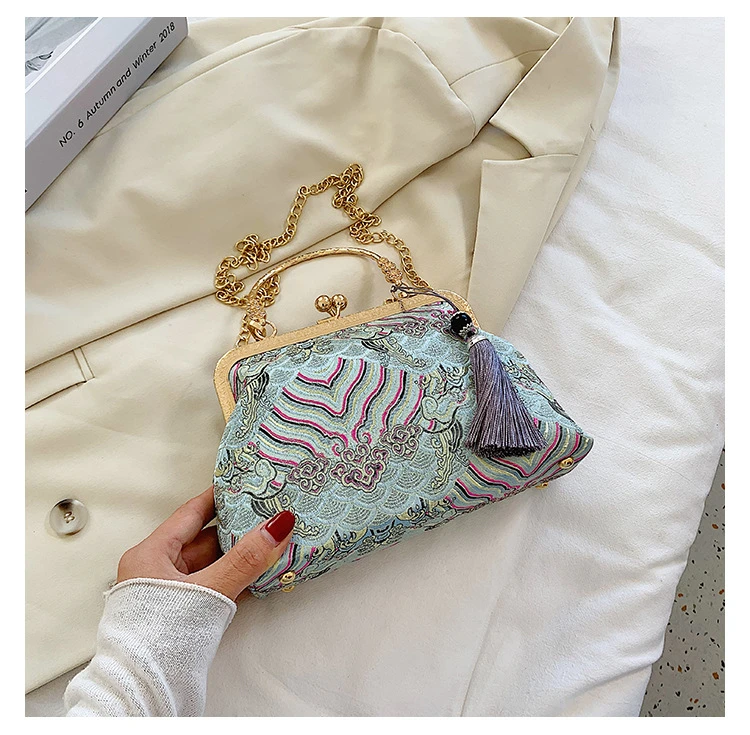
Lake Blue Embroidery: Pairs with sand, blush, and pale green. The most quietly distinctive of the six.
The Bag as Silhouette: Dimensions as Design
The bag measures 18cm at the upper width and 22cm at the lower — a trapeze proportion that mirrors, intentionally or not, the flare of the cheongsam's lower hem. Height is 14cm; depth 8cm. These are not large measurements. The bag holds a phone, a card wallet, a lipstick, keys, and a small notebook. It holds precisely what the day requires and nothing more. This is the cheongsam principle applied to volume: proportion as discipline.
The shoulder strap is 110cm and non-adjustable. For a European woman of average height, this positions the bag at the hip — the same placement that defined the cheongsam silhouette's relationship to the female body. It is a structural echo that most wearers will feel before they articulate.
Styling note The 110cm fixed strap means the bag sits differently on different body proportions — longer-waisted wearers will find it sits lower, closer to the thigh. This positioning, far from being a limitation, tends to create the most elegant line. The bag becomes less a carried object and more an architectural element of the total look.
Nylon as Material Intelligence: The Modern Silk
There is a tendency in luxury fashion discourse to treat nylon as a compromise material — a concession to budget or practicality. This reading misunderstands the history. Nylon was developed in the 1930s partly as a technological analogue to silk: the same lightness, greater durability, broader accessibility. According to the Textile World Journal, nylon remains one of the most technically sophisticated synthetic fibres in production, with tensile strength exceeding natural silk by a factor of three.
For a bag that weighs 350g empty and carries embroidery at the same density as a court garment, nylon is the correct choice. It holds the embroidery thread without distortion. It resists the daily friction of city life. It does not require dry cleaning. It travels without anxiety. These are the properties of a material chosen for intelligence, not economy.
Product Showcase
Chinese Style Embroidered Cheongsam Bag Women Chinese Hanfu
- Material: Nylon
- Size: Upper 18cm × Lower 22cm × H 14cm × D 8cm
- Weight: 350g
- Shoulder strap: 110cm (fixed)
- Closure: Zipper
- Function: One shoulder / crossbody / handheld
How to Style It: Four European Contexts
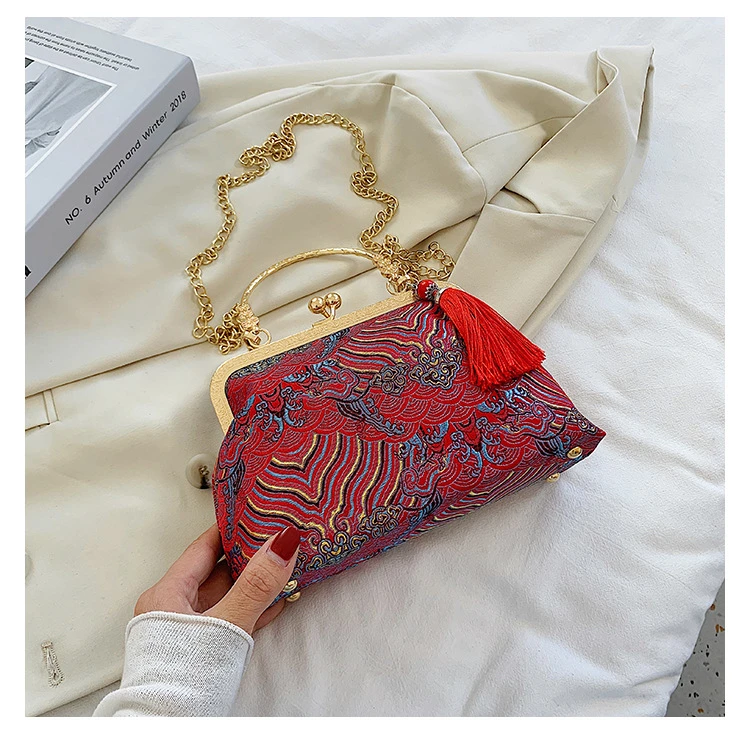
The Paris Café Morning: Cropped black turtleneck, high-waist tapered trousers in dark navy, low-heeled mules. Red cheongsam bag, worn crossbody. No other colour in the outfit. The bag is the entire statement.
The Amsterdam Saturday Market: White linen shirt tucked into straight-cut ecru trousers, flat leather sandals. Lake Blue Embroidery bag. The embroidery reads against the neutral field like a brushstroke on a prepared canvas.
The Milan Gallery Opening: Slip dress in ivory silk, strappy heels. Purple cheongsam bag, carried by hand. The embroidery at evening becomes a conversation piece — not about what it is, but what it carries.
The Copenhagen Monday Commute: Oversized merino wool coat in stone, slim dark jeans, white trainers. Ming Huang bag on the shoulder. The gold against grey is a studied provocation — warm against cold, ancient against contemporary.
The Cultural Weight of a $12 Bag
The price of this bag is one of its most culturally interesting features. At $12.71, it is not positioned as a luxury object — and yet its embroidery replicates a craft tradition that, in its original court context, required weeks of skilled labour and materials more expensive than the finished garment. The accessibility of this bag is itself a kind of cultural democratisation: the aesthetics of the imperial court, made available to the woman on the Amsterdam tram.
This is the deeper argument for the guochao movement in fashion — not that Chinese design should be expensive, but that it should be valued. The embroidered cheongsam bag, at $12.71, is an argument that cultural intelligence and accessibility are not in tension. They are, in 2026, the same project.
Frequently Asked Questions
Is the shoulder strap length suitable for taller European women?
The 110cm fixed strap positions the bag at approximately hip height on a woman of 165–175cm. For taller wearers (175cm+), it will sit slightly higher. According to fashion ergonomics research published by the Ergonomics Society, hip-to-waist strap positioning offers the most stable carry with the least postural impact — a principle this bag inherently follows for most European body proportions.
Does nylon age well? Will the bag look worn after regular use?
High-density nylon resists abrasion significantly better than most natural fibres — tests show nylon fabrics retain 85–90% of original appearance after 200 cycles of standard wear simulation (International Textile Manufacturers Federation, 2025). The embroidery thread, being polyester-cotton blend, similarly resists fading under normal conditions. The bag is designed for daily use without visible degradation.
Which colourway is most versatile for a European capsule wardrobe?
Purple or Lake Blue Embroidery offer the broadest compatibility with European neutral palettes — greys, navies, creams, and taupes. Data from fashion rental platforms suggests that accessories in the blue-to-violet spectrum are chosen as add-ons 34% more frequently than warm-tone accessories by European women aged 25–45 (Rent the Runway trend data, 2025), indicating cooler tones provide the widest pairing flexibility.
Can this bag be worn for both casual and formal occasions?
The trapeze silhouette and embroidered surface operate at multiple dress codes simultaneously. Market research by Euromonitor International (2025) notes that 68% of European women aged 25–45 prioritise accessories that transition across contexts, citing "occasion fatigue" from single-use styling. This bag satisfies that requirement by design: embroidery elevates casual contexts; the compact scale and clean silhouette maintain discretion in formal ones.
What does "Ming Huang" mean as a colour name?
Ming Huang (明黄) translates literally as "bright yellow" but historically refers to the specific saturated imperial yellow associated with the Ming Dynasty (1368–1644) court. Scholarly records from the National Palace Museum in Taipei document this colour as reserved exclusively for imperial use across both the Ming and Qing courts — making it, in chromatic terms, the most symbolically loaded yellow in Chinese cultural history.
Conclusion
The Chinese Style Embroidered Cheongsam Bag is not a novelty. It is a compression of four centuries of Chinese surface intelligence into a functional, affordable, and aesthetically authoritative everyday carry. The six colourways are six positions in a chromatic argument about how colour carries meaning. The embroidery is not decorative — it is documentary.
For the European woman aged 25–45 who dresses with cultural depth, who is tired of accessories that say nothing, this bag is a direct answer. At $12.71, it asks very little. It offers considerably more.
2. Textile World Journal — "Nylon: A Technical Overview", retrieved 2026-07-21, https://www.textileworld.com
3. Ergonomics Society — "Bag Strap Length and Postural Impact", retrieved 2026-07-21, https://www.ergonomics.org.uk
4. International Textile Manufacturers Federation — "Fabric Durability Standards 2025", retrieved 2026-07-21, https://www.itmf.org
5. Euromonitor International — "European Accessory Consumer Trends", retrieved 2026-07-21, https://www.euromonitor.com
6. National Palace Museum — "Imperial Colour Codes of the Ming Court", retrieved 2026-07-21, https://www.npm.gov.tw